How to Stop a Panic Attack Fast: 7 Techniques That Work in Under 5 Minutes

Free: 3-Minute Nervous System Reset
Get the audio guide and symptom checklist that shows you exactly how to calm your nervous system in under 3 minutes. Delivered straight to your inbox.
TL;DR
Panic attacks peak within 10 minutes and cannot physically harm you. Your nervous system is overreacting to a perceived threat. You can interrupt this response using specific physical techniques: the physiological sigh works in 15 to 30 seconds, the cold water dive reflex drops heart rate by up to 30% in under a minute, and extended exhale breathing activates your parasympathetic system within 60 seconds. This guide gives you 7 techniques ordered by speed so you know exactly what to do from the first second of a panic attack through full recovery.
Your chest tightens. Your heart pounds so hard you can feel it in your ears. You cannot catch your breath. Your vision narrows. Everything in your body screams that something is terribly wrong.
This is a panic attack. And it is one of the most frightening experiences a person can have.
Around 6 million adults in the United States live with panic disorder, and women are 2.5 times more likely to experience it than men. Between 18% and 25% of all emergency department visits for chest pain are actually panic attacks. Many people genuinely believe they are having a heart attack or dying.
But here is what the research shows: panic attacks are not dangerous. They peak within 10 minutes and always pass. Your body cannot sustain the panic response indefinitely.
Dr. Kevin Chapman, a clinical psychologist specializing in anxiety disorders, calls it "the emotional law of gravity. Always remember that what goes up must come down, and that is true for emotions, too."
The techniques below work because they send physical signals through your vagus nerve that interrupt the panic response at its source. Not through willpower. Not through positive thinking. Through direct nervous system communication.
What Happens in Your Body During a Panic Attack
A panic attack is your nervous system's most extreme alarm response. Understanding what is happening gives you power over it.
Your amygdala, the brain's threat detection center, fires a false alarm. It does not wait for confirmation. It activates your fight or flight response immediately, flooding your body with adrenaline and cortisol.
What follows is a cascade of physical symptoms:
- Heart rate spikes to 100 to 150 beats per minute
- Breathing becomes rapid and shallow (hyperventilation)
- Blood shifts from your digestive system to your muscles
- Your visual field narrows (tunnel vision)
- Hands and feet tingle from carbon dioxide changes in your blood
- Chest muscles tighten, creating the sensation of chest pain
- Adrenaline creates a feeling of impending doom
Dr. Stephen Porges, creator of polyvagal theory, explains that "our nervous system is always trying to figure out a way for us to survive, to be safe." A panic attack is your survival system working perfectly. It just activated at the wrong time.
Why Panic Attacks Feel Different from Regular Anxiety
Regular anxiety builds gradually. It is your nervous system running slightly too hot in the background. You can often identify what is causing it.
Panic attacks are different. They hit suddenly and at full intensity, often without an obvious trigger. The physical symptoms are so severe that most people believe something is medically wrong. This fear amplifies the panic, creating a feedback loop where the fear of the symptoms makes the symptoms worse.
Breaking this cycle requires physical intervention, not mental. Your body started this response, and your body is the fastest way to end it.
7 Techniques to Stop a Panic Attack (Ordered by Speed)
Use these in order. Start with the fastest technique and layer on others as needed.
1. Name It (0 Seconds)
The moment you feel panic symptoms, say to yourself (out loud if possible): "This is a panic attack. It is not dangerous. It will pass."
Want a quick nervous system reset right now?
Get the free 3-minute audio guide and symptom checklist. Delivered instantly.
This is not positive thinking. This is accurate information. Your prefrontal cortex (the rational part of your brain) can partially override your amygdala's alarm when you provide it with facts. Studies show that labeling an emotional experience reduces amygdala activity and increases frontal cortex engagement.
The critical fact to remember: no panic attack has ever lasted indefinitely. They peak within 10 minutes and typically pass within 20 to 30 minutes. Your body physically cannot maintain the panic response longer than this because it runs out of adrenaline.
2. Physiological Sigh (15 to 30 Seconds)
Take two quick inhales through your nose (one stacked on top of the other), then one long, slow exhale through your mouth. The exhale should be at least twice as long as the inhales combined.
Repeat two to three times.
This is the single fastest voluntary technique for reducing autonomic arousal. A 2023 study published in Cell Reports Medicine by researchers at Stanford found that cyclic sighing outperformed mindfulness meditation, box breathing, and cyclic hyperventilation for mood improvement and physiological calming.
Dr. David Spiegel, Associate Chair of Psychiatry at Stanford, explains: "We know that people who are breathing very rapidly feel more anxious, such as during a panic attack. Controlled breathwork seems to be a straightforward way to do the opposite: lower physiologic arousal and regulate your mood."
Why it works during panic: the double inhale maximally inflates your lung alveoli, and the extended exhale activates your vagus nerve and parasympathetic system. For more breathing techniques, see our guide to breathwork for beginners.
3. Cold Water Dive Reflex (30 to 60 Seconds)
Fill a bowl with cold water and submerge your face for 15 to 30 seconds while holding your breath. If you do not have a bowl, splash cold water on your forehead, cheeks, and around your eyes, or press a cold pack against your face.
This activates the mammalian dive reflex, an involuntary parasympathetic response that cannot be overridden by panic. A 2021 study published in PMC found that cold facial immersion reduces heart rate by 10% to 30% within seconds. In some cases, heart rate drops of up to 50% have been recorded.
The dive reflex works through the trigeminal nerve, which connects directly to the vagus nerve. Unlike breathing techniques, you do not need to concentrate or remember a pattern. Your body responds automatically.
For a full guide on using cold exposure for nervous system regulation, see our post on cold exposure and your nervous system.
4. Extended Exhale Breathing (60 to 90 Seconds)
Breathe in through your nose for 4 counts. Breathe out through your mouth for 8 counts. Continue for 6 to 8 cycles.
The key is making your exhale at least twice as long as your inhale. When your exhale is longer, your vagus nerve sends a direct signal to your brain to slow your heart rate. Research published in Frontiers in Human Neuroscience shows this activates the parasympathetic nervous system within 60 seconds.
During a panic attack, you are likely hyperventilating (breathing too fast and too shallow). Extended exhale breathing directly counteracts this by slowing your breathing rate to about 4 to 6 breaths per minute, which is the range where vagal stimulation is strongest.
For a detailed comparison of box breathing versus 4 7 8 breathing, see our guide.
Want a quick nervous system reset right now?
Get the free 3-minute audio guide and symptom checklist. Delivered instantly.
5. Grounding with the 5 4 3 2 1 Method (2 Minutes)
Name out loud: 5 things you can see, 4 things you can touch, 3 things you can hear, 2 things you can smell, 1 thing you can taste.
This technique works by redirecting your attention from internal panic symptoms to external sensory input. A 2025 study found that this grounding exercise reduced the percentage of participants reporting high anxiety from 23% down to just 4% (p < 0.001).
This method is especially useful if breathing exercises feel difficult during panic (some people find that focusing on their breath actually increases their panic). Grounding pulls your awareness outward rather than inward.
For 10 more grounding exercises, see our full guide on grounding techniques for anxiety.
6. Progressive Muscle Tension Release (3 Minutes)
Starting with your feet, tense each muscle group as tightly as you can for 5 seconds, then release completely. Work your way up: calves, thighs, glutes, stomach, chest, hands, arms, shoulders, face.
During a panic attack, your muscles are already tensed from the adrenaline surge. By deliberately tensing them harder and then releasing, you give your nervous system a contrast signal. The release phase triggers the parasympathetic response.
This technique also helps with the "frozen" feeling some people experience during panic. If you cannot think clearly or your body feels locked up, starting with physical muscle engagement can break through the freeze state.
For more body based practices, see our guide to somatic exercises for overwhelm.
7. Slow Orienting (3 to 5 Minutes)
Slowly turn your head to the right. Let your eyes scan everything in that direction. Notice details: colors, textures, shapes, distances. Then slowly turn your head to the left and repeat.
Continue for 3 to 5 minutes, moving your head and eyes as slowly as possible.
This engages your ventral vagal system, the part of your nervous system associated with social engagement and safety. When you slowly orient to your environment, you are doing exactly what your nervous system needs to confirm that there is no actual threat present.
Dr. Stephen Porges's research shows that the orienting response is one of the most effective ways to signal safety to the nervous system. Animals in the wild do this naturally after escaping a predator. They look around slowly to confirm the danger has passed before their nervous system returns to baseline.
Build Your Panic Toolkit Before You Need It
The worst time to learn a new technique is in the middle of a panic attack. Your prefrontal cortex (the part of your brain responsible for learning and decision making) goes partially offline during intense stress.
Build your toolkit now so it becomes automatic.
Your Panic Preparation Checklist
- Practice the physiological sigh daily. Do 3 to 5 cycles every morning before you even feel stressed. Within a week, it becomes a reflex you can access during panic without thinking.
- Keep a cold pack in your freezer. A gel pack wrapped in a thin cloth pressed against your face activates the dive reflex just as effectively as water submersion.
- Write your protocol on a card. Keep a small card in your wallet or a note on your phone: "1. This is a panic attack. It will pass. 2. Double inhale, long exhale. 3. Cold water on face. 4. Name 5 things you see." During panic, reading familiar instructions is easier than remembering them.
- Tell someone you trust. Let a partner, friend, or coworker know what your panic attacks look like and what helps. Having someone who can calmly remind you "this is a panic attack, you are safe" is remarkably grounding.
- Practice in low stress moments. Research shows that people who practice calming techniques during calm periods are 40% to 56% more likely to use them effectively during actual crises.
After the Panic Attack: Your Recovery Protocol
Most guides stop at "the panic attack is over." But what you do in the 30 minutes after a panic attack matters for preventing the next one.
Immediate Recovery (First 10 Minutes)
- Drink water. Adrenaline dehydrates you. Cold water also helps cool down your internal temperature.
- Move gently. A slow walk or gentle stretching helps your body metabolize the remaining cortisol and adrenaline. Do not sit still and replay what happened.
- Continue slow breathing. Your nervous system may try to ramp back up. Keep your exhales longer than your inhales for another 5 to 10 minutes.
Short Term Recovery (Next 30 Minutes)
- Eat something small. Your blood sugar drops during panic. A small snack with protein and complex carbohydrates helps stabilize your system.
- Avoid caffeine. Your nervous system is already overstimulated. Caffeine will extend the heightened state.
- Note the trigger (if identifiable). Write a brief note about what you were doing, thinking, or feeling before the attack started. Over time, this log reveals patterns that help you anticipate and prevent future episodes.
Building Long Term Resilience
Panic attacks often decrease in frequency when you build a daily nervous system regulation practice. Even 5 minutes per day of breathwork or body scan meditation can lower your baseline arousal level, making panic attacks less likely to trigger.
For a complete guide on building this practice, see our post on nervous system regulation for beginners.
When Panic Attacks Signal Something Deeper
Occasional panic attacks in response to extreme stress are common. But recurring panic attacks, especially ones that seem to come out of nowhere, may indicate that your nervous system is chronically dysregulated.
Signs that your panic attacks need more than emergency techniques:
- They happen more than once a month
- You avoid situations, places, or activities because you fear triggering one
- The fear of having another panic attack is itself causing anxiety
- You have experienced trauma and panic attacks started after a stressful event
- Physical symptoms persist between attacks (constant muscle tension, digestive issues, sleep disruption)
A 2025 study in BMC Psychiatry found that intensive, short term cognitive behavioral therapy achieved a 90% remission rate for panic disorder at 18 months. Professional support works. These techniques are powerful first aid, but they are not a replacement for clinical treatment when panic has become a pattern.
A Note from Diego
I will never forget the first time I experienced a panic attack. It happened during a deep freedive in open water. My chest locked up. My vision narrowed. Every cell in my body screamed to get to the surface immediately.
What saved me was not willpower. It was training. I had practiced the physiological sigh hundreds of times on dry land. When panic hit, my body knew what to do even when my mind was frozen.
That experience changed how I teach breathwork. I do not just teach people techniques for when they feel calm. I train them to build automatic responses that activate when they need them most.
If you want to start building these automatic responses, try our free 3 minute nervous system reset. It walks you through guided breathing so you do not have to remember the steps.
And when you are ready for a structured daily practice that builds real panic resilience over time, the 7 Day Nervous System Reset gives you a technique for each day of the week until calm becomes your default state.
Frequently Asked Questions
How long does a panic attack last?
Most panic attacks peak within 10 minutes and resolve within 20 to 30 minutes. Some people experience residual symptoms (shakiness, fatigue, light sensitivity) for up to an hour afterward. Your body physically cannot sustain the full panic response beyond this window because adrenaline reserves deplete. If symptoms persist for hours, it is likely ongoing anxiety rather than a single panic attack, and the techniques in this guide still apply.
Can you stop a panic attack before it starts?
Yes. Most people experience early warning signs 30 to 60 seconds before full panic hits: slight dizziness, tingling in the hands, a sudden wave of heat, or a vague sense that something is wrong. If you intervene with the physiological sigh or extended exhale breathing during this window, you can often prevent the full attack. Building a daily breathing practice increases your ability to notice these early signals. Research shows that people who practice stress reduction techniques regularly are 40% to 56% more likely to catch and interrupt panic in its early stages.
Is it a panic attack or a heart attack?
Panic attacks and heart attacks share symptoms including chest pain, shortness of breath, and a feeling of doom. Key differences: panic attack chest pain is usually sharp and localized to the center of the chest, worsens with breathing, and does not radiate to the arm or jaw. Heart attack pain is typically a pressing or squeezing sensation that spreads to the left arm, neck, or jaw. If you are unsure, call emergency services. Between 18% and 25% of ER chest pain patients are experiencing panic attacks, so medical professionals see this frequently and will not judge you for seeking evaluation.
Why do panic attacks happen for no reason?
Panic attacks often feel random, but they usually have triggers your conscious mind does not recognize. Your nervous system processes environmental cues (sounds, smells, body sensations, social dynamics) below your awareness through a process Dr. Stephen Porges calls neuroception. A smell that reminds your nervous system of a past stressful experience, a slight drop in blood sugar, or accumulated sleep debt can all trigger the alarm without any conscious thought. Keeping a panic journal (noting what you were doing, eating, and feeling before each attack) often reveals patterns within 2 to 4 weeks.
Can you have a panic attack while sleeping?
Yes. Nocturnal panic attacks affect roughly 40% to 70% of people with panic disorder. They typically occur during the transition between light sleep and deep sleep (stages N2 to N3). You wake up suddenly with racing heart, difficulty breathing, and intense fear. The techniques in this guide work the same way for sleep panic: start with the physiological sigh, then use extended exhale breathing. Sitting up and turning on a dim light can also help orient you to your safe surroundings. For more on managing nighttime anxiety, see our guide on why anxiety gets worse at night.
Should I go to the emergency room for a panic attack?
If this is your first episode and you are not sure what is happening, yes. Getting a medical evaluation rules out cardiac issues, thyroid problems, and other conditions that mimic panic. Once you have been evaluated and know that you experience panic attacks, you can typically manage them with the techniques described here. However, always seek emergency care if your chest pain radiates to your arm or jaw, if you have a known heart condition, or if symptoms feel genuinely different from your usual panic attacks.
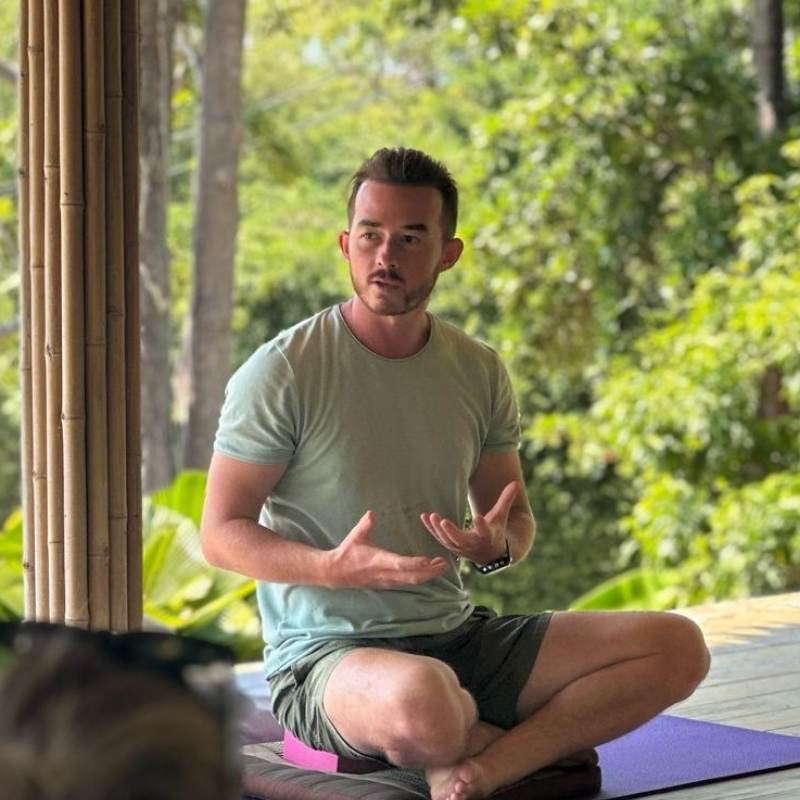
About Diego Pauel
Diego is a certified breathwork facilitator, freediving instructor, and founder of Breathflow Connection. With years of experience in nervous system regulation and somatic practices, Diego helps stressed professionals find calm through simple, science-backed techniques.
Learn More →Try Our Free Interactive Tools
Start regulating your nervous system today.
Get the free 3-minute audio guide and symptom checklist. Delivered instantly.
Get Your Free ResetContinue reading

High Cortisol in Women: Symptoms, Causes, and How to Lower It Naturally
High cortisol symptoms in women include weight gain, irregular periods, hair thinning, and anxiety. Learn natural ways t
Read More →
Nervous System Reset for Sleep: Your Complete Bedtime Routine
A complete 90 minute bedtime routine to reset your nervous system for deep sleep. Breathwork, light science, and tempera
Read More →
Breathwork for Sleep: 5 Techniques That Work Better Than Melatonin
Five breathwork techniques for better sleep that outperform melatonin. Learn why your nervous system needs breathwork, n
Read More →