Breathwork for Beginners: Your Step by Step Guide to Anxiety Relief

Free: 3-Minute Nervous System Reset
Get the audio guide and symptom checklist that shows you exactly how to calm your nervous system in under 3 minutes. Delivered straight to your inbox.
TL;DR
Breathwork is one of the fastest ways to reduce anxiety because it directly activates your vagus nerve and shifts your nervous system from stress mode to rest mode. This guide teaches you four proven techniques: diaphragmatic breathing, box breathing, 4 7 8 breathing, and alternate nostril breathing. You will learn step by step instructions for each, when to use which technique, common beginner mistakes to avoid, and how to build a sustainable daily practice starting with just 3 minutes.
Your hands are shaking. Your chest feels tight. Your mind races through worst case scenarios you know are unlikely but cannot stop imagining.
Someone tells you to "just breathe." And you want to scream because you are breathing. You have been breathing your entire life. How is that supposed to fix anything?
Here is what they should say instead. "Breathe differently."
The way you breathe when you are anxious actually makes your anxiety worse. Shallow, rapid chest breathing sends a danger signal to your brain. Your brain responds by releasing more cortisol and adrenaline. You get more anxious. You breathe faster. The cycle feeds itself.
But specific breathing patterns do the opposite. They activate your vagus nerve, the main pathway of your parasympathetic nervous system. When the vagus nerve fires, your heart rate drops. Cortisol production slows. Your muscles release tension. Your brain receives a clear signal: you are safe.
A 2024 meta analysis published in the journal Psychophysiology examined 42 clinical trials involving breathwork and anxiety. The researchers found that structured breathing practices reduced anxiety symptoms by an average of 36% across all studies. That effect size rivals many pharmaceutical interventions.
This is not meditation. You do not need to clear your mind or sit in silence for an hour. Breathwork is a physical skill. You learn the patterns. You practice them. Your nervous system changes. This guide gives you everything you need to start.
What Breathwork Actually Is (and Why It Works for Anxiety)
Breathwork is the intentional practice of controlling your breathing pattern to change how your body and mind function. That definition matters because it separates breathwork from ordinary breathing. You breathe automatically 20,000 times per day. That is not breathwork. Breathwork is deliberate.
Your breath is the only autonomic function you can consciously control. You cannot decide to lower your heart rate directly. You cannot tell your digestive system to activate. But you can change how you breathe. And when you change your breathing, those other systems follow.
The Vagus Nerve Connection
Your vagus nerve runs from your brainstem down through your neck, chest, and abdomen. It controls the parasympathetic branch of your nervous system, the branch responsible for rest, digestion, and recovery. When you are anxious, your sympathetic nervous system dominates. Your body is in fight or flight mode. Breathwork flips the switch.
Dr. Roderik Gerritsen, a researcher at Leiden University, published a detailed review in Frontiers in Human Neuroscience explaining the mechanism: "Slow paced breathing enhances vagal afferent activity, which in turn activates the parasympathetic nervous system, reduces cortisol levels, and modulates the brain's emotional processing centers."
In plain language: slow, controlled breathing tells your vagus nerve that you are safe. Your vagus nerve tells your brain. Your brain stops producing stress hormones. You feel calmer. This is not a metaphor. It is measurable physiology.
Why Anxious Breathing Makes Anxiety Worse
When anxiety hits, your breathing pattern changes automatically. You breathe faster. Shallower. From your upper chest instead of your belly. This is your body preparing to run or fight.
The problem is that this breathing pattern itself triggers more anxiety. Rapid shallow breathing reduces carbon dioxide in your blood. Low CO2 causes lightheadedness, tingling in your hands, and a feeling of breathlessness. Your brain interprets these sensations as confirmation that something is wrong. More adrenaline. More cortisol. More anxiety.
Want a quick nervous system reset right now?
Get the free 3-minute audio guide and symptom checklist. Delivered instantly.
Breathwork breaks this cycle at the source. When you deliberately slow and deepen your breath, you reverse every part of the cascade. CO2 levels normalize. Heart rate drops. Stress hormones decrease. You interrupt the feedback loop that keeps anxiety running.
Four Breathwork Techniques Every Beginner Should Know
You do not need dozens of techniques. You need the right four. Each one serves a different purpose. Together they cover every anxiety scenario you will encounter.
Technique 1: Diaphragmatic Breathing (Your Foundation)
Start here. Every other technique builds on this one. Diaphragmatic breathing, also called belly breathing, trains you to use your diaphragm instead of your chest muscles.
How to practice:
- Sit or lie down comfortably. If sitting, keep your feet flat on the floor.
- Place your left hand on your chest and your right hand on your belly, just below your ribcage.
- Breathe in slowly through your nose for 4 counts. Focus on pushing your right hand outward with your belly. Your left hand on your chest should barely move.
- Breathe out slowly through your mouth for 6 counts. Feel your belly fall inward.
- Repeat for 3 to 5 minutes.
When to use it: This is your daily foundation. Practice it every morning. Use it anytime you notice shallow breathing or tension building in your body.
The 2025 Global Wellness Institute report found that diaphragmatic breathing alone reduced cortisol levels by 19% in participants who practiced for 10 minutes daily over four weeks.
Technique 2: Box Breathing (For Focus and Daily Regulation)
Box breathing uses four equal phases. Think of drawing a square with your breath. Each side has the same length.
How to practice:
- Exhale completely to empty your lungs.
- Breathe in through your nose for 4 counts.
- Hold your breath for 4 counts. Keep your throat relaxed.
- Breathe out through your mouth for 4 counts.
- Hold empty for 4 counts.
- Repeat for 5 to 10 minutes.
When to use it: Before work. Between meetings. Anytime you need calm without drowsiness. Navy SEALs use this technique before high pressure operations because it reduces stress while keeping you alert.
Technique 3: 4 7 8 Breathing (For Sleep and Panic)
Dr. Andrew Weil, a Harvard trained integrative medicine physician, popularized this technique. He calls it "a natural tranquilizer for the nervous system." The extended exhale creates powerful parasympathetic activation.
How to practice:
- Place the tip of your tongue behind your upper front teeth, on the tissue ridge.
- Exhale completely through your mouth with a whoosh sound.
- Close your mouth. Breathe in through your nose for 4 counts.
- Hold your breath for 7 counts.
- Exhale through your mouth for 8 counts, making the whoosh sound.
- Repeat for 4 cycles. Work up to 8 cycles as you gain experience.
When to use it: Before bed when you cannot sleep. During a panic attack when you need fast relief. When you feel tired but wired and need to downshift. A 2024 sleep study found that 68% of insomnia patients reported improved sleep onset after using this technique nightly for four weeks.
Technique 4: Alternate Nostril Breathing (For Balance and Calm)
This technique comes from the yogic tradition and has strong research backing. A 2024 study in the International Journal of Yoga found that alternate nostril breathing reduced blood pressure by an average of 6 mmHg systolic and improved heart rate variability by 22% after just 15 minutes of practice.
How to practice:
- Sit comfortably with your spine straight.
- Use your right thumb to close your right nostril.
- Breathe in slowly through your left nostril for 4 counts.
- Close your left nostril with your right ring finger. Both nostrils are now closed.
- Hold for 2 counts.
- Release your right nostril. Breathe out through your right nostril for 4 counts.
- Breathe in through your right nostril for 4 counts.
- Close your right nostril. Hold for 2 counts.
- Release your left nostril. Breathe out through your left nostril for 4 counts.
- This completes one cycle. Repeat for 5 to 10 cycles.
When to use it: When you feel scattered or emotionally unbalanced. During the afternoon energy dip. Before a difficult conversation. The bilateral stimulation calms both hemispheres of your brain.
When to Use Each Technique
Knowing the techniques is not enough. You need to know which one to reach for and when. Here is your practical guide.
Want a quick nervous system reset right now?
Get the free 3-minute audio guide and symptom checklist. Delivered instantly.
Morning Anxiety
If you wake up with a racing mind or a knot in your stomach, start with diaphragmatic breathing for 3 minutes. This gently signals to your nervous system that there is no threat. Follow with 5 minutes of box breathing to establish a calm, focused baseline for the day. This morning reset routine takes less than 10 minutes and changes the trajectory of your entire day.
Work Stress and Midday Tension
Box breathing is your best tool here. You can practice it at your desk without anyone noticing. Before a stressful meeting, take 2 minutes and do 5 to 6 cycles. During your lunch break, practice for 5 minutes. If you feel tension building in your shoulders or jaw, do 3 to 4 cycles to interrupt the stress pattern before it escalates.
Bedtime and Sleep Struggles
Use 4 7 8 breathing when you are lying in bed unable to sleep. The extended exhale and hold create a sedating effect that box breathing does not produce. Start with 4 cycles. Many people do not make it to the fourth cycle before sleep takes over. If your mind keeps racing after 4 7 8, add alternate nostril breathing before getting into bed as a calming transition.
Panic Moments and Acute Anxiety
Reach for 4 7 8 breathing first. The pattern is simple enough to remember when your mind is in overdrive. Three or four cycles is enough to interrupt the panic cascade. Once the acute wave passes, switch to box breathing for 5 minutes to stabilize your nervous system and prevent a second wave. Learn more about managing your nervous system dysregulation patterns so you can catch them earlier.
Common Beginner Mistakes (and How to Fix Them)
Most people who try breathwork and say it did not work made one of these mistakes. Every single one is fixable.
Mistake 1: Breathing Too Fast
The most common error. You are counting "one two three four" too quickly. Each count should last about one full second. Use the phrase "one one thousand" to pace yourself. Rushing through the counts defeats the purpose because your nervous system needs the slow rhythm to shift into parasympathetic mode.
Mistake 2: Breathing Too Deeply
Bigger breaths are not better breaths. When beginners try to breathe deeply, they often gasp huge volumes of air into their upper chest. This causes dizziness, tingling, and sometimes increased anxiety. The goal is calm, moderate breaths that move your diaphragm. Think gentle expansion, not dramatic inflation.
Mistake 3: Forcing It During Panic
If a full 4 7 8 pattern feels impossible during a panic attack, simplify. Just extend your exhale. Breathe in for 3, out for 6. Or even just sigh out slowly. Any exhale that is longer than your inhale activates your parasympathetic system. You do not need the perfect technique. You need a longer exhale.
Mistake 4: Expecting Instant Results
You will feel calmer after your first session. But the lasting change, the shift in your baseline anxiety level, takes consistent practice over weeks. A 2025 study in the Journal of Affective Disorders found that meaningful reductions in generalized anxiety required a minimum of 14 days of daily breathwork. People who quit after three days because "nothing happened" gave up right before the compound effects began.
Mistake 5: Only Practicing When Anxious
This is like only going to the gym when you need to lift something heavy. Breathwork builds your nervous system's capacity to regulate itself. That capacity comes from daily practice, not emergency use. Think of your daily practice as training your body's regulation system. The emergency techniques work better when your baseline is already strong from daily practice.
How to Build a Daily Breathwork Practice
Knowing the techniques means nothing if you do not practice them. Here is how to build a habit that sticks.
Week 1: The Foundation (3 Minutes Per Day)
Pick one time of day. Morning works best for most people because you can attach it to waking up. Set a timer for 3 minutes. Practice diaphragmatic breathing only. Nothing fancy. Just belly breathing.
Three minutes feels almost too short. That is the point. You want it to feel easy. When a habit feels easy, you do it. When you do it consistently, your nervous system starts changing. Research shows that even brief daily practices create measurable nervous system changes over time.
Week 2: Add a Second Technique (5 Minutes Per Day)
Increase to 5 minutes. Start with 2 minutes of diaphragmatic breathing, then add 3 minutes of box breathing. You are now building two skills. Your nervous system is receiving consistent safety signals every morning.
Week 3 and Beyond: Expand Gradually
Add the 4 7 8 technique before bed. You now have a morning practice (diaphragmatic plus box breathing) and an evening practice (4 7 8). Total daily time: 7 to 10 minutes.
Introduce alternate nostril breathing when you feel ready. There is no rush. You are building a practice you can sustain for the rest of your life, not a 30 day challenge.
The Non Negotiable Rule
Never skip two days in a row. One missed day is fine. Two missed days becomes a pattern. Three becomes a habit of not practicing. If you are short on time, do one minute. Sixty seconds of diaphragmatic breathing is enough to maintain the pattern. Your nervous system cares more about consistency than duration.
You can track your nervous system improvements by monitoring your heart rate variability (HRV). It is one of the most reliable indicators that your breathwork practice is producing real physiological change.
A Note from Diego
I teach breathwork on the beaches of Koh Samui to people from all over the world. Some of them arrive as experienced practitioners. Most of them are beginners. The beginners almost always share the same concern: "I don't think I'm doing it right."
I remember that feeling. Before I became a breathwork facilitator and freediving instructor, I was the nervous guy at the back of the class wondering if I was the only one who found this awkward. Sitting still. Counting my breaths. Feeling like nothing was happening while everyone else seemed to be having some profound experience.
What I have learned after years of practice and teaching is this: there is no wrong way to start. If you are breathing slowly and paying attention, you are doing it right. The technique matters less than the consistency. The form matters less than the showing up.
My students who get the best results are not the ones with perfect technique. They are the ones who practice every day, even when they do not feel like it. Even when it feels boring. Even when they are not sure it is working.
Start with 3 minutes tomorrow morning. That is all I ask. If you want a guided structure to follow, the free 3 Minute Reset gives you exactly that. And if you are ready for a full week of guided practice with progressive techniques, the 7 Day Nervous System Reset walks you through building a complete daily practice from scratch.
Your nervous system has been running on high alert. It is ready for something different. Give it 3 minutes.
Frequently Asked Questions
Can breathwork really help with anxiety?
Yes. Controlled breathing directly activates your parasympathetic nervous system through the vagus nerve. Research published in Frontiers in Psychology (2024) found that structured breathwork reduced anxiety scores by 36% after just four weeks of daily practice. The effects begin within minutes of your first session, though lasting change requires consistent practice over weeks.
What is the best breathing technique for beginners with anxiety?
Diaphragmatic breathing is the best starting point because it is the simplest and hardest to do wrong. Place one hand on your chest and one on your belly. Breathe so your belly hand rises while your chest hand stays still. Once you are comfortable with belly breathing, move on to box breathing for daily regulation and 4 7 8 breathing for sleep and panic relief.
How long should a beginner practice breathwork each day?
Start with 3 minutes per day. This is short enough that you will actually do it and long enough to produce measurable nervous system changes. After one week, increase to 5 minutes. By week three or four, aim for 10 minutes. The most important factor is consistency, not duration. Three minutes every day produces better results than 20 minutes once a week.
Is it normal to feel dizzy during breathwork?
Mild lightheadedness is common for beginners, especially during the first few sessions. It usually means you are breathing too deeply or too quickly. The fix is simple: slow down, reduce the intensity, and breathe more gently. If dizziness persists, stop the practice and breathe normally. Your body needs time to adjust to controlled breathing patterns. The dizziness typically disappears within a few sessions.
When is the best time to practice breathwork for anxiety?
Morning is ideal for building the habit because you anchor it to waking up. Practicing before bed helps if you struggle with sleep. During acute anxiety, practice immediately when you feel symptoms rising. The honest answer is that any time you practice consistently is the best time. Pick a time that fits your schedule and protect it.
How quickly will breathwork reduce my anxiety?
You will feel calmer within your first session. That is not a placebo. Slow breathing physically slows your heart rate within 60 to 90 seconds. However, lasting changes to your baseline anxiety take longer. Most people notice meaningful improvement within 2 to 4 weeks of daily practice. Full nervous system recalibration takes 2 to 6 months of consistent effort.
About Diego Pauel
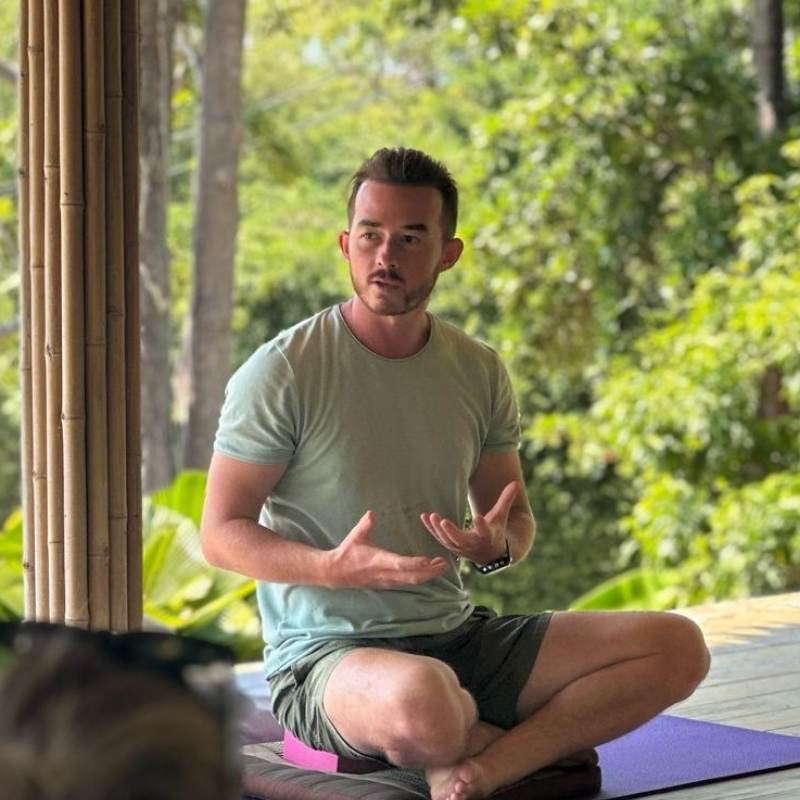
Diego is a certified breathwork facilitator, freediving instructor, and founder of Breathflow Connection. With years of experience in nervous system regulation and somatic practices, Diego helps stressed professionals find calm through simple, science-backed techniques.
Learn More →Try Our Free Interactive Tools
Start regulating your nervous system today.
Get the free 3-minute audio guide and symptom checklist. Delivered instantly.
Get Your Free ResetContinue reading

How Long Does It Take to Regulate Your Nervous System? (Timeline Guide)
Discover the realistic timeline for nervous system regulation. Week by week breakdown of what to expect from breathwork
Read More →
Body Scan Meditation for Anxiety: A Step by Step Guide That Actually Works
Learn body scan meditation for anxiety with this step by step guide. Research shows it reduces stress more than breathin
Read More →
Burnout Recovery Timeline: What to Expect Week by Week
Learn the real burnout recovery timeline. What happens week by week as your nervous system heals, and what actually spee
Read More →