Grounding Techniques for Anxiety: 10 Exercises That Work in Under 2 Minutes

Free: 3-Minute Nervous System Reset
Get the audio guide and symptom checklist that shows you exactly how to calm your nervous system in under 3 minutes. Delivered straight to your inbox.
TL;DR
Grounding techniques pull your nervous system out of the anxiety loop by engaging your senses and body. This guide covers 10 exercises you can do anywhere in under 2 minutes each. The 5 4 3 2 1 sensory method, box breathing, the physiological sigh, cold water, feet on the floor, progressive muscle release, object focus, the butterfly hug, quick body scan, and the 3 3 3 rule. A 2025 clinical study found the 5 4 3 2 1 technique alone reduced high anxiety from 23% to 4%. Pick two or three and practice them daily.
Your heart is pounding. Your thoughts are racing. You know you need to calm down but your brain will not cooperate.
Sound familiar? You are not alone. The Anxiety and Depression Association of America reports that anxiety disorders affect 40 million adults in the United States. That makes anxiety the most common mental health condition in the country. And 43% of adults reported feeling more anxious in 2024 than the year before.
Here is what most people get wrong about anxiety. They try to think their way out of it. They reason with themselves. They tell themselves to relax. But anxiety is not a thinking problem. It is a nervous system problem. Your body is stuck in threat mode, and no amount of logic will override that signal.
Grounding techniques work because they bypass your thinking brain entirely. They speak directly to your nervous system through your senses, your breath, and your body. And the best part? They take less than 2 minutes.
Why Grounding Works When Nothing Else Does
When anxiety takes over, your prefrontal cortex (the rational, decision making part of your brain) goes partially offline. Your amygdala (the brain's threat detector) takes the wheel. This is why you cannot "think" your way out of an anxiety spiral. The part of your brain responsible for clear thinking has been sidelined.
But here is what stays online: your senses. A 2025 review published in Trauma, Violence, and Abuse explains it clearly. "In either state of arousal, the cognitive resources of the individual are limited, while sensory capabilities remain intact." Your senses are the backdoor to calming your nervous system when the front door is locked.
Dr. Stephen Porges, creator of polyvagal theory, describes the mechanism. "Our nervous system is constantly evaluating risk in the environment." Grounding gives your nervous system new data. When you deliberately engage your senses, touch a cold surface, or slow your breathing, you send safety signals through your vagus nerve. Your body reads these signals and begins to shift out of fight or flight.
A December 2024 review in Medical Research Archives confirmed that grounding produces immediate regulation of heart rate, respiratory rate, and muscle tension. The researchers concluded that grounding is "a safe, accessible, and cost effective strategy for alleviating anxiety symptoms."
Why Under 2 Minutes Matters
Long exercises are great for prevention. But when anxiety hits, you need something fast. You need a technique you can use at your desk, in a meeting, in a parking lot before school pickup, or lying in bed at 2am. Every exercise below works in 2 minutes or less.
10 Grounding Techniques for Anxiety (All Under 2 Minutes)
1. The 5 4 3 2 1 Sensory Reset
Time: 1 to 2 minutes. Name 5 things you can see. Notice 4 things you can physically touch. Identify 3 things you hear. Find 2 things you can smell. Notice 1 thing you can taste.
Describe each one in detail. Not just "a wall" but "a white wall with a small crack near the ceiling." The detail forces your prefrontal cortex back online and pulls your attention into the present moment. A 2025 clinical study found this technique reduced high anxiety prevalence from 23% to just 4%.
Want a quick nervous system reset right now?
Get the free 3-minute audio guide and symptom checklist. Delivered instantly.
2. Box Breathing
Time: 1 to 2 minutes. Inhale for 4 counts. Hold for 4 counts. Exhale for 4 counts. Hold empty for 4 counts. Repeat 4 to 6 times.
This is the technique Navy SEALs use under pressure. A Stanford University study found that structured breathing exercises like this produce greater anxiety reduction than mindfulness meditation alone. The equal timing of each phase regulates your autonomic nervous system and increases heart rate variability.
3. The Physiological Sigh
Time: 30 seconds. Inhale through your nose. At the top of that breath, take a second short sniff through your nose. Then exhale slowly and completely through your mouth. Repeat 1 to 3 times.
This is the fastest technique on this list. Stanford researchers found the double inhale reinflates collapsed air sacs in your lungs, maximizing carbon dioxide release on the exhale. Your arousal level drops almost immediately. Three physiological sighs and you feel the shift.
4. Cold Water on Your Wrists
Time: 30 to 60 seconds. Run cold water over your wrists and inner forearms. Or splash cold water on your face. Hold for 30 seconds while breathing slowly.
Cold activates the mammalian dive reflex. Your heart rate drops. Your blood pressure stabilizes. Your vagus nerve fires. The shift from sympathetic to parasympathetic is almost instant. You do not need an ice bath. Cold tap water works.
5. Feet on the Floor
Time: 1 minute. Press your feet firmly into the ground. Remove your shoes if you can. Notice the temperature, texture, and pressure beneath each foot. Wiggle your toes. Push down harder. Breathe.
This works because it anchors your awareness in physical sensation. NIH research confirms that grounding through physical contact immediately stabilizes the autonomic nervous system by boosting vagal tone. You can do this under any table in any room without anyone noticing.
6. Progressive Muscle Release (Quick Version)
Time: 90 seconds. Clench both fists as tight as possible for 5 seconds. Release completely. Squeeze your shoulders up toward your ears for 5 seconds. Release. Tighten your stomach for 5 seconds. Release. Curl your toes for 5 seconds. Release. Take three slow breaths.
A 2024 systematic review of 3,402 adults across 16 countries confirmed that progressive muscle relaxation effectively reduces stress, anxiety, and depression. Your body cannot hold maximum tension and maintain an anxiety response at the same time. The release creates involuntary relaxation.
7. Object Focus
Time: 1 minute. Pick up any nearby object. A pen, a mug, your phone case. Hold it and notice its weight, temperature, texture, color, and shape. Describe each quality in your mind as if you have never seen this object before.
Want a quick nervous system reset right now?
Get the free 3-minute audio guide and symptom checklist. Delivered instantly.
This anchors you in the present by directing all your attention to a single sensory experience. It is subtle enough to use in a meeting, on the train, or in a waiting room. The focused attention pulls neural resources away from your amygdala's threat scanning.
8. The Butterfly Hug (Bilateral Tapping)
Time: 1 to 2 minutes. Cross your arms over your chest. Right hand on left shoulder, left hand on right shoulder. Tap each shoulder alternately in a slow rhythm. Left, right, left, right. Breathe slowly while tapping.
This comes from EMDR therapy. Bilateral stimulation activates communication between both brain hemispheres, which research shows deactivates the amygdala. One study found that bilateral tapping reduced anxiety symptoms after a single session. You can also tap alternate thighs instead of shoulders if that feels more comfortable.
9. Quick Body Scan
Time: 1 to 2 minutes. Close your eyes or soften your gaze. Start at the top of your head. Move your attention slowly down through your forehead, jaw, neck, shoulders, chest, stomach, hands, legs, and feet. At each area, notice any sensation without trying to change it. Breathe.
An NIH pilot study found that body scan produced an immediate decrease in anxiety with a large effect size. The goal is not to relax. The goal is to notice. Relaxation follows. This technique directly counteracts dissociation by pulling awareness back into your physical body.
10. The 3 3 3 Rule
Time: Under 1 minute. Name 3 things you see. Name 3 things you hear. Move 3 parts of your body. Wiggle your fingers, roll your shoulders, tap your feet.
This is the simplest technique on the list and the fastest to learn. It works as a rapid interrupt for mild to moderate anxiety. The combination of visual, auditory, and physical engagement pulls your awareness out of your head and into the present moment in under 60 seconds.
How to Choose the Right Technique for Your Situation
Not every technique works equally well in every situation. Here is a quick guide.
At your desk or in a meeting: Object focus, feet on the floor, box breathing, or the 3 3 3 rule. These are invisible to everyone around you.
During a panic spiral: The physiological sigh, cold water, or the 5 4 3 2 1 method. These produce the fastest nervous system shift.
In bed at night: Quick body scan, box breathing, or progressive muscle release. These calm your body without requiring you to move.
Feeling disconnected or numb: Cold water, feet on the floor, or bilateral tapping. Physical sensation brings you back into your body when you feel checked out.
The most important thing is not which technique you pick. It is that you practice it before you need it. Grounding works best when the pathways are already established. Practice two or three of these techniques daily in calm moments. Then when anxiety strikes, your body already knows what to do.
A Note from Diego
I teach breathwork and nervous system regulation every day. And I still use grounding techniques myself. Not because I have it all figured out. Because the nervous system needs consistent input.
The technique that changed everything for me was the simplest one. Feet on the floor. When I notice my mind racing or my chest tightening, I press my bare feet into the ground and breathe. Ten seconds. That is often enough to interrupt the pattern.
You do not need to master all ten techniques. Pick two that resonate with you. Practice them today. Practice them tomorrow. Within a week, your body will start reaching for them automatically. That is when the real shift happens.
If you want a guided starting point, grab the free 3 minute nervous system reset. It walks you through a breathing technique and gives you a symptom checklist so you can track your progress. And if you are ready for a structured daily practice, the 7 Day Nervous System Reset builds on everything in this article with daily guided sessions.
Frequently Asked Questions
What is the most effective grounding technique for anxiety?
The 5 4 3 2 1 sensory technique and box breathing have the most research support for general anxiety. A 2025 clinical study found the 5 4 3 2 1 method reduced high anxiety prevalence from 23% to 4%. For the fastest relief, the physiological sigh works in under 30 seconds. The best technique is the one you will actually use consistently. Practice two or three in calm moments so they are automatic when anxiety hits.
How long do grounding techniques take to work?
Some techniques produce immediate changes within seconds. Cold water activates the dive reflex instantly. The physiological sigh reduces arousal in under 30 seconds. Box breathing calms the nervous system within 60 to 90 seconds. Full relief from an anxiety episode may take 5 to 20 minutes as your nervous system completes its shift from sympathetic to parasympathetic mode. Long term benefits come from daily practice over several weeks.
Can grounding techniques stop a panic attack?
Grounding techniques are most effective when used early in a panic cycle before the peak of the attack. They interrupt the feedback loop between anxious thoughts and physical symptoms. Cold water, box breathing, and the 5 4 3 2 1 technique are recommended during panic attacks in clinical settings. During the peak of a full panic attack, these techniques may not stop it completely but can reduce its intensity and shorten its duration.
What is the 5 4 3 2 1 grounding method?
The 5 4 3 2 1 method is a sensory grounding technique that anchors you in the present moment by engaging all five senses. You name 5 things you see, 4 things you can touch, 3 things you hear, 2 things you smell, and 1 thing you taste. It works by engaging your prefrontal cortex to override the amygdala, your brain's anxiety alarm. The structured countdown prevents your mind from spiraling into worry.
Do grounding techniques work for everyone?
Grounding is safe and beneficial for most people with everyday anxiety. For people with severe trauma or dissociation, some techniques like body scan can initially increase distress by drawing attention to overwhelming physical sensations. In those cases, start with external focus techniques like the 5 4 3 2 1 method or cold water. Anyone with persistent or debilitating anxiety should use grounding alongside professional mental health support.
How often should you practice grounding techniques?
Practice daily, not only during anxiety episodes. Techniques work best when they become automatic through regular use. Even 2 to 5 minutes of daily practice builds the neural pathways you need during a crisis. Think of it like training. You build the skill in calm moments so it is available under stress. For acute anxiety, use techniques as needed throughout the day.
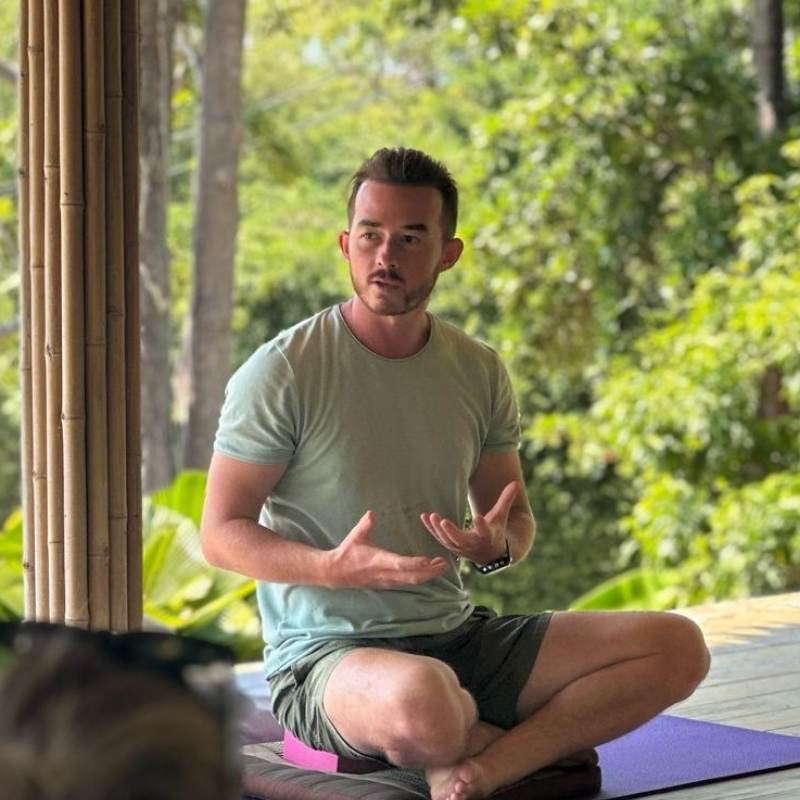
About Diego Pauel
Diego is a certified breathwork facilitator, freediving instructor, and founder of Breathflow Connection. With years of experience in nervous system regulation and somatic practices, Diego helps stressed professionals find calm through simple, science-backed techniques.
Learn More →Try Our Free Interactive Tools
Start regulating your nervous system today.
Get the free 3-minute audio guide and symptom checklist. Delivered instantly.
Get Your Free ResetContinue reading

The 4 Trauma Responses Explained: Fight, Flight, Freeze, and Fawn
Learn the 4 trauma responses: fight, flight, freeze, and fawn. Discover your dominant pattern and practices to regulate
Read More →
Breathwork for Beginners: Your Step by Step Guide to Anxiety Relief
Learn breathwork for beginners with this step by step guide to anxiety relief. Four proven techniques, common mistakes,
Read More →
Nervous System Reset for Sleep: Your Complete Bedtime Routine
A complete 90 minute bedtime routine to reset your nervous system for deep sleep. Breathwork, light science, and tempera
Read More →