Nervous System Regulation for Beginners: Where to Start When Everything Feels Overwhelming

Free: 3-Minute Nervous System Reset
Get the audio guide and symptom checklist that shows you exactly how to calm your nervous system in under 3 minutes. Delivered straight to your inbox.
TL;DR
Nervous system regulation means teaching your body to shift between stress and calm more easily. You do not need a therapist, meditation retreat, or hours of daily practice to start. The most effective beginner technique takes 5 minutes per day. This guide shows you exactly where to start, what to do first, and how to build a practice that sticks when everything else has not.
You know something is off. You feel wired but exhausted. Anxious but unmotivated. Stressed about everything and unable to do anything about it.
You have probably tried things. A meditation app. Deep breathing when someone told you to "just relax." Maybe yoga for a few weeks before life got in the way. None of it stuck.
Here is what nobody told you. The problem is not your willpower. The problem is that nobody taught you how your nervous system works.
The American Psychiatric Association found that 43% of American adults felt more anxious in 2024 than the year before. The APA Stress in America survey revealed something even more telling: 36% of adults said they do not know where to begin managing their stress. And a 2024 DHR Global survey of white collar workers found that 82% are at risk of burnout.
You are not alone in feeling overwhelmed. And you are not alone in not knowing where to start. This guide fixes that.
What Nervous System Regulation Actually Means
Your autonomic nervous system runs in the background of everything you do. It controls your heart rate, breathing, digestion, sleep, and stress response. You do not choose when it activates. It responds to signals from your body and environment automatically.
Regulation does not mean being calm all the time. That is a common misconception that stops people from starting. Regulation means your nervous system can move between states flexibly. You can ramp up when you need energy and come back down when the challenge passes.
Dr. Stephen Porges, the neuroscientist who created polyvagal theory, explains that "our nervous system is always trying to figure out a way for us to survive, to be safe." When it works properly, it responds to real threats and returns to baseline. When it is dysregulated, it stays stuck in protection mode even when you are objectively safe.
Dr. Andrew Huberman, neuroscientist at Stanford, puts it more directly: "Most people are taught how to drive a car. Most people are not taught how to drive their nervous system."
That is what regulation is. Learning to drive the system that already runs your entire body.
The Three States Your Nervous System Moves Between
Your autonomic nervous system operates in three primary states. Understanding these changes everything about how you approach stress.
Ventral vagal (safe and social). This is your optimal state. You feel present. You can think clearly, connect with people, and handle challenges without spiraling. Your heart rate is steady. Your breathing is deep and easy. You feel like yourself.
Sympathetic (fight or flight). This is your activation state. Your heart races. Your muscles tense. Your breathing gets shallow. You feel anxious, irritable, or unable to sit still. This is useful for genuine emergencies. It becomes a problem when it stays on for hours, days, or weeks. For a deeper look at this state, see our guide on how to move out of fight or flight.
Dorsal vagal (freeze or shutdown). This is your collapse state. You feel numb, exhausted, disconnected, or unable to move. Everything feels like too much effort. This is your nervous system pulling the emergency brake when it decides the threat is too big to fight or flee. Learn more about this in our freeze response vs shutdown guide.
Deb Dana, a polyvagal therapist and consultant at the Polyvagal Institute, emphasizes that "we all benefit when we have a basic understanding of the ways the nervous system works and learn how to become active operators of this essential system."
Most people reading this are stuck in sympathetic mode, dorsal vagal mode, or swinging between both. That is dysregulation. And if you want to understand the full symptom picture, our nervous system dysregulation checklist walks through every sign.
What "Regulation" Looks Like in Practice
Regulation is not about eliminating stress. It is about recovery speed.
A regulated nervous system gets stressed, handles it, and comes back down. An argument at work rattles you for 20 minutes, not 3 days. A bad night of sleep makes you tired, not panicked. A busy week leaves you needing rest, not collapse.
You are not trying to become a person who never feels stressed. You are training your nervous system to bounce back faster. And that training is more accessible than you think.
Want a quick nervous system reset right now?
Get the free 3-minute audio guide and symptom checklist. Delivered instantly.
Why Most Beginners Quit Before It Works
Before we get to the actual practices, you need to understand why most wellness approaches fail. Not because they do not work. Because the approach is wrong from the start.
Research shows that 30% to 50% of people who start a meditation practice through an app quit within 8 weeks. Only 1 in 5 people who download a meditation app use it weekly. The dropout rate climbs to nearly 50% in programs with no human guidance or feedback.
The reasons are predictable. People start too big (30 minute sessions), expect results too fast (instant calm), and choose techniques that do not match their nervous system state (trying to meditate while in fight or flight).
Here is the critical insight. If your nervous system is activated, sitting still and trying to clear your mind can actually make you feel worse. Your body is screaming "danger" and you are asking it to do nothing. That creates internal conflict, not peace.
Nervous system regulation works differently. You start where your body is, not where you want it to be. You use techniques that match your current state. And the most effective starting technique takes 5 minutes, not 30.
The 2023 Stanford study published in Cell Reports Medicine confirmed this. Just 5 minutes per day of structured breathing (cyclic sighing) improved mood and reduced anxiety more effectively than mindfulness meditation over a 30 day period. All breathing groups in the study outperformed the meditation group.
You do not need to build a huge new habit. You need the right tiny one.
The 5 Step Starting Path for Complete Beginners
This is the exact sequence that works for people who have tried everything and nothing stuck. Each step builds on the last. Do not skip ahead.
Step 1: Learn to Notice Your Current State
Before you can regulate your nervous system, you need to know which state you are in. This is the foundation that most guides skip entirely.
Three times per day, pause and ask yourself one question: "Am I activated, shutdown, or okay right now?"
Signs you are activated (sympathetic). Your heart is beating fast. Your jaw is clenched. Your breathing is shallow. You feel restless, anxious, or irritable. Your thoughts are racing.
Signs you are shutdown (dorsal vagal). You feel heavy. Everything takes effort. You want to hide or withdraw. Your brain feels foggy. You feel disconnected from yourself or others.
Signs you are regulated (ventral vagal). You feel present. Your breathing is easy. You can focus. You feel connected. Challenges feel manageable.
You do not need to fix anything in this step. Just notice. Do this for 3 to 5 days before adding any practice. Awareness itself begins the process of regulation because it engages the prefrontal cortex, which helps modulate autonomic responses.
For a detailed look at what each state feels like, see our polyvagal theory explained simply guide.
Step 2: Start With the Physiological Sigh (The Fastest Reset)
This is the single best starting technique for nervous system regulation. It works in under 60 seconds. You can do it anywhere. And it has the strongest research backing of any quick regulation technique.
How to do it. Take a quick inhale through your nose. Before you exhale, take a second smaller inhale through your nose (a "top off" breath). Then exhale slowly through your mouth for as long as feels comfortable.
That is one cycle. Do 2 to 3 cycles when you notice yourself activated.
The double inhale opens your lung's alveoli (the tiny air sacs), which increases CO2 offloading on the exhale. This directly calms the sympathetic nervous system. The long exhale stimulates the vagus nerve, which activates your parasympathetic (rest and recovery) response.
Want a quick nervous system reset right now?
Get the free 3-minute audio guide and symptom checklist. Delivered instantly.
This is not a breathing exercise you have to set time aside for. It is an emergency tool you use in the moment. Stressed in a meeting? Two physiological sighs. Can not fall asleep? Three physiological sighs. Overwhelmed by your inbox? Pause. Sigh. Continue.
Practice this for one week before moving to Step 3. Use it every time you notice activation from Step 1. For more on how breathing techniques compare, see our box breathing vs 4 7 8 comparison guide.
Step 3: Add One Grounding Practice
Once the physiological sigh becomes automatic (usually after a week), add one grounding technique. Grounding pulls you into the present moment through your senses. It works especially well when your nervous system is cycling between activation and shutdown.
Pick one of these and use it once per day.
Cold water on the face. Splash cold water on your face or hold a cold cloth against your cheeks and forehead for 30 seconds. This triggers the mammalian dive reflex, which directly activates the vagus nerve and slows your heart rate. It works in under a minute.
Feet on the ground. Stand barefoot on a solid surface. Press your feet into the floor. Notice the temperature, texture, and pressure. Spend 60 seconds paying attention to what your feet feel. This engages interoception (internal body awareness), which Deb Dana identifies as a core regulatory resource.
5 4 3 2 1 sensory check. Notice 5 things you see, 4 you hear, 3 you can touch, 2 you smell, 1 you taste. This redirects your brain from internal threat scanning to present moment awareness. It takes about 2 minutes.
Our grounding techniques for anxiety guide covers 10 more options if none of these resonate.
Step 4: Build a 5 Minute Daily Practice
After 2 weeks of Steps 1 through 3, you are ready for a daily practice. Not 20 minutes. Not 30. Five minutes.
Research consistently shows that 5 minutes of structured breathing produces measurable nervous system shifts. The Stanford cyclic sighing study used 5 minute daily sessions. A 2024 Frontiers in Psychology systematic review confirmed that brief breathing techniques produce significant, measurable reductions in anxiety within a single session.
Choose one of these 5 minute practices.
Extended exhale breathing. Inhale for 4 counts. Exhale for 6 to 8 counts. Repeat for 5 minutes. The longer exhale directly stimulates parasympathetic activity. This is the simplest daily practice and the one most people stick with.
Cyclic sighing. The physiological sigh from Step 2, repeated continuously for 5 minutes. Double inhale through the nose, long exhale through the mouth. This is the technique from the Stanford study and has the most robust research support.
Vagal toning breathwork. Inhale through your nose for 4 counts. Exhale while humming for 6 to 8 counts. The vibration from humming directly stimulates the vagus nerve through your vocal folds. A pilot study found that humming during exhalation produced the lowest stress index of any breathing pattern tested, lower even than the stress index measured during sleep.
Pair your practice with something you already do. After your morning coffee. Before you start work. In the car after parking (before going inside). Research on habit formation shows that pairing a new behavior with an existing routine reduces abandonment risk by 40% to 56%.
For a complete beginner guide to breathwork techniques, see our breathwork for beginners article.
Step 5: Track Without Obsessing
After a month of daily practice, check in with yourself honestly.
Do not track metrics. Do not buy an HRV monitor yet. Just answer these questions once per week.
Do I recover from stressful moments faster than a month ago? Am I sleeping better or falling asleep more easily? Do small annoyances bother me less? Can I catch myself when I am getting activated, before it spirals?
If any of those answers trend positive, your nervous system is regulating. Keep going.
If nothing has shifted after 4 consistent weeks, change the technique (not the approach). Try a different breathing pattern or grounding practice. The principle is the same. The specific method might need adjustment.
For a detailed look at what to expect as your nervous system heals, read our signs your nervous system is healing guide. And when you are ready for biometric tracking, our HRV tracking for beginners article explains how to use heart rate variability data without getting overwhelmed by it.
What to Expect in Your First 30 Days
Your nervous system does not reset overnight. But the timeline is faster than most people expect.
Days 1 to 7. You learn to notice your states. The physiological sigh starts to feel natural. You may notice you have been activated all day without realizing it. This awareness is the first sign of progress.
Days 8 to 14. You add grounding. The combination of breath and body awareness begins creating small windows of calm during your day. These windows may only last a few minutes. That is normal and significant.
Days 15 to 21. Your daily practice becomes a habit. You start catching activation earlier. Instead of realizing you have been stressed for 3 hours, you notice it within 20 minutes and use your tools. This is where most people feel the first real shift.
Days 22 to 30. Your baseline starts to change. You are not just recovering from stress faster. You are getting activated less easily. Sleep improves. Reactions feel more proportional. You have more space between a trigger and your response.
This is not a promise. This is the pattern reported across the research and across Diego's client work. Your timeline may be shorter or longer depending on how long your nervous system has been dysregulated and what you are currently dealing with. For a detailed recovery timeline specific to burnout, see our burnout recovery timeline guide.
A Note from Diego
When people ask me where to start, I always say the same thing. Start with noticing.
Most people who come to me have spent years trying to outthink their stress. More information. More strategies. More understanding. But the nervous system does not respond to understanding. It responds to experience.
The moment you pause and feel what is happening in your body right now, that is regulation. That single act of turning attention inward sends a signal of safety. You are saying to your nervous system: I am here. I am paying attention. I am not running from what I feel.
You do not need to be good at this. You do not need to feel calm. You just need to start paying attention. Everything else builds from that.
If you want a guided starting point, the free 3 minute nervous system reset walks you through your first regulation practice. And when you are ready for a structured daily program, the 7 Day Nervous System Reset gives you exactly what to do each day, with audio guidance, so you do not have to figure it out alone.
Frequently Asked Questions
What does "nervous system regulation" actually mean?
Nervous system regulation is your body's ability to shift between stress and calm appropriately. A regulated nervous system responds to real threats and returns to baseline afterward. A dysregulated nervous system stays stuck in stress mode (fight or flight) or shutdown mode (freeze) even when there is no actual danger. Regulation does not mean being calm all the time. It means recovering from activation faster and not getting triggered as easily over time. The practices in this guide train your nervous system to make these shifts more smoothly.
Do I need a therapist to regulate my nervous system?
For basic regulation, no. The self guided practices in this article (breathing techniques, grounding exercises, and state awareness) are effective starting points that most people can do independently. The Stanford cyclic sighing study demonstrated significant results with just 5 minutes of daily practice and no therapist involvement. However, if you have experienced trauma, if your dysregulation is severe, or if self guided practices consistently make you feel worse, working with a somatic therapist or polyvagal informed clinician can accelerate your progress and provide safety during the process.
What if breathing exercises make me feel more anxious?
This is more common than people realize and does not mean breathwork is wrong for you. It usually means you are breathing too forcefully, holding the breath when it creates tension, or trying a technique that does not match your current state. Start with the gentlest option: extended exhale breathing with no holds (inhale 4 counts, exhale 6 counts). Keep the breathing quiet and effortless. If counting feels stressful, drop the counts and focus only on making your exhale slightly longer than your inhale. If any technique consistently increases anxiety after several attempts, switch to a grounding practice like cold water on the face instead.
How long does it take to see results from nervous system regulation?
Most people notice subtle shifts within the first week of consistent practice. The physiological sigh produces immediate calming within 30 to 60 seconds of use. Daily 5 minute breathing practices show measurable changes in heart rate variability and reported anxiety within 2 to 4 weeks. Deeper baseline shifts, where your default state becomes calmer and you get activated less easily, typically develop over 4 to 12 weeks. The timeline depends on how long your nervous system has been dysregulated, your current stress load, and how consistently you practice. For a detailed timeline, see our regulation timeline guide.
Is nervous system regulation the same as meditation?
No. Meditation is one of many tools that can support nervous system regulation, but they are not the same thing. Meditation primarily works through attention training and cognitive awareness. Nervous system regulation works directly through the body, specifically through the vagus nerve and autonomic nervous system. Breathwork, cold exposure, movement, and grounding practices all regulate the nervous system without requiring you to sit still and observe your thoughts. The Stanford study found that structured breathing outperformed mindfulness meditation for reducing physiological stress markers. Many people who struggle with meditation find nervous system regulation practices much more accessible.
I feel too overwhelmed to start any new practice. What do I do?
Start with Step 1 only: noticing. Three times per day, pause for 10 seconds and ask "Am I activated, shutdown, or okay right now?" You do not need to do anything about the answer. Just notice. This takes less than a minute per day and requires zero energy. Awareness itself begins the regulatory process because it engages your prefrontal cortex. After a few days of noticing, add one physiological sigh per day (two breaths, takes 15 seconds). Build from there. The path out of overwhelm is through tiny, almost invisible steps. Not through adding another big commitment to your already full plate.
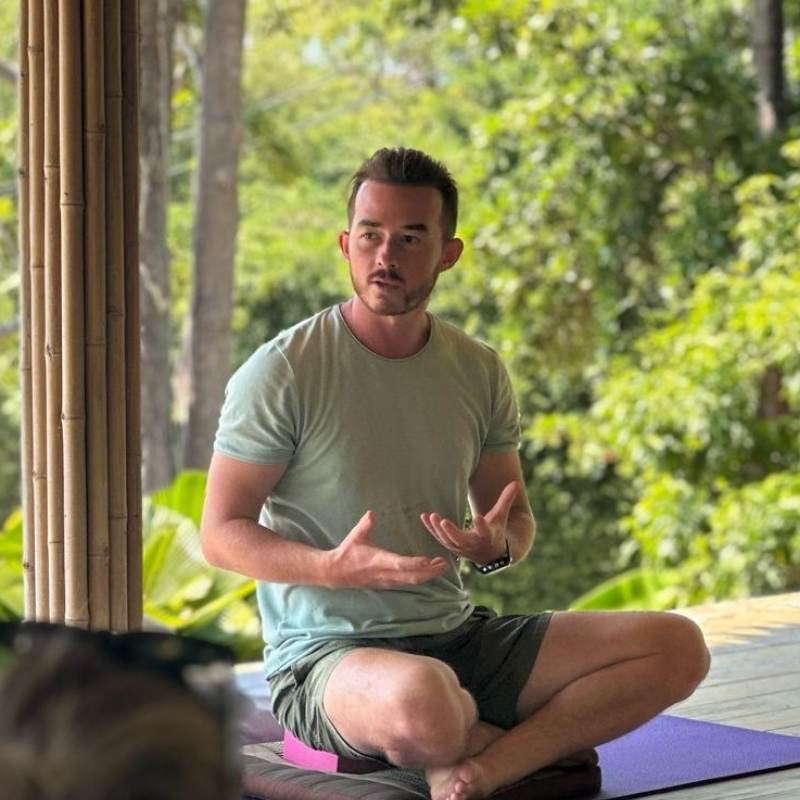
About Diego Pauel
Diego is a certified breathwork facilitator, freediving instructor, and founder of Breathflow Connection. With years of experience in nervous system regulation and somatic practices, Diego helps stressed professionals find calm through simple, science-backed techniques.
Learn More →Try Our Free Interactive Tools
Start regulating your nervous system today.
Get the free 3-minute audio guide and symptom checklist. Delivered instantly.
Get Your Free ResetContinue reading

Tired But Wired? Why You Can't Sleep (And How to Fix It Tonight)
Discover why you feel tired but wired at night and can't sleep. Learn science backed techniques to calm your nervous sys
Read More →
High Cortisol in Women: Symptoms, Causes, and How to Lower It Naturally
High cortisol symptoms in women include weight gain, irregular periods, hair thinning, and anxiety. Learn natural ways t
Read More →
Nervous System Reset Exercises You Can Do at Your Desk: 6 Techniques for Instant Calm
Six nervous system reset exercises you can do at your desk without anyone noticing. Science backed techniques for instan
Read More →