Why Anxiety Gets Worse at Night (And What Your Nervous System Needs)
Free: 3-Minute Nervous System Reset
Get the audio guide and symptom checklist that shows you exactly how to calm your nervous system in under 3 minutes. Delivered straight to your inbox.
TL;DR
Nighttime anxiety is not random. Your nervous system keeps cortisol elevated when it should be dropping, your brain processes unresolved threats once distractions disappear, and screen use keeps your sympathetic system locked on. The fix is an evening wind down routine that sends direct safety signals to your nervous system. Practices like 4 7 8 breathing, legs up the wall, and cold water face exposure calm your system within minutes. Most people notice better sleep within 1 to 2 weeks of consistent practice.
The day was fine. Busy, stressful maybe, but manageable. Then 9pm hits and your chest tightens. Your thoughts start spiraling. Suddenly everything feels urgent and overwhelming.
You are not imagining it. Anxiety genuinely gets worse at night for biological reasons your nervous system controls.
A 2024 study published in the Journal of Affective Disorders found that 74% of adults with generalized anxiety report their worst symptoms occur in the evening and nighttime hours. Your nervous system operates on a rhythm, and when that rhythm breaks down, nights become the hardest part of your day.
If you have read our guide on the tired but wired pattern, you already understand how sympathetic activation blocks sleep. This article goes deeper into the "why" behind nighttime anxiety and gives you specific practices to address each cause.
The Cortisol and Melatonin Crossover Explained
Your body runs on a hormonal rhythm called the circadian cycle. Two hormones control your energy and sleep: cortisol and melatonin. Cortisol peaks in the morning, giving you energy, then gradually declines. By evening it reaches its lowest point. As cortisol drops, melatonin rises, signaling your body and brain to power down.
This crossover is supposed to happen smoothly around 8pm to 9pm. You feel naturally tired. Your thoughts slow. Sleep comes easily.
What Happens When the Crossover Fails
Chronic stress breaks this rhythm. When your nervous system stays in fight or flight mode all day, cortisol does not drop the way it should. Instead of a gradual decline, your cortisol stays elevated or even spikes in the evening.
Dr. Matthew Walker, neuroscientist and author of Why We Sleep, explains: "Elevated evening cortisol is one of the most reliable biomarkers of chronic stress. It directly suppresses melatonin production and keeps the brain in a state of vigilance incompatible with sleep."
A 2025 study in Psychoneuroendocrinology found that adults with chronic stress showed cortisol levels 40% higher than normal during evening hours. Their melatonin production was delayed by an average of 90 minutes. The result: anxiety that peaks right when you want to wind down.
This is why you can feel exhausted all day but suddenly alert and anxious at bedtime. Your hormones are out of sync. Your nervous system is telling your brain it is still daytime, still dangerous, still time to stay alert.
Why Your Brain Gets Louder When Everything Gets Quiet
During the day, your brain stays busy. Work tasks, conversations, notifications, errands. Your anxiety is still there, but distractions keep it in the background. Then you lie down. The room goes dark. The noise stops. And your brain does what it has been waiting to do all day: process everything you ignored.
The Default Mode Network Takes Over
Neuroscience calls this the default mode network. It activates when you are not focused on external tasks, handling self reflection, future planning, and threat assessment.
In a regulated nervous system, this network reviews the day calmly. In a dysregulated system, it goes into overdrive. Every unresolved problem, every unanswered email, every awkward interaction becomes urgent. This is why you suddenly remember something embarrassing from three years ago at 11pm. A dysregulated nervous system cannot distinguish between a real danger and a social worry.
Want a quick nervous system reset right now?
Get the free 3-minute audio guide and symptom checklist. Delivered instantly.
Unprocessed Stress Surfaces at Night
When you push through stress all day without pausing to process it, the stress accumulates. Your body stores it as tension. Your mind stores it as unfinished business. At night, with no distractions left, all of it surfaces at once. People who describe themselves as "fine during the day" often experience their worst anxiety at night. They are just too busy to notice until the busyness stops.
How Screens Keep Your Stress Response Locked On
You already know screens before bed are bad for sleep. But the problem goes far deeper than blue light.
Research from the National Sleep Foundation (2024) found that 82% of adults use a screen within 30 minutes of bedtime. Among those who report nighttime anxiety, the number rises to 91%.
Blue Light Suppresses Your Sleep Hormone
Blue light from phones, tablets, and laptops suppresses melatonin production by up to 50%, according to research from Harvard Medical School. Even 30 minutes of screen exposure in the hour before bed delays melatonin release significantly.
But blue light blockers do not solve the whole problem. The content itself matters just as much.
Content Activates Your Sympathetic System
Scrolling social media, reading news, watching intense shows, and checking work emails all activate your sympathetic nervous system. Each piece of content requires a micro decision: Is this a threat? Do I need to respond? Your nervous system does not know the difference between a stressful email and a stressful situation. It responds to both with cortisol and adrenaline. By the time you put the phone down, your stress system has been running for another hour past when you should have started winding down.
This is one of the primary drivers of the tired but wired pattern. Your body is exhausted but your nervous system just finished processing dozens of stimulating inputs.
The Evening Cortisol Spike in Dysregulated Systems
There is a specific phenomenon that affects people with chronic stress. Instead of a gradual cortisol decline, they experience an actual cortisol spike in the evening. Cortisol actively rises between 8pm and 11pm, creating a second wave of alertness and anxiety right at bedtime.
Why This Happens
Your HPA axis (hypothalamic pituitary adrenal axis) controls cortisol release. Under chronic stress, this axis loses its normal rhythm and starts producing cortisol at irregular times. For some people, the evening spike happens because their daytime cortisol was too low and their body compensates later. For others, evening is when accumulated stress finally triggers a fresh cortisol release.
Dr. Rangan Chatterjee, physician and author, notes: "Many of my patients with nighttime anxiety show a clear pattern of reversed cortisol rhythms. Their bodies produce the most cortisol at the worst possible time, right when they need to sleep."
The Feedback Loop
The cortisol spike reinforces sympathetic activation. Your body receives a fresh dose of stress hormone and interprets it as danger. Cortisol triggers anxiety. Anxiety triggers more cortisol. Without intervention, this loop runs until your body is too exhausted to maintain it, which is why some people do not fall asleep until 1am or 2am despite going to bed hours earlier.
Breaking this loop requires practices that actively shift your autonomic state, not just environmental changes like a dark room.
Evening Practices That Calm Your Nervous System
These are not generic sleep tips. Each practice directly targets your autonomic nervous system and shifts it toward parasympathetic activation. Use them in the order listed for the best results.
Want a quick nervous system reset right now?
Get the free 3-minute audio guide and symptom checklist. Delivered instantly.
Legs Up the Wall (10 Minutes)
Lie on your back with your legs extended up against a wall. Your body forms an L shape. Stay here for 10 minutes.
This position increases venous return to the heart, which triggers baroreceptors that signal your vagus nerve to slow your heart rate. It also releases stored tension in the hamstrings and lower back. Many people feel a noticeable shift from anxious to calm within 3 to 5 minutes. Combine this with slow breathing for an even stronger effect.
4 7 8 Breathing (5 Minutes)
Inhale through your nose for 4 counts. Hold your breath for 7 counts. Exhale slowly through your mouth for 8 counts. Repeat for 4 to 8 rounds.
The extended exhale is the key. Exhalation activates the parasympathetic branch of your nervous system through the vagus nerve. The hold builds mild CO2 tolerance, which has a calming effect. This technique is particularly effective for the evening cortisol spike because it directly counters sympathetic activation.
For a detailed comparison of breathing techniques, see our guide on box breathing vs 4 7 8 breathing.
Progressive Muscle Relaxation (10 to 15 Minutes)
Start at your feet. Tense the muscles tightly for 5 seconds. Release completely. Notice the contrast between tension and relaxation. Move upward through your calves, thighs, abdomen, chest, arms, shoulders, and face.
Your nervous system monitors your muscles for signs of danger. Tense muscles signal threat. Relaxed muscles signal safety. By systematically releasing every muscle group, you send a full body safety signal to your brain. Research in Behaviour Research and Therapy (2024) found that progressive muscle relaxation reduced evening cortisol by 23% when practiced consistently for two weeks. This is one of the strongest somatic practices for nighttime anxiety.
Cold Water Face Wash
Splash cold water on your face for 15 to 30 seconds, focusing on the area around your eyes, cheeks, and forehead. This triggers the mammalian dive reflex. Your heart rate drops. Your nervous system shifts rapidly into parasympathetic mode.
Do this about 30 minutes before bed, not right before. The initial cold exposure is mildly activating before the deep calm sets in. Give your body time to settle into the parasympathetic response.
Building a Nervous System Wind Down Routine
Individual techniques help. But a consistent routine trains your nervous system to expect and prepare for sleep. Over time, your body begins the wind down process automatically.
The Two Hour Wind Down
Two hours before bed: Dim the lights in your home. Switch to lamps, candles, or low wattage bulbs. This allows melatonin production to begin naturally.
One hour before bed: Turn off all screens. No exceptions. Your nervous system needs a full hour without digital stimulation to begin its transition. Read a physical book. Have a quiet conversation. Do gentle stretching.
Thirty minutes before bed: Practice your nervous system techniques. Legs up the wall, followed by 4 7 8 breathing. Cold water face wash. Progressive muscle relaxation in bed.
In bed: If your mind still races, do a body scan. Start at your toes and move slowly upward, noticing sensation in each area without judgment. This occupies your default mode network with something other than threat scanning.
Why Consistency Matters More Than Perfection
Your nervous system learns through repetition. When you follow the same wind down routine every night, your brain begins associating those cues with safety and sleep. After two to three weeks, simply dimming the lights may start triggering your parasympathetic response automatically.
You do not need to do everything perfectly every night. Skipping screens for 45 minutes instead of a full hour still helps. Doing 3 rounds of breathing instead of 8 still shifts your nervous system. Progress over perfection. Regulation is a gradual process, not an overnight fix.
A Note from Diego
For years, nighttime was the hardest part of my day. I could handle anything during daylight. Teaching freediving classes, managing stress, staying productive. But the moment I got into bed, my mind would replay conversations, worry about finances, and spiral through everything I forgot to do.
What changed everything was understanding that my nervous system was not broken. It was doing exactly what a dysregulated system does. It was trying to protect me from threats that did not exist anymore.
The evening routine I shared in this article is the same one I use. Legs up the wall while watching the sunset here in Koh Samui. 4 7 8 breathing on my balcony. No phone after 8pm. Cold water on my face. It sounds simple because it is. But simple does not mean easy. It took me weeks to stick with it.
If your nights are hard right now, know that this changes. Your nervous system can relearn how to feel safe in the quiet.
Start tonight. Even one practice makes a difference. And if you want a structured approach, the free nervous system reset guide walks you through the basics. For a full program, the 7 Day Nervous System Reset includes a complete evening protocol designed specifically for nighttime anxiety.
Frequently Asked Questions
Why does anxiety get worse at night?
At night, the distractions that kept your mind busy during the day disappear. Your brain finally has space to process unresolved stress and perceived threats. At the same time, a dysregulated nervous system keeps cortisol elevated when it should be dropping. This combination of fewer distractions and hormonal disruption creates a perfect storm for nighttime anxiety.
How do I calm my nervous system before bed?
Start dimming lights two hours before bed. One hour before, turn off all screens. Practice 4 7 8 breathing for 5 minutes. Try legs up the wall for 10 minutes to activate your parasympathetic system. Splash cold water on your face to trigger the dive reflex. These practices send direct safety signals to your nervous system and lower cortisol.
Is nighttime anxiety a sign of nervous system dysregulation?
Yes. Nighttime anxiety is one of the most common signs that your nervous system is stuck in sympathetic activation. A regulated nervous system naturally shifts into parasympathetic mode as evening approaches. When that transition fails and you feel wired or anxious at bedtime, your autonomic nervous system has lost the ability to downshift on its own.
Why do I get anxious when I try to fall asleep?
Lying in bed removes all external stimulation. Your mind, which spent all day reacting to tasks and notifications, suddenly has nothing to focus on. Unprocessed stress from the day surfaces as racing thoughts. Your nervous system interprets this quiet moment as an opportunity to scan for threats. This is why specific breathing and body based techniques work better than simply trying to relax.
Does screen time before bed make anxiety worse?
Yes. Screens emit blue light that suppresses melatonin production by up to 50%. Beyond the light itself, social media and news content activate your sympathetic nervous system. Your brain processes each notification, comment, or headline as something requiring a response. This keeps your stress system engaged right up until the moment you try to sleep.
What is the best breathing technique for nighttime anxiety?
The 4 7 8 breathing technique is the most effective for nighttime anxiety. Inhale for 4 counts, hold for 7 counts, exhale for 8 counts. The extended exhale activates your vagus nerve and triggers parasympathetic activation. Do 4 to 8 rounds in bed. Many people fall asleep before completing the full sequence.
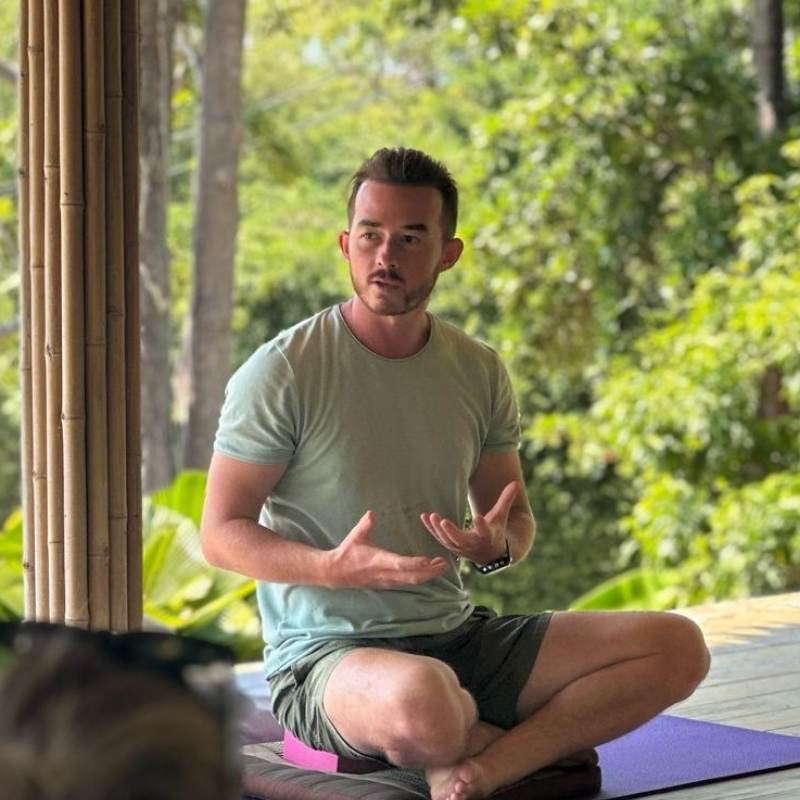
About Diego Pauel
Diego is a certified breathwork facilitator, freediving instructor, and founder of Breathflow Connection. With years of experience in nervous system regulation and somatic practices, Diego helps stressed professionals find calm through simple, science-backed techniques.
Learn More →Try Our Free Interactive Tools
Start regulating your nervous system today.
Get the free 3-minute audio guide and symptom checklist. Delivered instantly.
Get Your Free ResetContinue reading
What Causes Nervous System Dysregulation? 7 Root Causes Explained
Nervous system dysregulation has 7 root causes. Learn why chronic stress, trauma, poor sleep, and lifestyle factors keep
Read More →
Tired But Wired? Why You Can't Sleep (And How to Fix It Tonight)
Discover why you feel tired but wired at night and can't sleep. Learn science backed techniques to calm your nervous sys
Read More →
How to Stop an Anxiety Spiral: 5 Steps to Break the Loop Before It Takes Over
Learn how to stop an anxiety spiral with 5 research-backed steps. Break the thought-body loop fast and prevent spirals f
Read More →