Body Scan Meditation for Anxiety: A Step by Step Guide That Actually Works
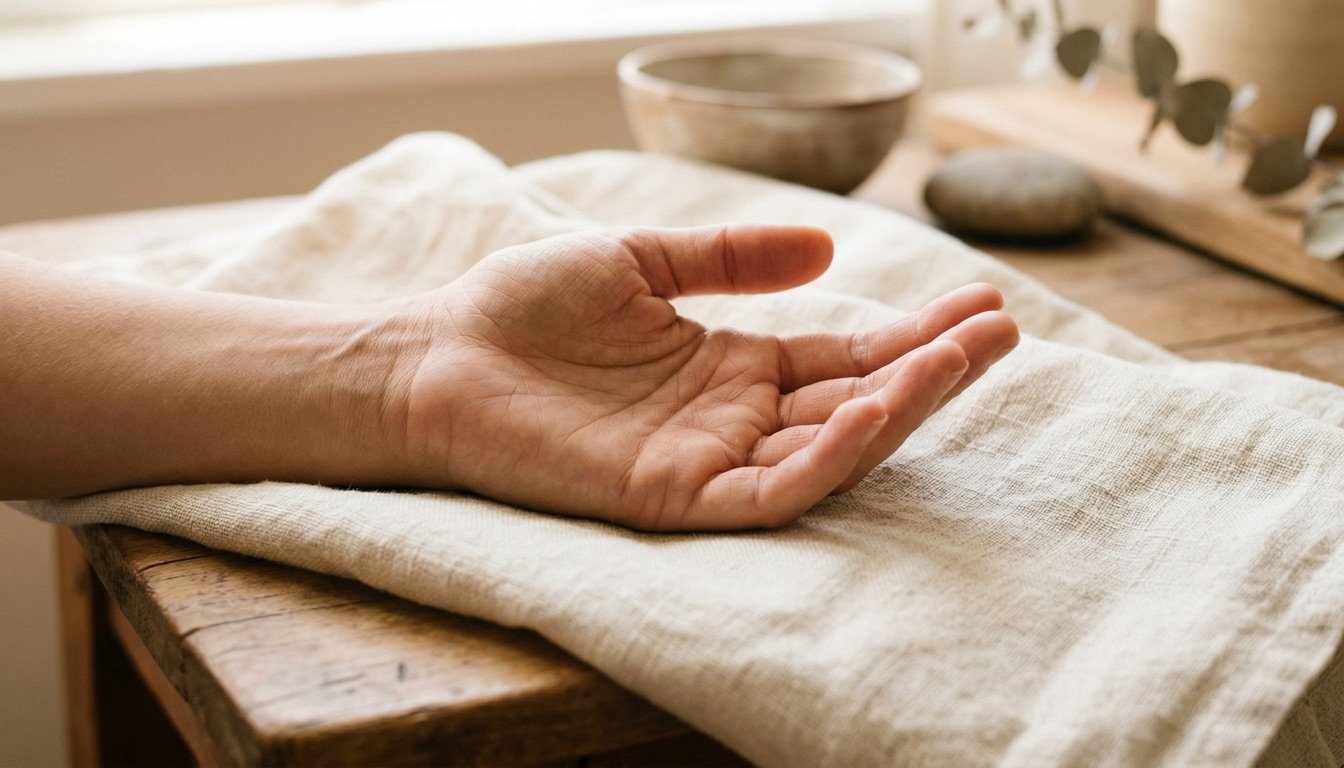
Free: 3-Minute Nervous System Reset
Get the audio guide and symptom checklist that shows you exactly how to calm your nervous system in under 3 minutes. Delivered straight to your inbox.
TL;DR
Body scan meditation is one of the most effective anxiety techniques available. A 2024 study in Nature Human Behaviour with 2,239 participants found that body scan produced the largest stress reduction of four mindfulness exercises tested, outperforming breathing, walking meditation, and loving kindness. Even a single session reduces anxiety scores by nearly 5 points. This guide walks you through exactly how to do it, from a 5 minute beginner version to a full 15 minute practice.
You know what anxiety feels like in your body. The tight chest. The clenched jaw. The shoulders that creep up toward your ears without you noticing.
But here is what most people miss: that body awareness is not just a symptom. It is the doorway to relief.
The World Health Organization reports that 301 million people worldwide live with an anxiety disorder as of 2025. That number has been climbing steadily, with global anxiety prevalence increasing from 3.7% to 4.4% between 1990 and 2021 according to The Lancet. Only 1 in 4 people with anxiety receive any treatment.
Body scan meditation works because it targets the exact mechanism that keeps anxiety alive: disconnection from your body. When you are anxious, your attention gets trapped in your head. Racing thoughts. Worst case scenarios. Mental loops that never resolve. The body scan pulls your attention back to physical sensation, which activates a completely different neural pathway.
And the research backs this up in ways that other techniques cannot match.
What Is Body Scan Meditation?
Body scan meditation is a practice where you systematically move your attention through different parts of your body, noticing physical sensations without trying to change them. You typically start at your head and work down to your feet, or the reverse.
Jon Kabat Zinn, Professor Emeritus of Medicine at the University of Massachusetts Medical School, developed the body scan as a core practice in his Mindfulness Based Stress Reduction (MBSR) program in 1979. He describes it this way: "The body scan has proven to be an extremely powerful and healing form of meditation."
The practice is different from progressive muscle relaxation, where you actively tense and release muscles. In a body scan, you do not manipulate anything. You observe. That distinction matters because observation activates your parasympathetic nervous system through a mechanism called interoception.
The Interoception Connection
Interoception is your ability to detect internal body signals. Heartbeat, breathing rate, muscle tension, gut sensations. Research from Frontiers in Human Neuroscience (Fischer et al., 2017) found that 8 weeks of body scan practice produced measurable structural changes in two brain regions: the anterior insula and the dorsomedial prefrontal cortex. These are the areas responsible for emotional regulation and body awareness.
When you practice noticing body sensations, your brain literally gets better at detecting and regulating your internal state. This is why body scan works for anxiety specifically. Anxiety is a failure of interoceptive regulation. Your body is sending stress signals and your brain cannot accurately interpret or manage them. The body scan trains that skill directly.
Dr. Melissa Young, a functional medicine specialist at Cleveland Clinic, explains: "When you practice this technique and incorporate it into your routine, your nervous system starts to remember how to relax."
What the Research Says About Body Scan and Anxiety
Body scan meditation has more clinical evidence behind it than most people realize. Here are the key studies.
The Largest Study: Nature Human Behaviour (2024)
Researchers led by Alessandro Sparacio tested four mindfulness exercises on 2,239 participants across 37 sites worldwide. The exercises: body scan, mindful breathing, mindful walking, and loving kindness meditation.
Body scan produced the largest stress reduction of all four, with an effect size of d = 0.56. The statistical evidence was described as "extreme" in favor of body scan over the control condition. This was not a small study or a borderline result. Body scan outperformed the three most popular meditation techniques in the largest controlled comparison ever conducted.
Want a quick nervous system reset right now?
Get the free 3-minute audio guide and symptom checklist. Delivered instantly.
Single Session Benefits (Bouchard, 2024)
A study published in Counselling and Psychotherapy Research found that a single brief body scan session reduced anxiety by 4.9 points on the State Trait Anxiety Inventory, with effects lasting at least 60 minutes. The study also found that people with higher baseline anxiety benefited the most.
This means you do not need weeks of practice to feel a difference. One session helps. And the people who need it most get the biggest benefit.
Cortisol Reduction (Mindfulness Journal, 2019)
A controlled study of 47 adults measured hair cortisol levels (a biological marker of chronic stress) before and after 8 weeks of daily 20 minute body scans. The body scan group showed declining cortisol levels. The control group (who listened to audiobooks for the same duration) showed increasing cortisol over the same period.
This is significant because cortisol is not a self reported measure. It is objective biology. Your body produces less stress hormone when you practice body scan regularly. For more on how high cortisol affects women specifically, see our detailed guide.
Sleep Quality (JMIR, 2024)
A 2024 study published in JMIR Formative Research found that daily body scan practice before bedtime improved both sleep quality and overall quality of life. The most interesting finding: even on high stress days, sleep quality remained good during the body scan intervention period. The practice appears to buffer the effect of daily stress on sleep. If anxiety disrupts your sleep, see our guide on nervous system reset for sleep.
How to Do a Body Scan for Anxiety: Step by Step
Here are two versions. Start with the 5 minute version if you are new to this practice. Graduate to the 15 minute version once the shorter one feels natural.
The 5 Minute Beginner Version
Position: Sit comfortably or lie down. Close your eyes or soften your gaze. Place your hands in your lap or at your sides.
Step 1: Take three slow breaths. Inhale through your nose for 4 counts. Exhale through your mouth for 6 counts. This is not the meditation itself. It is just settling in.
Step 2: Bring your attention to the top of your head. Notice any sensation there. Tingling, warmth, pressure, nothing at all. All of these are fine. You are not trying to feel something specific. You are just observing.
Step 3: Move your attention slowly down to your forehead, then your eyes, then your jaw. Spend about 10 seconds on each area. Notice if your jaw is clenched. Notice if your eyes are holding tension. Do not force anything to release. Just notice.
Step 4: Continue down through your neck, shoulders, arms, and hands. Your shoulders are where most people discover tension they did not know they were carrying. When you find tension, breathe into that area. Imagine your exhale softening the tight spot by 10 to 20 percent.
Step 5: Move through your chest, stomach, lower back, hips, legs, and feet. Your gut is the second area where anxiety concentrates physically. Many people feel a knot, tightness, or nausea in their abdomen when anxious. Notice it. Breathe with it.
Step 6: After reaching your feet, take one final breath and notice your body as a whole. Then open your eyes slowly.
That is the complete 5 minute body scan. If your mind wanders (it will), gently bring attention back to wherever you left off. Mind wandering is not failure. Noticing that your mind wandered IS the practice.
Want a quick nervous system reset right now?
Get the free 3-minute audio guide and symptom checklist. Delivered instantly.
The 15 Minute Extended Version
Follow the same path but spend 30 to 60 seconds on each body region. Add these areas that the short version skips:
Face: Scan your temples, cheekbones, the space around your nostrils, your lips, and your chin individually.
Torso detail: Separate your chest (front) from your upper back. Scan your ribcage on each side. Notice your breathing as a physical movement, the rise and fall of your ribs and belly.
Hands and fingers: Move through each finger individually. Notice the temperature, any tingling, the contact between your fingers.
Feet and toes: Scan the soles of your feet, the arches, each toe. Notice the contact with the floor or your shoes.
The extended version gives your nervous system more time to shift from sympathetic (stress) to parasympathetic (rest). The polyvagal theory explains why: sustained interoceptive attention signals safety to your vagus nerve, which gradually dials down the stress response.
Common Mistakes That Make Body Scan Less Effective
Body scan meditation seems simple. But these mistakes reduce its effectiveness significantly.
Trying to Relax
The body scan is not a relaxation exercise. It is an awareness exercise. The moment you try to force relaxation, you introduce effort and tension. The paradox: relaxation happens as a side effect of non judgmental observation. When you stop trying to fix what you feel, your nervous system relaxes on its own.
Going Too Fast
Rushing through body regions turns the scan into a checklist. The value comes from staying with each area long enough to actually notice something. If you did not discover any tension, warmth, tingling, or sensation in a region, you moved through it too quickly.
Judging What You Feel
Your mind will label sensations as "good" or "bad." Tension is "bad." Warmth is "good." This labeling activates your thinking brain and pulls you out of the interoceptive state that makes the scan work. Practice observing sensations as neutral information. Tension is not bad. It is data about your current state.
Only Practicing When Anxious
The meta analysis by Gan, Zhang, and Chen (2022) found that body scan works best as part of a consistent practice, not as an emergency intervention. If you only body scan when you are already anxious, you are using it like medication instead of building the neural pathways that prevent anxiety from escalating in the first place.
That said, the Bouchard (2024) study confirmed that even a single session helps. So use it in anxious moments too. Just do not make that your only practice.
How to Build a Body Scan Practice
Consistency matters more than duration. Five minutes daily produces better results than 30 minutes once a week. A study in Scientific Reports (2024) found that US meditation practice doubled from 7.5% to 17.3% over the past two decades, suggesting growing acceptance. But starting and sticking with a practice are different challenges.
When and How Often
Best time for anxiety: Morning, before your day triggers the stress response. If you do the 5 minute version before checking your phone, you start the day with your nervous system in a regulated state.
Best time for sleep: 15 to 30 minutes before bed. The extended version works best here. The 2024 JMIR study used bedtime body scan sessions specifically.
Frequency: Daily for the first 21 days. The cortisol study (2019) used daily sessions for 8 weeks and found measurable biological changes. After the first month, 4 to 5 times per week maintains the benefits.
Pairing with other practices: Body scan pairs well with breathwork. Many people do 3 minutes of slow breathing followed by a 5 minute body scan. The breathing activates your vagus nerve and the body scan deepens the parasympathetic shift. If you work at a desk, the 60 second seated body scan from our desk exercises guide is a great midday complement to a longer morning practice.
If you are new to nervous system regulation entirely, our beginner guide explains the fundamentals and helps you choose between techniques.
A Note from Diego
I started practicing body scan meditation during my freediving training. Before you dive deep on a single breath, you need to know exactly what your body is doing. Where you are holding tension. What your breathing pattern feels like. Whether your nervous system is calm enough to go under safely.
That is when I realized something. Most people walk through their entire day without checking in with their body once. They notice stress only when it becomes unbearable. A headache. A panic attack. A sleepless night.
The body scan changes this. It teaches you to notice before the crisis. The subtle tightness in your stomach at 2pm. The jaw clenching during a meeting. The shallow breathing that started three hours ago.
You do not need to be a meditator to do this. You do not need any experience at all. Just lie down, close your eyes, and pay attention to what your body is telling you. Five minutes. That is it.
If you want a guided version to walk you through your first session, grab the free 3 minute nervous system reset. And when you are ready for a structured daily practice, the 7 Day Nervous System Reset builds the habit for you with one guided exercise per day.
Frequently Asked Questions
How long should a body scan meditation be for anxiety?
For beginners, 5 minutes is enough to produce a measurable shift in your nervous system state. The Bouchard (2024) study found significant anxiety reduction from a single brief session. For deeper practice, 15 to 20 minutes allows more thorough scanning and a stronger parasympathetic response. The cortisol reduction study used 20 minute daily sessions for 8 weeks. Start with 5 minutes and increase gradually as the practice feels natural.
Can body scan meditation make anxiety worse?
For most people, no. However, if you have a trauma history, heightened body awareness can occasionally surface uncomfortable sensations or emotions. This is not the body scan causing harm. It is revealing tension your body was already holding. If this happens, open your eyes, ground yourself by pressing your feet into the floor, and try a shorter session next time. People with PTSD or complex trauma should consider starting with grounding techniques before attempting a full body scan, or work with a trauma informed practitioner.
Is body scan meditation better than breathing exercises for anxiety?
The 2024 Nature Human Behaviour study (2,239 participants across 37 sites) found that body scan produced the largest stress reduction compared to mindful breathing, walking meditation, and loving kindness meditation. However, "better" depends on context. Breathing exercises like the physiological sigh work faster (60 seconds) and are more discreet for workplace use. Body scan produces a deeper shift but requires more time and a quiet setting. The best approach is using both: breathing for real time relief, body scan for daily baseline regulation.
What should I feel during a body scan meditation?
There is no "correct" sensation. You might feel tingling, warmth, heaviness, tightness, pulsing, or nothing at all. All of these are normal. The practice is about noticing whatever is present, not producing a specific experience. If you feel nothing in a certain body part, that itself is useful information. Over time, you will become more sensitive to subtle sensations as your interoceptive awareness develops. The key is observing without judgment.
Can I do body scan meditation sitting up or does it have to be lying down?
Both positions work. Lying down allows deeper relaxation and is ideal for longer sessions or bedtime practice. Sitting up works well for shorter sessions, desk practice, and situations where lying down would cause you to fall asleep. If you find yourself consistently falling asleep during lying body scans, switch to a seated position with your back supported but not reclined. The posture matters less than the quality of attention you bring to the practice.
How long does it take for body scan meditation to reduce anxiety?
A single session produces immediate effects. The Bouchard (2024) study measured a significant reduction in anxiety scores after just one brief body scan, with effects lasting at least 60 minutes. For lasting changes in your baseline anxiety level, research suggests 4 to 8 weeks of consistent daily practice. The Fischer et al. (2017) study found structural brain changes after 8 weeks. Think of each session as a deposit: you get immediate returns, but the compound interest comes from consistency. For a detailed recovery timeline, see our guide on signs your nervous system is healing.
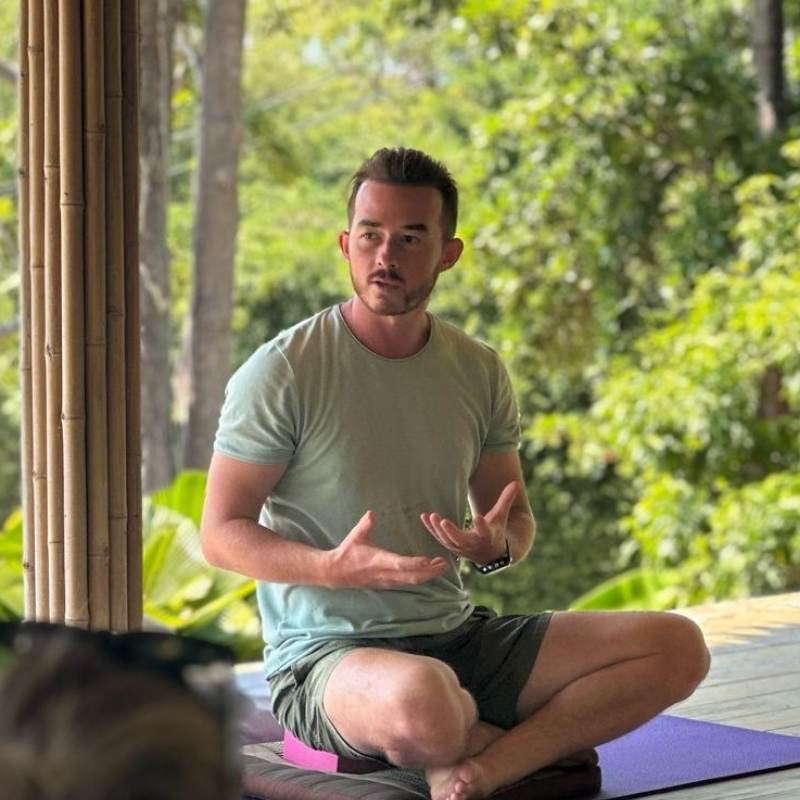
About Diego Pauel
Diego is a certified breathwork facilitator, freediving instructor, and founder of Breathflow Connection. With years of experience in nervous system regulation and somatic practices, Diego helps stressed professionals find calm through simple, science-backed techniques.
Learn More →Try Our Free Interactive Tools
Start regulating your nervous system today.
Get the free 3-minute audio guide and symptom checklist. Delivered instantly.
Get Your Free ResetContinue reading

Cold Exposure and Your Nervous System: The Complete Beginner's Guide
Learn how cold exposure resets your nervous system and activates your vagus nerve. A complete beginner's guide with safe
Read More →
Breathing Exercises for Anxiety at Work: 5 Techniques You Can Do Discreetly
Anxiety at work? These 5 breathing exercises reduce stress in under 5 minutes and most are invisible to coworkers. Box b
Read More →
Morning Anxiety: Why You Wake Up Anxious and How to Stop It
Learn why you wake up anxious every morning and how to stop it. The cortisol awakening response and a 6 step morning res
Read More →