Polyvagal Theory Explained Simply: What Your Nervous System Is Telling You

Free: 3-Minute Nervous System Reset
Get the audio guide and symptom checklist that shows you exactly how to calm your nervous system in under 3 minutes. Delivered straight to your inbox.
TL;DR
Polyvagal theory explains that your nervous system operates in three states: safe and social (ventral vagal), fight or flight (sympathetic), and freeze or shutdown (dorsal vagal). Your body moves between these states based on neuroception, a below conscious scanning process that detects safety or danger before you are even aware of it. Once you learn to identify which state you are in, you can use specific exercises to climb back to calm. This post breaks polyvagal theory down in plain language, gives you body based cues for each state, and provides practical techniques to shift your nervous system when you get stuck.
You have probably heard someone say "your nervous system is stuck in fight or flight." Maybe you have said it yourself.
But what does that actually mean? And more importantly, what do you do about it?
That is where polyvagal theory comes in. Developed by Dr. Stephen Porges in 1994, this theory changed how scientists, therapists, and practitioners understand the human nervous system. It moved us beyond the old model of "fight or flight versus rest and digest" and revealed a third state that explains why so many people feel numb, disconnected, or stuck in ways that willpower cannot fix.
A 2024 review in Neuroscience and Biobehavioral Reviews found that polyvagal informed interventions significantly improved autonomic regulation in individuals with anxiety, PTSD, and chronic stress. The research supports what many practitioners have seen for years: when you understand your nervous system's language, you can work with it instead of against it.
This post explains polyvagal theory in plain language. No neuroscience degree required. By the end, you will know how to read your own body's signals and have specific tools to shift your state when you need to.
The Old Model Was Incomplete
For over a century, science taught us that the autonomic nervous system had two modes. The sympathetic branch (fight or flight) and the parasympathetic branch (rest and digest). Stress turns one on. Safety turns the other on. Simple.
Except it was not that simple. This two part model could not explain certain human experiences. Why does someone freeze during a traumatic event instead of fighting or running? Why do some people shut down emotionally when overwhelmed instead of getting anxious? Why does a person feel exhausted and numb even when there is no identifiable threat?
Dr. Stephen Porges discovered the answer by studying the vagus nerve, the longest cranial nerve in your body. He found that the parasympathetic branch actually has two distinct pathways, not one. This discovery created the three state model that is now called polyvagal theory. You can learn more about the ongoing research at the Polyvagal Institute.
As Porges himself explains: "The nervous system is not simply reacting to danger. It is continuously evaluating risk in the environment and selecting a neural strategy to match."
The Three States of Your Nervous System
Think of your autonomic nervous system as a ladder with three rungs. At the top, you feel safe and connected. In the middle, you feel activated and alert. At the bottom, you feel shut down and disconnected. Your body moves up and down this ladder throughout every single day.
Ventral Vagal: The Safe and Social State (Top of the Ladder)
This is your optimal state. When your ventral vagal pathway is active, you feel calm, present, and open to connection. You can think clearly, engage with other people, and respond to challenges without being overwhelmed by them.
What it feels like in your body:
- Relaxed muscles, especially in your face and jaw
- Slow, deep breathing that happens naturally
- Warm hands and feet (good blood flow to extremities)
- A sense of openness in your chest
- Genuine interest in the people around you
What your thoughts sound like:
- "I can handle this."
- "Things will work out."
- "I feel connected to the people in my life."
This is not about being happy all the time. Ventral vagal simply means your nervous system feels safe enough to engage with the world. You can still feel sad or frustrated in this state. The difference is that those emotions flow through you instead of overwhelming you.
Sympathetic Activation: The Fight or Flight State (Middle of the Ladder)
When your nervous system detects a threat, it mobilizes energy. Your heart rate increases. Adrenaline and cortisol flood your body. Blood moves away from your digestive organs and toward your muscles. You are ready to fight or run.
This response saved our ancestors from predators. Today, it activates for work deadlines, difficult conversations, traffic, and dozens of modern stressors that never actually resolve.
Want a quick nervous system reset right now?
Get the free 3-minute audio guide and symptom checklist. Delivered instantly.
What it feels like in your body:
- Racing heart or pounding in your chest
- Shallow, rapid breathing
- Tight jaw, clenched fists, tense shoulders
- Restlessness or inability to sit still
- Stomach churning or loss of appetite
- Feeling hot or flushed
What your thoughts sound like:
- "Something bad is about to happen."
- "I need to fix this right now."
- "Why can't everyone just leave me alone?"
Short bursts of sympathetic activation are healthy. You need this system to perform, meet deadlines, and respond to real emergencies. The problem comes when you get stuck in fight or flight for hours, days, or months. That is when chronic anxiety, insomnia, and burnout take root.
Dorsal Vagal: The Freeze and Shutdown State (Bottom of the Ladder)
This is the state that the old model missed entirely. When your nervous system decides that the threat is too big to fight or flee from, it does something radical. It shuts down.
The dorsal vagal pathway slows everything. Heart rate drops. Blood pressure decreases. You disconnect from your emotions, your body, and the world around you. In extreme cases, people faint or dissociate. In everyday life, it shows up as numbness, brain fog, fatigue that sleep does not fix, and a feeling of being "checked out."
What it feels like in your body:
- Heavy limbs, as if your body weighs twice as much
- Brain fog or difficulty concentrating
- Feeling emotionally flat or numb
- Low energy that is not relieved by rest
- A desire to withdraw, hide, or disappear
- Feeling disconnected from your own body
What your thoughts sound like:
- "What is the point?"
- "I don't care anymore."
- "I just want to be left alone."
Many people in dorsal vagal shutdown get misdiagnosed with depression or labeled as lazy. They are neither. Their nervous system has taken a protective measure because the world felt too overwhelming for too long. Understanding this distinction changes everything about how you approach recovery.
Neuroception: Your Body's Below Conscious Radar
Here is the part of polyvagal theory that surprises most people. You do not choose which state your nervous system enters. Your body decides for you.
Dr. Porges coined the term "neuroception" to describe this process. Neuroception is your nervous system's way of scanning the environment for cues of safety or danger without involving your conscious mind. It happens faster than thought.
Your nervous system picks up signals you do not even notice. The tone of someone's voice. A subtle facial expression. The feeling of a room. Whether someone's body language is open or closed. A 2025 study in Psychological Science confirmed that autonomic state changes in response to social cues occur within 200 milliseconds, far faster than conscious perception.
This explains so much about daily life:
- Why you feel uneasy around certain people even though they have not said anything threatening
- Why you relax instantly in some environments and tense up in others
- Why your mood shifts after reading the news or scrolling social media, even though "nothing happened to you"
- Why you sometimes feel anxious for no apparent reason
There is always a reason. You just cannot see it because neuroception operates below awareness. Your body detected something your conscious mind missed.
When Neuroception Gets It Wrong
Neuroception is not always accurate. If you grew up in an environment where safety was unpredictable, or if you have experienced prolonged stress or trauma, your neuroception can become overly sensitive. It starts detecting danger in situations that are actually safe.
This is the root of much chronic anxiety. Your logical mind knows you are safe at your desk, in your home, at dinner with friends. But your nervous system disagrees. It reads threat cues where none exist because its calibration has shifted.
The good news is that neuroception can be recalibrated. Through consistent practices that send genuine safety signals to your nervous system, you can gradually retrain it to distinguish real threats from false alarms. Vagus nerve exercises are one of the most effective ways to do this.
How to Identify Your Current State Right Now
Put down your phone for a moment. Take one breath. And notice.
Want a quick nervous system reset right now?
Get the free 3-minute audio guide and symptom checklist. Delivered instantly.
What is happening in your body right now? Not what you think should be happening. What is actually happening.
Check your breathing. Is it shallow and fast (sympathetic)? Deep and easy (ventral vagal)? Barely noticeable and thin (dorsal vagal)?
Check your muscles. Are your shoulders up near your ears (sympathetic)? Dropped and relaxed (ventral vagal)? Heavy and immovable (dorsal vagal)?
Check your energy. Do you feel wired and restless (sympathetic)? Alert but calm (ventral vagal)? Exhausted and foggy (dorsal vagal)?
Check your social impulse. Do you want to snap at someone or escape (sympathetic)? Do you feel open to conversation (ventral vagal)? Do you want to disappear and be completely alone (dorsal vagal)?
This body scan takes less than 30 seconds. It is the most important skill polyvagal theory teaches. When you know where you are on the autonomic ladder, you know exactly which direction to move and which tools will help. If you want to build a daily tracking habit around this awareness, HRV monitoring gives you an objective data point alongside your subjective check in.
Climbing the Ladder: Practical Exercises for Each State
Knowing your state is step one. Step two is learning how to shift it. The key principle is that you climb the ladder one rung at a time. You cannot jump from dorsal vagal shutdown straight to ventral vagal safety. You have to pass through sympathetic activation on the way up.
This is why someone in a freeze state cannot just "think positive" or "calm down." Their system needs gentle activation first, then calming. Skipping steps does not work.
If You Are in Dorsal Vagal (Shutdown): Add Gentle Movement
Your nervous system needs a small spark of activation to begin climbing. The goal is not to leap into high energy. It is to create just enough mobilization to move out of freeze.
- Orienting exercise. Slowly turn your head to look around the room. Name five things you can see. This activates your visual processing and tells your brainstem that you are present.
- Gentle movement. Rock side to side in your chair. Stretch your arms overhead. Walk slowly around the room. Even small movements signal to your nervous system that you are not frozen.
- Humming or singing. The vibration activates your vagus nerve through the muscles in your throat. Start with a low hum. No song required.
- Cold water on your face. Splash cold water on your cheeks and forehead. This triggers the dive reflex, which activates the vagus nerve and shifts your autonomic state rapidly.
- Connect with one safe person. Send a text. Make a brief call. Even a small moment of social connection sends safety cues through your ventral vagal pathway.
If You Are in Sympathetic Activation (Fight or Flight): Slow Everything Down
Your system is mobilized and pumping out stress hormones. You need to send a clear signal that the danger has passed.
- Extended exhale breathing. Breathe in for 4 counts, out for 6 to 8 counts. The extended exhale activates your parasympathetic system. Even three rounds of this breathing pattern measurably reduces heart rate.
- Physiological sigh. Take a double inhale through your nose (two quick sniffs), then one long exhale through your mouth. Research from Stanford showed this is the single fastest way to reduce real time stress.
- Bilateral stimulation. Cross your arms over your chest and alternately tap your shoulders left and right. This engages both hemispheres of your brain and helps process the activation.
- Ground through your feet. Press your feet firmly into the floor. Feel the chair supporting your body. Physical grounding tells your nervous system that you are safe and stable right here.
- Somatic shaking. Stand and gently shake your hands, arms, and legs for 60 to 90 seconds. Animals do this instinctively after a threat passes. It discharges the mobilized energy so your system can settle.
If You Are in Ventral Vagal (Safe and Social): Build Capacity
When you are already in your optimal state, the work is building resilience so you can return here faster after stress pulls you away.
- Practice consistent daily regulation exercises even on good days
- Spend time with people who feel safe and calming to your system
- Notice and savor the feeling of safety in your body so you can recognize it more easily
- Build your window of tolerance by gradually exposing yourself to manageable challenges
Co Regulation: How Other People's Nervous Systems Affect Yours
Polyvagal theory reveals something that most self help advice misses entirely. Your nervous system does not regulate in isolation. It is designed to regulate through connection with other people.
Dr. Porges describes this as co regulation: "Mammals require engagement with other mammals to maintain their physiological homeostasis. The neural circuits that support social engagement are the same circuits that support health, growth, and restoration."
In practical terms, this means your nervous system literally borrows regulation from the people around you. When you sit with someone who is calm and grounded, your vagus nerve picks up their safety cues. Their steady voice, relaxed posture, and warm facial expression tell your neuroception that the environment is safe. Your body begins to settle in response.
This also works in reverse. Spend time around someone who is anxious, agitated, or dysregulated, and your nervous system picks up those cues too. You absorb their activation. This is not weakness. It is biology.
A 2024 study published in Nature Reviews Neuroscience demonstrated that autonomic synchrony between individuals occurs within minutes of face to face interaction. Your heart rate, breathing rate, and skin conductance begin to mirror the person you are with. This happens automatically and below conscious awareness.
Co regulation has direct implications for your daily life:
- Choose your environment carefully. The people you spend the most time with directly shape your nervous system's baseline.
- Notice who calms you and who activates you. This is not judgment. It is nervous system literacy.
- If you live or work with a dysregulated person, your own regulation practice becomes even more important. You cannot pour from an empty cup, and you cannot co regulate someone else if your own system is depleted.
- Working with a therapist, coach, or practitioner is powerful partly because of co regulation. Their regulated presence creates the conditions for your nervous system to feel safe enough to process difficult material. If you are a working parent managing stress, finding even brief moments of co regulation with a safe partner or friend can make a measurable difference.
Why This Changes Everything About Anxiety
Most approaches to anxiety focus on your thoughts. Challenge the negative thought. Replace it with a positive one. Think your way to calm.
Polyvagal theory reveals why this approach so often fails. Your thoughts do not drive your nervous system state. Your nervous system state drives your thoughts.
When you are in sympathetic activation, your brain generates anxious thoughts because your body is in a threat state. The thoughts are a symptom, not the cause. Trying to think your way out of anxiety is like trying to think your way out of a fever. The issue is physiological.
This is why breathwork and body based practices work when cognitive strategies alone do not. They address the nervous system directly. When your body shifts out of threat mode, your thoughts change automatically. You do not have to force positive thinking. Safety produces clear thinking on its own.
According to the World Health Organization, anxiety disorders affect approximately 301 million people worldwide as of 2024. Polyvagal informed approaches offer a framework that addresses the biological roots of anxiety rather than just managing the cognitive symptoms.
This does not mean therapy is useless or that thoughts do not matter. It means that combining top down work (therapy, journaling, mindset) with bottom up work (breathwork, vagus nerve stimulation, somatic practices) produces dramatically better results than either approach alone. A 2025 meta analysis in the journal Clinical Psychology Review found that interventions combining cognitive and somatic techniques showed a 47% greater improvement in anxiety outcomes compared to cognitive interventions alone.
A Note from Diego
When I first learned about polyvagal theory, everything clicked. For years I had tried to think my way out of stress. I would tell myself to calm down. I would analyze why I was anxious. I would make lists of things I was grateful for. And sometimes it helped. But the anxiety always came back.
Polyvagal theory showed me that my body was running a program that my conscious mind had no control over. My neuroception was stuck on high alert. No amount of positive thinking was going to override millions of years of survival wiring.
So I stopped trying to think my way to calm and started working with my body directly. Breathwork. Cold exposure. Vagus nerve exercises. Somatic movement. The shift was not instant. But within a few weeks, I noticed something different. My body started settling on its own. Not because I told it to. Because I finally started speaking its language.
If you are new to this work, I recommend starting with the free 3 minute nervous system reset. It gives you a direct experience of what it feels like to shift your autonomic state on purpose. And if you want a structured approach that walks you through the full autonomic ladder over seven days, the 7 Day Nervous System Reset was built on these principles.
Your body is not broken. Your nervous system is doing exactly what it was designed to do. The work is not fixing yourself. It is learning the language your body already speaks.
Frequently Asked Questions
What is polyvagal theory in simple terms?
Polyvagal theory explains that your nervous system has three states: safe and social (ventral vagal), fight or flight (sympathetic), and freeze or shutdown (dorsal vagal). Your body constantly scans for safety or danger below your conscious awareness and shifts between these states automatically. Understanding which state you are in gives you the ability to use specific practices to return to calm.
What are the three states of the autonomic nervous system?
The three states are ventral vagal (safe and social), where you feel calm, connected, and present. Sympathetic activation (fight or flight), where your body mobilizes energy to face a threat. And dorsal vagal (freeze or shutdown), where your system conserves energy by disconnecting and going numb. A healthy nervous system moves between these states fluidly. Problems arise when you get stuck in one state.
What is neuroception and how does it work?
Neuroception is a term coined by Dr. Stephen Porges to describe how your nervous system detects safety or danger without your conscious input. It works below awareness, processing cues from your environment, other people's facial expressions, tone of voice, and body language. When neuroception detects threat, your body shifts into a defensive state before you even realize something feels wrong.
How do I know which nervous system state I am in?
Check your body first. In ventral vagal, your muscles are relaxed, breathing is slow, and you feel open to connection. In sympathetic activation, your heart races, muscles tense, breathing becomes shallow, and you feel restless or irritable. In dorsal vagal, you feel heavy, foggy, disconnected, and may want to withdraw from everything. Your body always tells you the truth about your state.
Can you get stuck in dorsal vagal shutdown?
Yes. Chronic dorsal vagal activation happens when your nervous system has been overwhelmed for a prolonged period. It shows up as emotional numbness, fatigue that sleep does not fix, difficulty feeling motivation, and withdrawing from relationships. The path out of dorsal vagal requires gentle activation, not force. Small movements, humming, cold water on the face, and safe social connection help your system climb back up the autonomic ladder gradually.
How does co regulation work?
Co regulation is the process by which one person's nervous system influences another's. When you are near someone who is calm and regulated, your nervous system picks up their safety cues through facial expressions, voice tone, and body language. This is why you feel calmer around certain people and more anxious around others. It is also why a calm parent can soothe a distressed child. Your nervous system literally borrows regulation from other people.
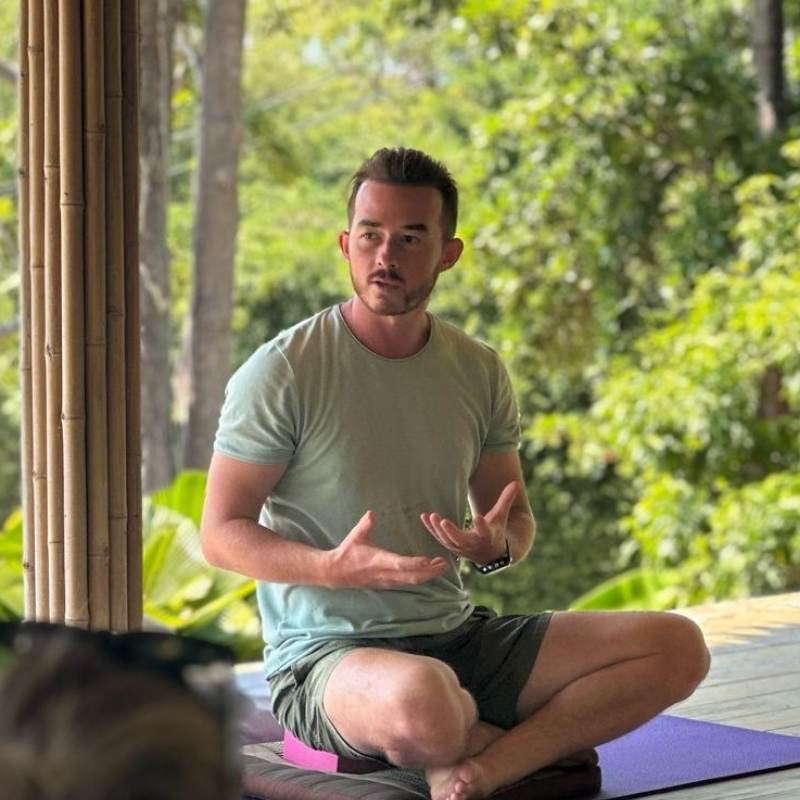
About Diego Pauel
Diego is a certified breathwork facilitator, freediving instructor, and founder of Breathflow Connection. With years of experience in nervous system regulation and somatic practices, Diego helps stressed professionals find calm through simple, science-backed techniques.
Learn More →Try Our Free Interactive Tools
Start regulating your nervous system today.
Get the free 3-minute audio guide and symptom checklist. Delivered instantly.
Get Your Free ResetContinue reading


Box Breathing vs 4-7-8 Breathing: Which One Works Better for Anxiety?
Compare box breathing and 4-7-8 breathing for anxiety relief. Learn which technique works faster, when to use each, and
Read More →
HRV Tracking for Beginners: What Your Heart Rate Variability Tells You About Stress
Learn how to track heart rate variability to measure stress and nervous system health. Beginner friendly guide to unders
Read More →