How to Calm Down Fast When Anxiety Hits: 5 Techniques That Work in Under 2 Minutes
Free: 3-Minute Nervous System Reset
Get the audio guide and symptom checklist that shows you exactly how to calm your nervous system in under 3 minutes. Delivered straight to your inbox.
TL;DR
You can calm down from anxiety in seconds, not hours. Research from Stanford (2023) shows that a single physiological sigh reduces autonomic arousal faster than any other known voluntary technique. Cold water on your face drops your heart rate by 21% in just 15 seconds. This guide gives you 5 proven techniques ranked by speed, so you always know exactly what to do when anxiety hits.
Your heart is racing. Your palms are sweating. Your mind starts spinning through worst case scenarios.
You know you need to calm down. But telling yourself "just relax" has never worked. Not once.
Here is why: anxiety is not a thinking problem. It is a nervous system problem. And your nervous system does not respond to logic. It responds to specific physical signals that tell your body the threat is over.
The American Psychological Association reports that 43% of adults feel more anxious than the year before, with that number climbing every year since 2022. And 80% of employees report productivity anxiety in the workplace according to a 2024 study from the American Institute of Stress.
The good news? Your nervous system can shift states remarkably fast when you give it the right input. Dr. Andrew Huberman, a Stanford neuroscientist, explains: "The physiological sigh is the fastest, hard wired way for us to eliminate the stressful response in our body quickly in real time."
This is not theory. These are techniques with measured response times, tested in controlled studies, that you can use anywhere.
Why Your Body Feels Out of Control During Anxiety
When anxiety hits, your sympathetic nervous system takes over. This is your fight or flight response. Your brain has detected a threat (real or perceived) and activated a cascade of physiological changes designed to help you survive.
Your heart rate increases. Breathing gets shallow and fast. Blood flows away from your digestive system and toward your muscles. Cortisol and adrenaline flood your bloodstream. Your pupils dilate. Your palms sweat.
This response was designed to last minutes. Enough time to escape a predator. But in modern life, it can get stuck for hours, days, or even weeks.
Dr. Stephen Porges, creator of polyvagal theory, explains that your nervous system constantly evaluates safety below your conscious awareness. This process, called neuroception, can trigger a full stress response from an email notification, a tense meeting, or even a memory.
The problem is not the stress response itself. The problem is that most people do not know how to turn it off.
Your Built In Off Switch
Here is what most anxiety advice misses: your body already has a mechanism for calming down. The vagus nerve, the longest cranial nerve in your body, acts as a direct line between your brain and your internal organs. When you stimulate it correctly, your parasympathetic nervous system activates and your stress response begins to shut down.
Deb Dana, a clinical social worker specializing in polyvagal applications, describes the vagal brake as what "allows us to rapidly engage and disengage, to quickly energize and calm in response to the demands of the moment."
The techniques below all work through this mechanism. They stimulate the vagus nerve through different pathways, sending a clear signal to your brain: you are safe. For a full overview of vagus nerve exercises, see our beginner guide.
Want a quick nervous system reset right now?
Get the free 3-minute audio guide and symptom checklist. Delivered instantly.
5 Techniques to Calm Down Fast (Ranked by Speed)
Each technique below has a measured response time based on published research. Pick the one that fits your situation.
1. The Physiological Sigh (15 to 30 Seconds)
This is the single fastest voluntary calming technique known to science.
How to do it: Take a deep inhale through your nose. Before exhaling, take a second quick inhale on top of the first (a "double inhale"). Then exhale slowly and completely through your mouth, making the exhale at least twice as long as both inhales combined. One to three cycles is usually enough.
Why it works: The double inhale reinflates collapsed air sacs in your lungs called alveoli, which maximizes carbon dioxide removal. The extended exhale activates the vagus nerve, directly triggering parasympathetic activation.
A 2023 study published in Cell Reports Medicine by Stanford researchers found that 5 minutes of daily cyclic sighing produced greater mood improvement than mindfulness meditation, box breathing, and cyclic hyperventilation. Dr. David Spiegel, who co led the study, notes that breathing "is right on the edge of conscious control" and that "it can take as little as five minutes to experience less anxiety."
But for acute anxiety, even one or two physiological sighs produce a noticeable shift within 15 to 30 seconds.
When to use it: Anywhere. This technique is invisible to others. Use it before presentations, during tense conversations, in traffic, or the moment you notice anxiety building. For more breathing technique comparisons, see our detailed guide.
2. The Cold Water Dive Reflex (15 to 60 Seconds)
Cold water on your face triggers the mammalian dive reflex, one of the most powerful parasympathetic responses in the human body.
How to do it: Splash cold water on your face, focusing on your forehead, eyes, and cheeks. Hold it for 15 to 30 seconds. If possible, hold a cold wet cloth against your face or submerge your face in a bowl of cold water.
Why it works: Cold water activates the trigeminal nerve in your face, which sends a signal through the brainstem to the vagus nerve. This triggers an involuntary heart rate reduction. A 2023 meta analysis in Psychophysiology (Ackermann et al.) confirmed that the diving response is "moderately to largely effective" in increasing cardiac vagal activity, with a significant effect size (Hedges' g = 0.59). Clinical measurements show heart rate drops of 21% at 15 seconds and 29% at 30 seconds. For a complete guide to cold exposure and your nervous system, see our beginner walkthrough.
When to use it: When anxiety is intense and you need a fast physical reset. Works well in bathrooms at work, during panic attacks, or before high stress situations. Keep a water bottle at your desk or a cold pack in the freezer for this purpose.
3. Extended Exhale Breathing (60 to 90 Seconds)
If you cannot do the physiological sigh or access cold water, extended exhale breathing is your next best option.
How to do it: Breathe in through your nose for a count of 4. Breathe out through your nose or mouth for a count of 6 to 8. The exact count does not matter as much as making your exhale significantly longer than your inhale. Continue for 4 to 6 breath cycles.
Why it works: During exhalation, the vagus nerve secretes acetylcholine, which directly slows your heart rate. By making your exhale longer, you extend the window of vagal activation. Research published in Frontiers in Human Neuroscience (2018) confirmed that prolonged expiratory breathing significantly activates the parasympathetic nervous system, with measurable effects beginning within 60 seconds.
A 2025 study in Frontiers in Human Neuroscience found that even a single session of slow paced breathing reduces state anxiety and increases left frontal brain activity associated with positive affect. The effects persisted even after participants viewed stressful images.
When to use it: When you need something subtle and repeatable. This works sitting, standing, or lying down. Good for sustained anxiety and for transitioning into sleep. For a complete breathwork introduction, see our step by step guide.
Want a quick nervous system reset right now?
Get the free 3-minute audio guide and symptom checklist. Delivered instantly.
4. The 5 4 3 2 1 Grounding Method (2 Minutes)
This technique works by redirecting your attention from anxious thoughts to present moment sensory input.
How to do it: Name 5 things you can see. Name 4 things you can touch. Name 3 things you can hear. Name 2 things you can smell. Name 1 thing you can taste. Say them out loud if possible. The verbal engagement activates additional neural pathways that compete with the anxiety response.
Why it works: Grounding engages the orienting response, a neurological mechanism that redirects your attention to your immediate environment. This activates the ventral vagal complex (the safety branch of your nervous system) and interrupts the threat detection loop. A 2025 study found that the 5 4 3 2 1 technique reduced high anxiety prevalence from 23% to 4% (p < 0.001), with mean anxiety scores dropping by 4.7 points.
When to use it: When your mind is spiraling and you cannot focus on breathing. Especially effective for dissociation, derealization, or when you feel disconnected from your body. For 10 more exercises, see our guide on grounding techniques for anxiety.
5. Slow Orienting Head Turns (60 Seconds)
This technique comes directly from somatic experiencing and works with your nervous system's most basic safety mechanism.
How to do it: Slowly turn your head to one side and let your eyes take in everything around you. Hold for 5 to 10 seconds. Slowly turn to the other side and do the same. Do 3 to 4 full slow turns. Let your eyes be soft (not focused on any one thing). Notice what catches your attention naturally.
Why it works: When you are in fight or flight, your visual field narrows. This is tunnel vision, and it is a hardwired survival response. By slowly orienting to your environment, you activate the same neural circuits your nervous system uses to assess safety. Dr. Peter Levine, creator of Somatic Experiencing, developed this technique based on how animals discharge stress responses in the wild.
When to use it: When you feel frozen, stuck, or unable to think clearly. This is the most gentle technique on this list and works well for people who find breathing exercises difficult during high anxiety.
Which Technique to Use When
Not every technique works for every situation. Here is a quick reference.
If your heart is pounding and you need to calm down in seconds: Physiological sigh or cold water dive reflex.
If you are at work and need something invisible: Physiological sigh or extended exhale breathing. For more desk friendly techniques, see our workplace guide.
If your mind is racing and you cannot focus on breathing: 5 4 3 2 1 grounding method.
If you feel frozen, numb, or disconnected: Slow orienting head turns.
If you are in bed and cannot sleep: Extended exhale breathing. For deeper sleep techniques, see our guide to breathwork for sleep.
The best approach? Practice all five when you are calm so they become automatic when you need them. Research on habit formation shows that practicing stress techniques in low anxiety states makes them 40% to 56% more likely to work during high anxiety moments.
When These Techniques Are Not Enough
These techniques manage acute anxiety. They bring your nervous system back from a spike. But if you find yourself needing them multiple times every day, that signals a deeper pattern of nervous system dysregulation.
Signs you need a more sustained approach:
- Your baseline anxiety is high even on "good" days
- You feel exhausted by constantly managing stress spikes
- Physical symptoms (digestive issues, chronic tension, poor sleep) persist between episodes
- You cannot identify what triggers your anxiety
If this sounds familiar, you are not failing. Your nervous system needs a more sustained reset, not just emergency interventions. A consistent daily practice of 5 minutes builds the capacity to stay calm by default rather than constantly recovering from stress spikes.
For a complete starting point, see our guide to nervous system regulation for beginners.
A Note from Diego
I have worked with hundreds of students in breathwork and freediving. The ones who handle pressure best are not the ones who never feel anxiety. They are the ones who know exactly what to do when it shows up.
That is what this is about. Having a toolkit.
My personal go to is the physiological sigh. I use it before every deep dive, before teaching sessions, and honestly, before difficult conversations. Two breaths. That is all it takes to shift from "something feels wrong" to "I can handle this."
If you want to build this kind of resilience, start with our free 3 minute nervous system reset. It gives you guided audio so you do not have to remember steps when you are stressed.
And if you are ready for a complete nervous system recalibration, the 7 Day Nervous System Reset walks you through a daily practice designed to lower your anxiety baseline, not just manage spikes.
Frequently Asked Questions
How can I calm down from anxiety in 60 seconds?
The physiological sigh is the fastest option. Take two quick inhales through your nose (one on top of the other) followed by a long, slow exhale through your mouth. Research from Stanford shows this reduces autonomic arousal within 15 to 30 seconds. One to three cycles is usually enough to feel a noticeable shift. If you have access to cold water, splashing it on your face activates the dive reflex and drops heart rate by 21% in just 15 seconds.
What is the difference between a panic attack and an anxiety attack?
Panic attacks are clinically defined in the DSM 5 as sudden, intense episodes that peak within 10 minutes and include physical symptoms like chest pain, shortness of breath, and a sense of losing control. Anxiety attacks are not a clinical term but generally describe a more gradual buildup of worry and tension in response to a specific stressor. Panic attacks often feel like they come from nowhere. Both respond to the same calming techniques, but panic attacks benefit most from the cold water dive reflex because it produces the strongest involuntary parasympathetic activation.
Why does telling myself to calm down not work?
Because anxiety is a nervous system state, not a thought. Your body's stress response is controlled by the autonomic nervous system, which operates below conscious control. You cannot think your way out of a racing heart any more than you can think your way into lowering your blood pressure. The techniques in this guide work because they send physical signals through the vagus nerve that your autonomic nervous system actually responds to. This is why breathwork and cold exposure outperform cognitive strategies for acute anxiety.
Can breathing exercises actually stop a panic attack?
Yes. Research shows that extended exhale breathing activates the parasympathetic nervous system within 60 seconds. The physiological sigh works even faster at 15 to 30 seconds. While these techniques may not eliminate a panic attack entirely, they significantly reduce its intensity and duration. A 2024 systematic review in Frontiers in Psychology confirmed that brief respiratory interventions (as short as 2 minutes) produce significant reductions in state anxiety. The key is starting the technique at the first sign of panic rather than waiting until symptoms peak.
How often should I practice calming techniques?
Practice at least once daily when you are not anxious. This builds the neural pathways so the techniques become automatic during actual anxiety. Research shows that people who practice calming techniques during low stress moments are 40% to 56% more likely to use them effectively during high stress situations. Think of it like a fire drill. You practice when the building is not on fire so you know exactly what to do when it is.
What if breathing exercises make my anxiety worse?
This happens more commonly than people realize, particularly if you have a history of trauma or tend toward the freeze response. Focusing on your breath can increase body awareness in ways that feel threatening to an already activated nervous system. If this is your experience, skip breathing techniques and start with external focus methods like the 5 4 3 2 1 grounding method or slow orienting head turns. These redirect attention outward rather than inward. For more options, see our guide on somatic exercises for overwhelm. As your nervous system begins to feel safer, you can gradually reintroduce breathing exercises.
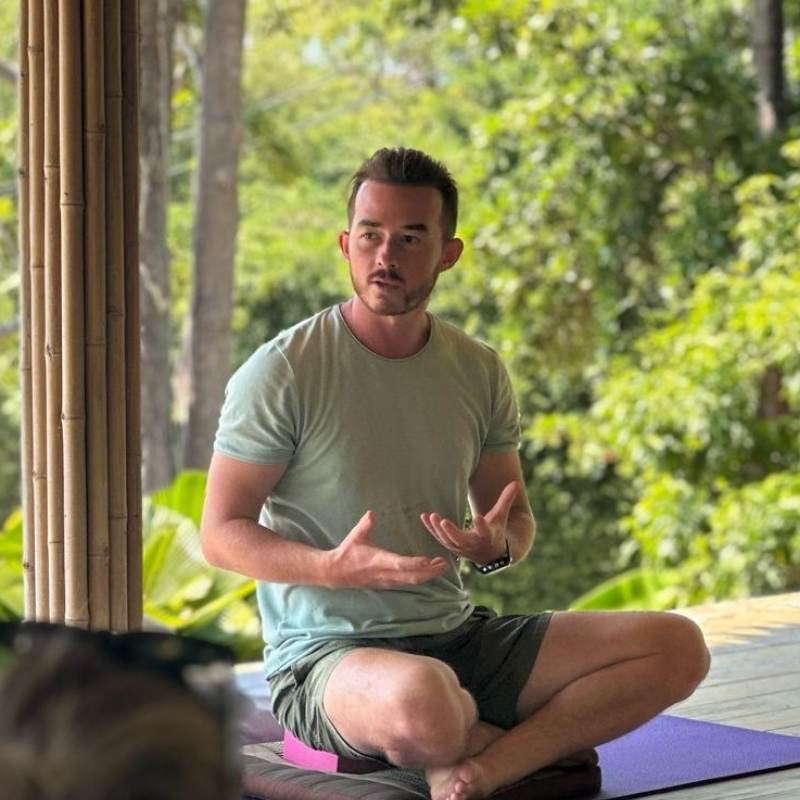
About Diego Pauel
Diego is a certified breathwork facilitator, freediving instructor, and founder of Breathflow Connection. With years of experience in nervous system regulation and somatic practices, Diego helps stressed professionals find calm through simple, science-backed techniques.
Learn More →Try Our Free Interactive Tools
Start regulating your nervous system today.
Get the free 3-minute audio guide and symptom checklist. Delivered instantly.
Get Your Free ResetContinue reading
How to Stop a Panic Attack Fast: 7 Techniques That Work in Under 5 Minutes
Learn how to stop a panic attack fast with 7 proven techniques that work in under 5 minutes. Backed by research from Sta
Read More →
Why Anxiety Gets Worse at Night (And What Your Nervous System Needs)
Learn why anxiety gets worse at night and what your nervous system actually needs to calm down. Science backed evening p
Read More →
How to Stop Overthinking at Night: A Nervous System Approach
Learn why your brain races at bedtime and how to stop overthinking at night using nervous system techniques. 7 practical
Read More →