Nervous System Reset Exercises You Can Do at Your Desk: 6 Techniques for Instant Calm

Free: 3-Minute Nervous System Reset
Get the audio guide and symptom checklist that shows you exactly how to calm your nervous system in under 3 minutes. Delivered straight to your inbox.
TL;DR
Your nervous system does not wait until you leave the office to dysregulate. It happens during the meeting, after the email, in the middle of your workday. These six exercises work in under 5 minutes, require no equipment, and nobody around you will notice you are doing them. Each one is backed by peer reviewed research. The physiological sigh alone reduces stress markers within 60 seconds.
Your heart is racing. Your shoulders are up near your ears. You just got another email that makes your stomach drop. And you cannot exactly roll out a yoga mat in the middle of the office.
This is the problem with most stress relief advice. It assumes you have time, space, and privacy. You do not. You have a desk, a laptop, and 30 seconds before the next notification.
Gallup's 2024 State of the Global Workplace report found that 41% of workers experience significant daily stress. The World Health Organization estimates that workplace stress costs the global economy over $1 trillion per year in lost productivity. And the APA's 2024 Work in America survey found that 61% of employees feel stressed in workplaces with low psychological safety.
The good news: your nervous system responds to specific physical signals that you can send while sitting at your desk. You do not need to meditate for 20 minutes. You do not need to leave the room. You need techniques that work in the environment where you actually get stressed.
These six exercises do exactly that. Each one takes under 5 minutes. Most take under 2. And every single one is backed by research, not wishful thinking.
Why Your Nervous System Dysregulates at Work
Your autonomic nervous system evolved to handle acute threats. A predator. A physical confrontation. A short burst of danger followed by safety.
Modern work delivers something your nervous system never evolved for: sustained low grade threat that never resolves. Back to back meetings. Performance reviews. Inbox notifications every 90 seconds. Slack messages while you are trying to focus. Your body interprets all of this as danger because the physiological response is identical.
Dr. Stephen Porges, creator of polyvagal theory, explains that your nervous system uses a process called neuroception to evaluate safety. "Neuroception is not a conscious perception. Your body is evaluating risk below the level of awareness." This means your nervous system can be in full fight or flight activation before you consciously register that anything is wrong.
That tightness in your chest during a meeting? Neuroception. The shallow breathing after reading a critical email? Neuroception. The inability to focus after a difficult conversation? Your nervous system has already shifted into protection mode.
The Problem with "Just Take a Break"
The standard advice is to take breaks. Walk around the building. Step outside. Get fresh air. This is fine in theory. In practice, you are on a deadline. Your calendar is stacked. Your manager expects a response in the next 10 minutes.
A 2022 study published in PLOS ONE found that micro breaks (under 5 minutes) significantly boost vigor and reduce fatigue during the workday. The key finding: breaks do not need to be long. They need to be targeted. A 60 second nervous system intervention produces measurable changes in heart rate variability, cortisol response, and subjective stress levels.
That is what these exercises deliver. Targeted interventions that fit into the gaps of your actual workday.
Exercise 1: The Physiological Sigh (60 Seconds)
This is the single most effective desk exercise for instant nervous system regulation. It was studied at Stanford by Dr. David Spiegel and published in Cell Reports Medicine in 2023.
The study compared cyclic physiological sighing to mindfulness meditation, box breathing, and a control group. Cyclic sighing produced the greatest reduction in respiratory rate, heart rate, and mood improvement. In just 5 minutes per day. Dr. Spiegel noted that "the physiological sigh is the fastest way we know of to voluntarily reduce autonomic arousal."
How to Do It at Your Desk
Step 1: Inhale through your nose until your lungs feel about 80% full.
Step 2: Without exhaling, take a second short sniff through your nose to completely fill your lungs.
Step 3: Let out a long, slow exhale through your mouth. Make the exhale at least twice as long as both inhales combined.
Step 4: Repeat 2 to 3 times.
That is it. Three physiological sighs take about 60 seconds. Nobody at the desk next to you will notice. Your heart rate drops, your diaphragm relaxes, and your nervous system receives a direct signal that the threat has passed.
Why it works: the double inhale maximally inflates the alveoli (tiny air sacs in your lungs), which increases the surface area for gas exchange. The extended exhale activates your vagus nerve, which sends a calming signal to your brain. You are essentially using your lungs as a remote control for your nervous system.
Want a quick nervous system reset right now?
Get the free 3-minute audio guide and symptom checklist. Delivered instantly.
Exercise 2: The Cold Water Facial Reset (90 Seconds)
This exercise activates the mammalian dive reflex, one of the most powerful nervous system reset mechanisms in your body. It works through the trigeminal nerve, which connects your face to your brainstem.
How to Do It at Your Desk
Option A (preferred): Walk to the nearest restroom. Run cold water over your wrists and splash cold water on your face, focusing on your forehead and cheeks. Hold for 15 to 30 seconds.
Option B (at your desk): Keep a cold water bottle at your desk. When stress spikes, hold it against your cheeks and forehead for 30 seconds. You can also press it against the sides of your neck where the vagus nerve runs close to the surface.
A 2018 study in Frontiers in Neuroscience confirmed that cold stimulation to the face triggers an immediate parasympathetic response. Heart rate drops, blood pressure decreases, and your nervous system shifts from sympathetic (stress) to parasympathetic (rest) within seconds.
For a deeper guide on cold exposure and your nervous system, see our complete beginner's guide to cold exposure.
Exercise 3: Vagal Toning Through Humming (2 Minutes)
Your vagus nerve passes through your throat and is directly stimulated by vibration. Humming is the most discreet way to create that vibration while sitting at a desk.
How to Do It at Your Desk
Step 1: Close your mouth gently. Your teeth should be slightly apart.
Step 2: Inhale through your nose for 4 counts.
Step 3: Exhale while humming at a comfortable low pitch for 6 to 8 counts. You should feel the vibration in your chest and throat.
Step 4: Repeat for 6 to 8 rounds.
Deb Dana, clinician and author on polyvagal applications, explains that "we can become active operators of our autonomic nervous system. The vagus nerve responds to specific inputs and we can learn to provide them intentionally."
Humming extends your exhale naturally, which activates the parasympathetic branch. The vibration directly stimulates vagal tone. And the entire practice looks like you are just thinking quietly at your desk. If you work in an open office and humming feels too noticeable, substitute with slow deep breathing where you constrict the back of your throat slightly on the exhale to create gentle vibration internally.
For more vagus nerve techniques, see our 10 vagus nerve exercises for anxiety.
Exercise 4: The 60 Second Seated Body Scan
Traditional body scans take 15 to 45 minutes. This version takes 60 seconds and accomplishes the primary neurological purpose: engaging your interoceptive awareness, which activates your insular cortex and helps your nervous system recalibrate.
How to Do It at Your Desk
Step 1: Place both feet flat on the floor. Feel the pressure of the ground beneath you.
Step 2: Notice where your body makes contact with the chair. Your back. Your thighs. Your arms on the armrests.
Step 3: Scan for tension. Start at your jaw (most people clench without realizing). Move to your shoulders. Then your hands (are they gripping?). Then your stomach.
Step 4: For each area of tension, exhale and consciously release. Do not force relaxation. Just notice the tension and let your exhale soften it 10 to 20 percent.
This exercise works because nervous system dysregulation pulls your attention into your thoughts (rumination, worry, planning) and away from your body. The body scan reverses this. By directing attention to physical sensation, you engage the ventral vagal pathway and begin the shift out of fight or flight.
Research published in Frontiers in Psychology in 2024 confirmed that brief interoceptive awareness exercises produce significant reductions in anxiety and physiological arousal, even in sessions under 2 minutes.
For a full guide on grounding techniques, including more detailed body scan variations, see our complete article.
Exercise 5: Extended Exhale Breathing (3 Minutes)
This is the most versatile desk exercise because you can do it during a meeting, on a phone call, or while reading emails. Nobody can see your breathing pattern.
Want a quick nervous system reset right now?
Get the free 3-minute audio guide and symptom checklist. Delivered instantly.
How to Do It at Your Desk
Step 1: Inhale through your nose for 4 counts.
Step 2: Exhale through your nose (or mouth, whichever is more comfortable) for 6 counts.
Step 3: Repeat for 8 to 10 rounds.
The key is the ratio, not the exact count. Your exhale should be roughly 1.5 times longer than your inhale. If 4:6 feels forced, try 3:5 or even 2:4.
Why it works: inhalation activates your sympathetic nervous system. Exhalation activates your parasympathetic nervous system. By making your exhale longer, you tip the balance toward calm. It is the same mechanism behind the physiological sigh, delivered in a more sustained, gentle format.
This is different from box breathing or 4 7 8 breathing, which include breath holds. Extended exhale breathing skips the holds entirely, making it more accessible for people who find holding their breath activating rather than calming.
The Slack State of Work 2024 survey found that workers who incorporate regular stress management practices throughout the day report 230% higher satisfaction with their ability to handle workplace pressure. Extended exhale breathing is one of the easiest practices to integrate because it requires zero setup and zero visible change in your behavior.
Exercise 6: Neck and Jaw Release (2 Minutes)
Your jaw and neck are the two areas where your body stores stress most aggressively during desk work. The masseter (jaw muscle) is one of the strongest muscles in the body by force, and when you clench it unconsciously during stress, it sends tension signals throughout your entire head, neck, and upper back.
How to Do It at Your Desk
Step 1: Drop your jaw open slightly. Let your tongue rest on the floor of your mouth, away from the roof. Most people hold their tongue pressed upward during stress without realizing it.
Step 2: Place your fingertips just in front of your ears where the jaw joint meets the skull. Apply gentle pressure and make 5 small circles in each direction.
Step 3: Drop your chin toward your chest slowly. Hold for 3 breaths. Then tilt your right ear toward your right shoulder. Hold for 3 breaths. Repeat on the left side.
Step 4: Shrug your shoulders up toward your ears on an inhale. Drop them completely on an exhale. Repeat 3 times.
This exercise targets the accessory nerve (cranial nerve XI) which connects your neck muscles to your brainstem. When your neck and jaw release, this nerve communicates safety to your autonomic nervous system. It is the physical equivalent of your body saying "the danger has passed, you can stand down."
Pair this with the physiological sigh for a powerful 3 minute combination: jaw and neck release first to reduce physical tension, then physiological sighs to send the parasympathetic signal. Together they address both the muscular and the respiratory components of desk based stress.
How to Build These Into Your Workday
Having six exercises is useless if you never remember to do them. Here is how to make these automatic.
The Trigger Method
Do not schedule these exercises. Attach them to triggers that already exist in your workday.
Before every meeting: 3 physiological sighs (60 seconds)
After every stressful email: Extended exhale breathing for 1 minute
Every time you get up for water or coffee: Cold water on wrists and face in the restroom
At lunch: Full 2 minute neck and jaw release
Mid afternoon energy dip: 60 second seated body scan
Research on habit pairing from the British Journal of Health Psychology shows that attaching new behaviors to existing routines reduces the abandonment rate by 40 to 56%. You already go to meetings, respond to emails, and get coffee. Now those moments become reset triggers.
Start with One
Do not try all six at once. Pick the one that matches your biggest stress pattern.
If you feel anxious or activated: Start with the physiological sigh. It is the fastest intervention for sympathetic arousal.
If you feel numb, foggy, or disconnected: Start with the seated body scan. It reconnects you to physical sensation and pulls you out of dorsal vagal shutdown.
If you carry tension in your upper body: Start with the neck and jaw release. Physical tension is both a symptom and a perpetuator of nervous system activation.
If you are new to nervous system regulation entirely, our beginner's guide to nervous system regulation walks you through the fundamentals before adding specific exercises.
What to Expect When You Start
Week 1: You will forget to do these. That is normal. The goal for Week 1 is to do any exercise at least once per day. Set a phone reminder if you need to. The physiological sigh after your morning coffee is the easiest place to start.
Weeks 2 to 3: The trigger method starts working. You begin associating stressful moments with specific exercises. Recovery time shortens. You notice stress building in your body earlier instead of only realizing after the meeting that your shoulders were up near your ears the entire time.
Weeks 4 to 8: These become automatic. You start doing the physiological sigh before someone finishes a stressful sentence. The body scan happens during elevator rides without thinking about it. Your baseline stress level at work measurably decreases.
For a detailed timeline of nervous system healing, see our guide to signs your nervous system is healing.
A Note from Diego
I teach breathwork to people from all backgrounds. CEOs, teachers, parents, athletes. The one thing they all have in common is this: they wait too long.
They wait until the stress is unbearable. Until the burnout hits. Until their body forces them to stop through illness, insomnia, or breakdown.
These desk exercises exist so you do not have to wait. You can intervene in the moment. Before the stress accumulates. Before the nervous system gets stuck so deep that recovery takes months instead of minutes.
Pick one exercise from this list. Try it right now, wherever you are reading this. That single moment of attention to your body is not small. It is the beginning of a different relationship with stress.
If you want a guided audio to walk you through your first reset, grab the free 3 minute nervous system reset. And when you are ready for a daily practice that builds over time, the 7 Day Nervous System Reset gives you one exercise per day with audio guidance so you never have to wonder what to do next.
Frequently Asked Questions
Can I do nervous system reset exercises during a meeting?
Yes. The physiological sigh and extended exhale breathing are both invisible to others. Nobody can see your breathing pattern during a video call or in a conference room. The cold water method and neck release are better suited for breaks between meetings. The seated body scan works during meetings where you are listening rather than presenting. Start with breathing exercises during meetings and save the physical exercises for natural pauses in your day.
How quickly do desk nervous system exercises work?
The physiological sigh produces measurable changes in heart rate and respiratory rate within 60 seconds. Cold water facial reset activates the dive reflex in 15 to 30 seconds. Extended exhale breathing shifts your autonomic balance within 2 to 3 minutes. These are not relaxation techniques that require 20 minutes to take effect. They work through direct physiological pathways, specifically the vagus nerve, which sends signals to your brainstem faster than any conscious thought process. The effects are immediate, though they deepen with consistent practice over weeks.
What if my workplace is too noisy or distracting for these exercises?
All six exercises work in noisy environments. Breathing exercises require no silence. The body scan uses internal attention, not external quiet. Even humming (Exercise 3) can be done so quietly that it is inaudible to others. If you are in an open plan office, the restroom is a legitimate reset space for the cold water exercise. Many people also find that putting on headphones (even without music) creates enough psychological space to do a 60 second body scan or breathing practice without feeling self conscious.
Should I do all six exercises every day?
No. Start with one. The research consistently shows that a single technique practiced consistently outperforms multiple techniques done sporadically. Pick the exercise that matches your primary stress pattern (anxious: physiological sigh, foggy: body scan, tense: neck release) and do it daily for two weeks before adding a second technique. Most people find that 2 to 3 exercises cover their full range of workplace stress once they understand which exercise matches which nervous system state.
Are desk exercises enough or do I need a longer daily practice?
Desk exercises are excellent as real time interventions, meaning they help you in the moment stress occurs. For deeper nervous system regulation and long term baseline changes, a dedicated daily practice of 5 to 10 minutes produces better results. The Stanford cyclic sighing study used 5 minute daily sessions. Think of desk exercises as your emergency toolkit and a daily practice as your ongoing maintenance. Both serve different purposes and work best together. Our breathwork for beginners guide covers how to build a daily practice from scratch.
I have tried breathing exercises before and they did not help. What am I doing wrong?
Three common reasons. First, you may have been using the wrong technique for your state. If you are in dorsal vagal shutdown (feeling numb and disconnected), deep breathing can feel worse because your body needs activation first, not more calming. Start with the body scan or neck release instead. Second, you may have been breathing too forcefully. Nervous system breathing should feel effortless, not like exercise. Third, you may not have been consistent enough. One session of breathing does not rewire a nervous system that has been dysregulated for months. Commit to one technique, once per day, for 14 days before evaluating whether it works.
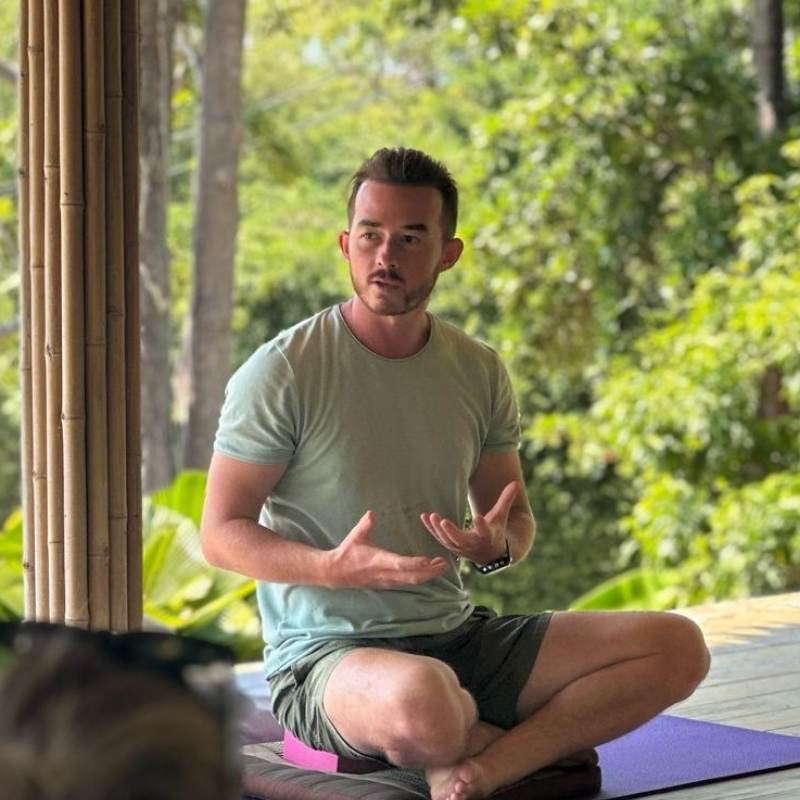
About Diego Pauel
Diego is a certified breathwork facilitator, freediving instructor, and founder of Breathflow Connection. With years of experience in nervous system regulation and somatic practices, Diego helps stressed professionals find calm through simple, science-backed techniques.
Learn More →Try Our Free Interactive Tools
Start regulating your nervous system today.
Get the free 3-minute audio guide and symptom checklist. Delivered instantly.
Get Your Free ResetContinue reading

Morning Anxiety: Why You Wake Up Anxious and How to Stop It
Learn why you wake up anxious every morning and how to stop it. The cortisol awakening response and a 6 step morning res
Read More →
The 4 Trauma Responses Explained: Fight, Flight, Freeze, and Fawn
Learn the 4 trauma responses: fight, flight, freeze, and fawn. Discover your dominant pattern and practices to regulate
Read More →
How to Stop an Anxiety Spiral: 5 Steps to Break the Loop Before It Takes Over
Learn how to stop an anxiety spiral with 5 research-backed steps. Break the thought-body loop fast and prevent spirals f
Read More →