Breathwork for Sleep: 5 Techniques That Work Better Than Melatonin

Free: 3-Minute Nervous System Reset
Get the audio guide and symptom checklist that shows you exactly how to calm your nervous system in under 3 minutes. Delivered straight to your inbox.
TL;DR
Your body does not need a supplement to fall asleep. It needs your nervous system to shift out of survival mode. Melatonin is a timing signal that tells your body it is nighttime, but it does not address the sympathetic activation that keeps you awake. Research shows melatonin improves sleep onset by roughly 7 minutes compared to placebo. Breathwork directly shifts your autonomic nervous system from fight or flight to rest and digest. Five techniques do this more effectively than any supplement: 4 7 8 breathing, cyclic sighing, extended exhale breathing, diaphragmatic belly breathing, and box breathing adapted for bedtime. Each takes 5 minutes or less and produces measurable parasympathetic activation within a single session.
Fifty to seventy million American adults have a sleep disorder. One in three do not get the recommended seven hours per night. And in the search for a solution, most people reach for the same thing: melatonin.
Melatonin use among American adults has more than quintupled since 1999, according to research published in JAMA. Sales increased 150 percent between 2016 and 2020 alone. It is the most popular natural sleep supplement in the world.
There is one problem. For most people lying awake at 2am with a racing mind, melatonin barely works.
A meta analysis published in PLOS ONE found that melatonin reduced sleep onset latency by approximately 7 minutes and increased total sleep duration by approximately 8 minutes compared to placebo. Not hours. Minutes.
The reason is straightforward. Melatonin is a timing signal. It tells your body that it is nighttime. But if you are lying awake because your nervous system is stuck in fight or flight, a timing signal does not solve the problem. Your body already knows it is nighttime. It just cannot turn off.
Breathwork changes the equation. Controlled breathing techniques directly shift your autonomic nervous system from sympathetic activation to parasympathetic dominance. They do not signal sleep. They create the physiological conditions that make sleep possible.
Why Melatonin Does Not Work for Stress Related Insomnia
Melatonin works best for circadian rhythm disorders: jet lag, shift work, and delayed sleep phase syndrome. In these cases, the problem is timing. Your body's internal clock is out of sync with when you need to sleep. Melatonin helps reset the clock.
But most people taking melatonin are not dealing with a timing problem. They are dealing with a nervous system problem. The American Academy of Sleep Medicine reports that 12 percent of Americans have been diagnosed with chronic insomnia (2024), and the primary driver of chronic insomnia is not a broken clock. It is a nervous system that will not stand down.
Dr. Matthew Walker, professor of neuroscience at UC Berkeley, puts it clearly: "Sleep quality depends on the balance between the two branches of your nervous system. One is the fight or flight branch called the sympathetic nervous system. And then there is the parasympathetic, the kind of quiescent branch of your nervous system."
When you are stressed, your sympathetic nervous system stays active. Cortisol remains elevated. Heart rate stays up. Breathing stays shallow. Your body is chemically wired for alertness. Adding melatonin to this state is like hanging a "closed" sign on a store while the lights are blazing and the music is blasting. The signal is there. The conditions are not.
There are additional concerns. A study in the Journal of Clinical Sleep Medicine found that melatonin content did not meet within a 10 percent margin of the label claim in more than 71 percent of supplements tested. Actual content ranged from 83 percent less to 478 percent more than what the label stated. And 26 percent of tested products contained unlabeled serotonin, a controlled substance.
What Melatonin Cannot Do
Melatonin does not reduce sympathetic nervous system activation. It does not lower cortisol. It does not improve heart rate variability. It does not activate the vagus nerve. It does not address the physiological state that prevents sleep in stressed individuals. It is a timing signal, and for most people with stress related insomnia, timing is not the problem.
Why Breathwork Works for Sleep
Breathwork addresses the actual barrier to sleep: sympathetic nervous system activation.
Want a quick nervous system reset right now?
Get the free 3-minute audio guide and symptom checklist. Delivered instantly.
When you extend your exhale beyond your inhale, you directly stimulate the vagus nerve. This is the primary communication pathway between your brain and your body's rest and digest system. Vagal stimulation reduces heart rate, lowers blood pressure, and shifts your autonomic nervous system toward parasympathetic dominance. This is the physiological state required for sleep onset.
A 2018 study on prolonged expiratory breathing found that extending exhales increased high frequency heart rate variability from 36.88 to 43.08, a statistically significant shift toward parasympathetic dominance. The researchers concluded that prolonged expiration results in parasympathetic dominance.
The Stanford cyclic sighing study, published in Cell Reports Medicine in 2023, compared three breathwork techniques against mindfulness meditation in 111 participants over one month. Cyclic sighing showed approximately one third greater improvement in positive affect compared to mindfulness meditation. Participants also significantly lowered their resting breathing rate throughout the day, not just during the exercise.
Dr. David Spiegel, associate chair of psychiatry at Stanford and co author of the study, stated: "Controlled breathing exercises may have a more rapid, more direct effect on physiology than mindfulness."
This is the critical difference. Melatonin is a supplement you consume passively. Breathwork is a skill that retrains your nervous system. And unlike melatonin, breathwork gains power with practice. Dr. Andrew Weil, who developed the 4 7 8 technique, calls it "a natural tranquilizer for the nervous system" and notes: "Unlike tranquilizing drugs, which are often effective when first taken but then lose their power over time, this exercise is subtle when you first try it but gains in power with repetition and practice."
5 Breathwork Techniques for Better Sleep
1. The 4 7 8 Technique (The Natural Tranquilizer)
Developed by Dr. Andrew Weil, this uses a specific ratio of inhale, hold, and exhale to activate your parasympathetic nervous system.
How to do it. Inhale through your nose for 4 counts. Hold your breath for 7 counts. Exhale slowly through your mouth for 8 counts. Repeat for 4 cycles.
The extended exhale is the active ingredient. Eight counts of exhalation is double the inhale, which creates a strong vagal response. A 2022 study in Physiological Reports found that 4 7 8 breathing significantly improved heart rate variability and decreased both heart rate and systolic blood pressure.
Start with 4 cycles. As you build familiarity, you can extend to 8 cycles. The hold phase allows carbon dioxide to build slightly, which enhances the calming effect of the long exhale that follows. For a detailed comparison with box breathing, see our guide on box breathing vs 4 7 8 breathing.
2. Cyclic Sighing (The Stanford Method)
This is the technique that outperformed mindfulness meditation in the Stanford study. It mimics the physiological sigh your body produces naturally during sleep and crying.
How to do it. Take a normal inhale through your nose. At the top, take a second short inhale (a "sip" of air) to fully expand your lungs. Exhale slowly and completely through your mouth, making the exhale at least twice as long as the combined inhales. Repeat for 5 minutes.
Dr. Andrew Huberman, Stanford neuroscientist and co author of the study, explains the mechanism: the double inhale reinflates collapsed air sacs in the lungs, and the long exhale gets rid of the carbon dioxide that has built up and is causing your body stress. Extending that exhale helps your diaphragm relax, which feeds back to the nervous system, then to the brain, relaxing the body.
Huberman specifically notes that this type of sigh "can also be great if you are having a hard time falling asleep or back to sleep." Five minutes produces measurable effects.
3. Extended Exhale Breathing (The Parasympathetic Switch)
This is the simplest of the five and directly based on vagal stimulation research.
How to do it. Inhale through your nose for 4 counts. Exhale through your nose or mouth for 6 to 8 counts. Keep the breathing gentle and relaxed. Continue for 5 to 10 minutes.
Want a quick nervous system reset right now?
Get the free 3-minute audio guide and symptom checklist. Delivered instantly.
The only rule: the exhale is longer than the inhale. The specific ratio matters less than the principle. A 4 count inhale with a 6 count exhale works. So does 3 and 6, or 4 and 8. Find the ratio that feels natural without strain.
The 2018 prolonged expiratory breathing study found that even a modest extension (6 second exhale, 4 second inhale) produced statistically significant parasympathetic dominance. The shift happens within minutes.
This technique pairs well with lying in bed. Close your eyes, place one hand on your belly, and focus on making the exhale smooth and complete. The counting gives your brain something to do besides rehearsing tomorrow's problems.
4. Diaphragmatic Belly Breathing (The Foundation)
This is not a specific ratio. It is a fundamental shift in how you breathe. Most stressed adults breathe into their upper chest. Diaphragmatic breathing reverses this, pulling air into the lower lungs where parasympathetic nerve receptors are most dense.
How to do it. Lie on your back with one hand on your chest and one on your belly. Breathe in slowly through your nose. Your belly hand should rise. Your chest hand should barely move. Exhale slowly as your belly falls. Continue for 5 to 10 minutes.
A 30 day study of 64 healthy adults found that an evening slow paced breathing intervention significantly improved subjective sleep quality and increased nighttime cardiac vagal activity. The effects were observed specifically during sleep, not just during the practice.
If you are new to breathwork, start here. Diaphragmatic breathing is the foundation that makes all other techniques more effective. See our breathwork for beginners guide for a detailed walkthrough.
5. Box Breathing Adapted for Bedtime
Standard box breathing uses equal counts for inhale, hold, exhale, and hold (4 4 4 4). This is excellent for daytime stress management. For bedtime, a small modification makes it more effective for sleep.
How to do it (bedtime version). Inhale through your nose for 4 counts. Hold for 4 counts. Exhale through your mouth for 6 counts (extended from the standard 4). Hold empty for 2 counts (shortened from the standard 4). Repeat for 5 to 8 minutes.
The modification extends the exhale and shortens the bottom hold, creating a parasympathetic bias while keeping the rhythmic structure that makes box breathing easy to follow. The rhythm itself is calming. It gives your mind a structured pattern, reducing the rumination that keeps many people awake.
How to Build a Pre Sleep Breathwork Routine
You do not need to do all five techniques. Pick one.
Start 15 to 30 minutes before you want to be asleep. Lying down is fine. So is sitting in a dim room. Reduce stimulation first: screens off, lights low, phone away.
Practice for 5 minutes. That is the threshold the research supports. The Stanford cyclic sighing study showed measurable benefits with just 5 minutes per day. More is fine, but 5 minutes is enough to produce the parasympathetic shift.
Consistency matters more than duration. Dr. Weil notes that breathwork gains in power with repetition and practice. The first night, the effect may feel subtle. After a week of nightly practice, the nervous system response becomes faster. After a month, your body begins to associate the breathing pattern with sleep onset, creating a conditioned relaxation response.
If you are new to breathwork, start with diaphragmatic belly breathing or extended exhale breathing. These have the lowest learning curve.
If you want the strongest research backing, use cyclic sighing. It outperformed all other methods in the Stanford head to head comparison.
If you struggle with overthinking at bedtime, combine breathwork with the strategies in our guide to stopping overthinking at night. And for a complete evening routine that goes beyond breathwork, see the nervous system reset for sleep guide.
A Note from Diego
I used to take melatonin every night. Higher and higher doses. And I would still lie awake.
The turning point came when I started treating sleep as a nervous system problem rather than a chemistry problem. Instead of adding a substance, I learned to change the signal. Five minutes of extended exhale breathing before bed did more for my sleep than any supplement I had tried.
Now I teach this to every client. The ones coming off melatonin or sleep aids are always the most surprised. They expected to need something external. They did not expect their own breathing to work better.
If you have been relying on melatonin and still struggling, try replacing it with one of these techniques for 7 nights. Not adding breathwork on top of melatonin. Replacing it. You need to feel the difference your own nervous system creates.
The free 3 minute nervous system reset walks you through an extended exhale pattern you can use tonight. And if you want a structured 7 day program that builds daily breathwork into a complete evening routine with behavioral tools and sleep specific practices, the 7 Day Nervous System Reset was designed for exactly this.
Frequently Asked Questions
Can breathwork really replace melatonin for sleep?
For most people whose sleep problems are caused by stress and nervous system activation, yes. Melatonin is a timing signal that tells your body it is nighttime but does not address the sympathetic arousal that keeps you awake. Breathwork directly shifts your nervous system from fight or flight to rest and digest. The Stanford cyclic sighing study found that 5 minutes of practice outperformed mindfulness meditation for reducing physiological arousal. If your insomnia is caused by circadian disruption like jet lag or shift work, melatonin may be more appropriate for the timing component.
How long before bed should I do breathwork?
Start 15 to 30 minutes before you want to be asleep. This gives the parasympathetic shift time to deepen. Dim the lights, put screens away, and practice for 5 to 10 minutes. Some people prefer to do breathwork in bed as the last thing before sleep. Others prefer sitting comfortably and then moving to bed once they feel the calming effect. Both approaches work. The key is reducing stimulation before you begin so the breathwork has the clearest possible effect.
Which breathwork technique is best for falling asleep?
Cyclic sighing has the strongest research support from the Stanford study, which compared multiple techniques head to head. Extended exhale breathing is the simplest and directly based on vagal stimulation research. The 4 7 8 technique is the most widely practiced sleep breathing method with supporting research on heart rate variability improvement. All five techniques produce parasympathetic activation. Choose the one that feels most natural. Consistency matters more than which technique you pick.
What if breathwork makes me feel more anxious?
This occasionally happens when you breathe too forcefully or when breath holds create tension. Switch to a technique with no holds, like extended exhale breathing or diaphragmatic belly breathing. Keep the breathing gentle and quiet. You should never feel like you are straining or gasping. If counting feels stressful, drop the counts and focus only on making your exhale longer than your inhale. Start with shorter sessions of 2 to 3 minutes and build up gradually.
How quickly will breathwork improve my sleep?
Many people notice a difference on the first night, particularly with extended exhale breathing or cyclic sighing. The parasympathetic shift begins within minutes of starting the practice. The deeper benefits compound over time. A 30 day study found that nightly slow breathing significantly improved both subjective sleep quality and nighttime cardiac vagal activity. Dr. Andrew Weil notes that breathwork gains in power with repetition. Give any technique at least 7 consecutive nights before judging its full effect on your sleep.
Is it safe to stop taking melatonin and switch to breathwork?
Melatonin does not create physical dependency the way prescription sleep medications can, and most people can simply stop taking it. If you have been using melatonin for a long time or at high doses, you may want to transition gradually: practice breathwork for a week while still taking melatonin, then reduce the dose over the following week. If you take prescription sleep medication, consult your doctor before making changes. Breathwork is complementary to medical treatment, not a replacement for prescribed medication.
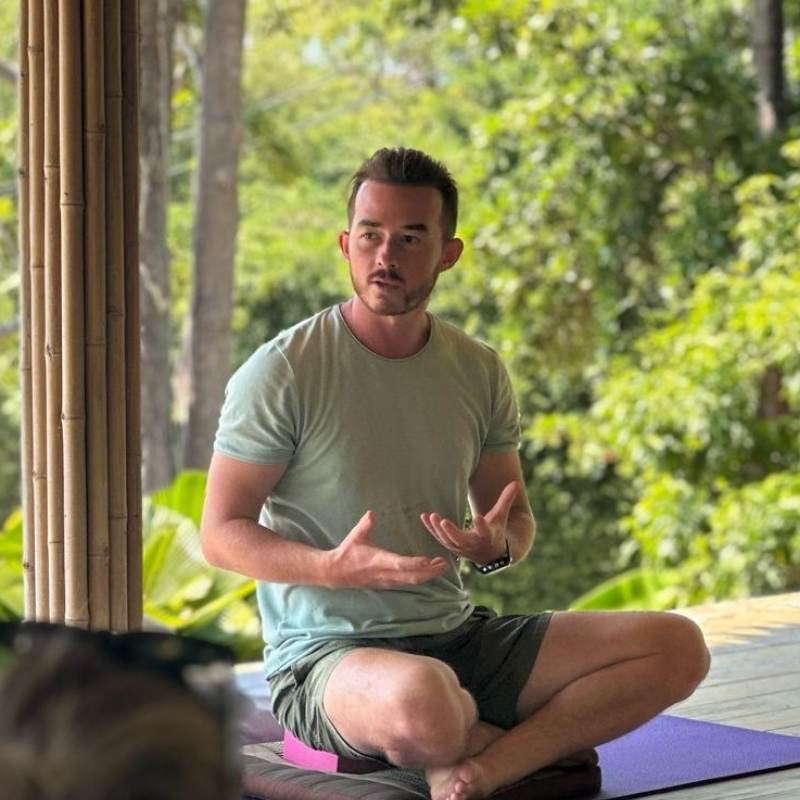
About Diego Pauel
Diego is a certified breathwork facilitator, freediving instructor, and founder of Breathflow Connection. With years of experience in nervous system regulation and somatic practices, Diego helps stressed professionals find calm through simple, science-backed techniques.
Learn More →Try Our Free Interactive Tools
Start regulating your nervous system today.
Get the free 3-minute audio guide and symptom checklist. Delivered instantly.
Get Your Free ResetContinue reading

Nervous System Regulation for Beginners: Where to Start When Everything Feels Overwhelming
Learn nervous system regulation for beginners. Where to start, what to do first, and how to build a simple daily practic
Read More →
Nervous System Dysregulation: The Complete Symptom Checklist (+ What to Do)
Check if your nervous system is dysregulated with this complete symptom checklist. Plus discover what to do about it wit
Read More →
Morning Anxiety: Why You Wake Up Anxious and How to Stop It
Learn why you wake up anxious every morning and how to stop it. The cortisol awakening response and a 6 step morning res
Read More →