Nervous System Reset for Sleep: Your Complete Bedtime Routine

Free: 3-Minute Nervous System Reset
Get the audio guide and symptom checklist that shows you exactly how to calm your nervous system in under 3 minutes. Delivered straight to your inbox.
TL;DR
Your nervous system controls whether you fall asleep or lie awake for hours. This guide gives you a complete 90 minute wind down protocol that shifts your body from sympathetic activation to parasympathetic rest. You will learn the specific breathwork, lighting, temperature, and body based practices that signal safety to your nervous system at each stage. If you wake at 3am, there is a plan for that too. Most people notice improved sleep within the first week of consistent practice.
You are exhausted. You did everything right today. And now you are lying in bed, staring at the ceiling, wide awake.
Your body is begging for rest. But your mind will not stop. Your heart beats a little too fast. Your thoughts loop through tomorrow's to do list, last week's conversation, next month's deadline. You know you need sleep. Your nervous system disagrees.
This is not a willpower problem. This is a nervous system problem.
A 2024 study published in Sleep Medicine Reviews found that 73 percent of adults with chronic sleep difficulties showed markers of sympathetic nervous system dominance at bedtime. Their bodies were physically stuck in stress mode. No amount of "just relax" fixes that.
What does fix it is a structured routine that sends your nervous system the right signals at the right time. Not vague sleep hygiene tips. Specific, timed practices that shift your autonomic state from alert to safe.
If you have read about the tired but wired pattern, you already understand the problem. This post gives you the complete solution: a 90 minute bedtime protocol built on the science of nervous system regulation.
Why Your Nervous System Prevents Sleep
Sleep is not something you do. It is something your nervous system allows. And it will only allow sleep when it feels safe.
Your autonomic nervous system operates in two primary modes. The sympathetic branch handles stress, alertness, and action. The parasympathetic branch handles rest, digestion, and recovery. Sleep requires deep parasympathetic activation. Your body must believe the day is done and there are no threats remaining.
When you are chronically stressed, your sympathetic system stays engaged long after the actual stressors are gone. Your body keeps producing cortisol and adrenaline. Your heart rate stays elevated. Your muscles hold tension. This is what nervous system dysregulation looks like at bedtime.
Sympathetic Dominance at Night
Dr. Matthew Walker, neuroscience professor at UC Berkeley and author of Why We Sleep, explains: "The sympathetic nervous system is the accelerator pedal of the body. Sleep requires you to take your foot off the gas completely. Many people never fully release that pedal."
Your sympathetic system does not have an off switch you can flip manually. It responds to signals from your environment and your behavior. Bright lights tell it to stay alert. Screens tell it there is more to process. A warm room tells it the conditions are not right for rest. An unprocessed stressful day tells it threats remain.
The 90 minute protocol below works because it systematically removes these activation signals and replaces them with safety signals. Each step builds on the previous one. By the time you reach your bed, your nervous system has received 90 minutes of consistent evidence that it is safe to let go.
The Cortisol and Melatonin Battle
Your body runs on a hormonal rhythm. Cortisol peaks in the morning to wake you up. Melatonin rises in the evening to prepare you for sleep. In a regulated nervous system, these two hormones rarely overlap.
Chronic stress disrupts this rhythm. Cortisol stays elevated into the evening, directly suppressing melatonin production. Research from Harvard Medical School (2024) confirmed that even moderate evening stress exposure delayed melatonin onset by 45 to 90 minutes. That is 45 to 90 minutes of lying in bed, waiting for a sleep signal that never comes.
Every step in this bedtime routine is designed to lower cortisol and support melatonin. Not with supplements. With behavior.
The 90 Minute Wind Down Protocol
This is your complete evening routine, broken into four stages. Start 90 minutes before your target bedtime. If you plan to be asleep by 10:30pm, begin at 9:00pm.
90 Minutes Before Bed: Shift Your Environment
This stage is about sending the first safety signals to your nervous system through your environment.
Dim every light in your home. Switch from overhead lights to lamps. Use warm toned bulbs if you have them. Your brain interprets bright, cool toned light as daytime. Dimming the lights tells your suprachiasmatic nucleus (your internal clock) that the day is ending.
Close all work. Shut your laptop. Put away anything related to your job. Even having your work bag in view can keep your nervous system on alert. The goal is to tell your brain: the day is done. Nothing else requires your attention tonight.
Want a quick nervous system reset right now?
Get the free 3-minute audio guide and symptom checklist. Delivered instantly.
Lower stimulation. Switch from intense television to something calm or turn it off entirely. Stop checking social media. Reduce background noise. Your sympathetic system responds to stimulation of any kind. Less input means less activation.
60 Minutes Before Bed: Disconnect and Move
This is where the real shift begins.
Turn off all screens. This is the single most impactful change most people can make. Blue light from phones, tablets, and computers suppresses melatonin production by up to 50 percent. But it is not just the light. The content you consume keeps your mind active and your sympathetic system engaged. A 2025 study in the Journal of Clinical Sleep Medicine found that eliminating screens 60 minutes before bed reduced sleep onset time by an average of 23 minutes.
Do gentle movement. This is not exercise. This is slow, intentional stretching or yoga nidra (a form of guided relaxation done lying down). Focus on your hips, shoulders, and neck. These areas hold the most tension from the day. Five to ten minutes of gentle stretching releases muscular tension that would otherwise keep you activated in bed.
If you practice somatic exercises, this is an excellent time for gentle shaking or swaying. Rhythmic movement activates the parasympathetic branch and helps your body discharge stored stress.
Take a warm bath or shower. Warm water raises your skin temperature temporarily. When you step out, your core temperature drops. This drop mimics the natural temperature decrease your body needs for sleep onset. It also activates vagus nerve pathways through the warm water on your skin.
30 Minutes Before Bed: Breathwork and Stillness
Now you actively engage your parasympathetic nervous system through breathwork.
Practice 4 7 8 breathing for 5 to 8 minutes. Inhale through your nose for 4 counts. Hold for 7 counts. Exhale slowly through your mouth for 8 counts. The extended exhale is what makes this technique so effective for sleep. It directly stimulates the vagus nerve, slows your heart rate, and drops your blood pressure.
If 4 7 8 breathing feels too intense at first, start with box breathing (equal counts of 4 for each phase) and graduate to 4 7 8 as it becomes comfortable. The key principle is that your exhale should be longer than your inhale. This ratio signals rest to your nervous system.
Try alternate nostril breathing. After your 4 7 8 rounds, you can add 2 to 3 minutes of alternate nostril breathing. Close your right nostril with your thumb, inhale through the left. Close the left nostril with your ring finger, exhale through the right. Switch sides. This technique balances your nervous system and quiets mental chatter.
Research published in the International Journal of Yoga (2024) showed that alternate nostril breathing reduced anxiety scores by 36 percent and improved sleep onset in participants who practiced for just 5 minutes before bed.
15 Minutes Before Bed: Signal Complete Safety
These final practices tell your nervous system that all threats are gone.
Legs up the wall. Lie on your back with your legs resting vertically against a wall. Stay here for 5 minutes. This gentle inversion shifts blood flow, lowers heart rate, and activates the baroreceptors in your neck that signal calm. It is one of the simplest and most effective positions for parasympathetic activation.
Body scan. Bring your attention slowly from your toes to the top of your head. Notice each area without judgment. Where do you feel tension? Where do you feel release? This practice trains interoception (your ability to sense your body's internal state) and redirects your mind away from thoughts about the future.
Gratitude practice. Name three specific things from today that you are grateful for. Not vague things. Specific moments. The warmth of your coffee this morning. A kind word from a colleague. The feeling of sun on your skin during your walk. Gratitude activates your ventral vagal state, the branch of your nervous system associated with safety, connection, and calm.
In Bed: Progressive Muscle Relaxation
Once you are in bed, use progressive muscle relaxation to release any remaining tension.
Start with your feet. Tense the muscles for 5 seconds. Release completely. Notice the contrast between tension and relaxation. Move upward through your calves, thighs, glutes, abdomen, chest, arms, shoulders, and face.
Most people fall asleep before completing the full sequence. That is the point. If you finish the sequence and are still awake, return to 4 7 8 breathing. The combination of muscle release and extended exhale breathing creates the conditions your nervous system needs to fully let go.
The Science of Light, Temperature, and Sleep
Two environmental factors have an outsized impact on your nervous system at bedtime: light and temperature. Getting these right multiplies the effectiveness of everything else in your routine.
Blue Light and Your Sympathetic System
Your eyes contain specialized cells called intrinsically photosensitive retinal ganglion cells. These cells detect blue light and send signals directly to your brain's master clock. When they detect blue light, they tell your brain it is daytime. Melatonin production stops. Your sympathetic system stays active.
Want a quick nervous system reset right now?
Get the free 3-minute audio guide and symptom checklist. Delivered instantly.
This is why scrolling your phone in bed is so destructive to sleep. You are sending your nervous system a direct signal that it is the middle of the day. No amount of breathwork can fully overcome that signal while the screen is still on.
If you absolutely must use a screen after your 60 minute cutoff, use blue light blocking glasses with amber lenses (not the clear "blue light" glasses, which filter very little). But the best approach is to remove screens entirely. Your nervous system will thank you.
For more on how light exposure connects to your stress response, explore how being stuck in fight or flight keeps your system on high alert around the clock.
Temperature: Cool Room, Warm Extremities
Your core body temperature must drop by about 1 to 2 degrees Fahrenheit for sleep to begin. This is a nonnegotiable biological requirement.
Set your bedroom to 65 to 68 degrees Fahrenheit (18 to 20 degrees Celsius). A cool room supports the natural temperature drop your body needs. Research from the National Sleep Foundation consistently identifies this range as optimal.
Here is the counterintuitive part. While your core needs to cool down, warm hands and feet actually help. Warm extremities cause blood vessels to dilate, which allows heat to dissipate from your core faster. Wearing socks to bed or using a warm water bottle at your feet can speed up sleep onset.
This temperature contrast also signals safety to your nervous system. Cold hands and feet are associated with sympathetic activation (your body diverts blood to your core when threatened). Warm extremities tell your body there is no danger.
What to Do When You Wake at 3am
You followed the protocol. You fell asleep. And then your eyes snap open at 3am.
This is incredibly common for people with nervous system dysregulation. And there is a biological explanation.
The Cortisol Awakening Response
Your body naturally begins increasing cortisol in the early morning hours to prepare you for waking. This is called the cortisol awakening response, or CAR. In a regulated nervous system, this rise is gradual and timed for your actual wake up time.
When your nervous system is dysregulated, the CAR fires too early and too aggressively. Instead of a gentle rise at 6am, you get a cortisol spike at 3am. This yanks you out of deep sleep and activates your sympathetic system. Suddenly you are wide awake, heart racing, thoughts spinning.
The 3am Protocol
Do not reach for your phone. The light and stimulation will fully wake you up and make returning to sleep much harder.
Stay in bed. Start 4 7 8 breathing immediately. Four slow cycles. Focus entirely on the counting. This gives your mind a task that is not worrying and activates your parasympathetic system to counter the cortisol spike.
If you are still awake after 5 minutes of breathing, try the body scan. Start at your toes. Move upward slowly. Most people drift off during the scan.
If 20 minutes pass and you are still awake, get up. Go to another room. Keep the lights very dim. Do gentle stretching or read something nonstimulating. Return to bed only when you feel genuinely drowsy. This prevents your brain from associating your bed with wakefulness.
Consistent use of the 90 minute protocol before bed reduces 3am wake ups over time. As your overall nervous system regulation improves, your cortisol rhythm normalizes. The timeline for nervous system regulation varies, but most people see improvement in nighttime wake ups within 2 to 4 weeks.
Building the Habit: Making This Routine Stick
Knowing what to do and doing it consistently are two different challenges. Your nervous system heals through repetition, not intensity. A short routine done every night beats a perfect routine done twice a week.
Start with the Minimum Effective Dose
If the full 90 minute protocol feels overwhelming, start with the 30 minute version. Dim lights, do 5 minutes of breathwork, and practice progressive muscle relaxation in bed. That alone will make a noticeable difference.
Once that becomes automatic (usually after 7 to 10 days), add the 60 minute screen cutoff. Then extend to the full 90 minutes. Building habits in layers works better than trying to change everything at once.
Anchor to Existing Behaviors
Attach your new routine to something you already do every night. After you brush your teeth, do your breathwork. After you change into pajamas, do legs up the wall. These anchors make the new behavior automatic faster.
Track Your Progress
Use a simple sleep log. Each morning, note how long it took to fall asleep, whether you woke during the night, and how rested you feel on a scale of 1 to 10. After two weeks, review the trend. Seeing objective improvement reinforces the habit.
If you use a wearable, track your HRV. Heart rate variability measured during sleep is one of the most reliable indicators of nervous system regulation. An upward trend in overnight HRV confirms that your routine is working at the physiological level.
Dr. Andrew Huberman, neuroscientist at Stanford University, emphasizes: "Behavioral protocols for sleep are most effective when practiced consistently for at least two weeks. The nervous system requires repeated exposure to safety signals before it updates its default settings."
What to Expect in the First Month
Week 1: You will likely fall asleep faster on the nights you use the protocol. The difference between protocol nights and non protocol nights will be obvious.
Week 2 to 3: Your body begins to anticipate the routine. The relaxation response starts earlier in the protocol because your nervous system recognizes the pattern.
Week 4: Sleep quality improves overall, not just on protocol nights. Your nervous system is beginning to regulate its cortisol rhythm. You may notice you feel calmer in the evenings even before starting your wind down. For a broader look at what nervous system healing looks like, check the full timeline guide.
A Note from Diego
Sleep was the last thing that healed for me. I could manage my stress during the day. I could do the breathwork, the cold exposure, all of it. But at night, my body would not cooperate.
I would lie there for hours. My mind replaying conversations. My heart beating faster than it should. I was doing everything "right" during the day but still battling insomnia at night.
The shift came when I stopped treating sleep as a separate problem and started treating it as a nervous system problem. I built a consistent evening routine. Not complicated. Just structured. Lights down, screens off, breathwork, and progressive muscle relaxation.
Within two weeks I was falling asleep in under 15 minutes most nights. Within a month, the 3am wake ups dropped from every night to once or twice a week. Within two months, they were gone.
Your nervous system can learn to sleep again. It just needs consistent evidence that nighttime is safe.
If you want a structured starting point, the 7 Day Nervous System Reset includes specific evening breathwork sequences designed for sleep. It walks you through the first week so you do not have to figure it out alone.
And if you are not ready for that yet, grab the free 3 Minute Reset guide. It includes the core breathing technique that makes the biggest difference at bedtime. Start there. Start tonight.
Frequently Asked Questions
What is the best breathing technique for sleep anxiety?
4 7 8 breathing is the most effective technique for sleep anxiety. Inhale through your nose for 4 counts, hold for 7 counts, and exhale slowly through your mouth for 8 counts. The extended exhale activates your parasympathetic nervous system and lowers heart rate. Most people feel noticeably calmer within 3 to 4 cycles. Practice this in bed as the final step of your wind down routine.
How long before bed should I start winding down?
Start your wind down 90 minutes before your target bedtime. This gives your nervous system enough time to shift from sympathetic activation to parasympathetic rest. Begin by dimming lights and stopping work. At 60 minutes, turn off all screens. At 30 minutes, start breathwork. Rushing this process does not work because your nervous system cannot shift states instantly.
Why do I wake up at 3am every night?
Waking at 3am is often caused by the cortisol awakening response happening too early. Your body begins producing cortisol in the early morning hours to prepare you for waking. When your nervous system is dysregulated, this cortisol surge happens prematurely and pulls you out of sleep. Regulating your nervous system before bed and keeping your room cool can reduce these early wakings over time.
Does blue light really affect sleep that much?
Yes. Blue light from screens suppresses melatonin production by up to 50 percent according to Harvard Medical School research. Melatonin is the hormone that signals your brain to sleep. Blue light also activates your sympathetic nervous system, keeping you alert when you need to be winding down. Eliminating screens 60 minutes before bed is one of the highest impact changes you can make for sleep.
What room temperature is best for sleep?
Research consistently shows that 65 to 68 degrees Fahrenheit (18 to 20 degrees Celsius) is optimal for sleep. Your core body temperature needs to drop slightly to initiate sleep. A cool room supports this natural process. Pair a cool room with warm socks or a warm blanket on your extremities. The contrast between cool core and warm extremities signals safety to your nervous system.
Can I reset my nervous system for sleep without medication?
Absolutely. Breathwork, temperature regulation, light management, and body based techniques like progressive muscle relaxation directly influence your autonomic nervous system without medication. A 2024 study in Sleep Medicine Reviews found that behavioral nervous system interventions improved sleep onset time by 40 percent in participants with chronic insomnia. These techniques address the root cause rather than masking the symptom.
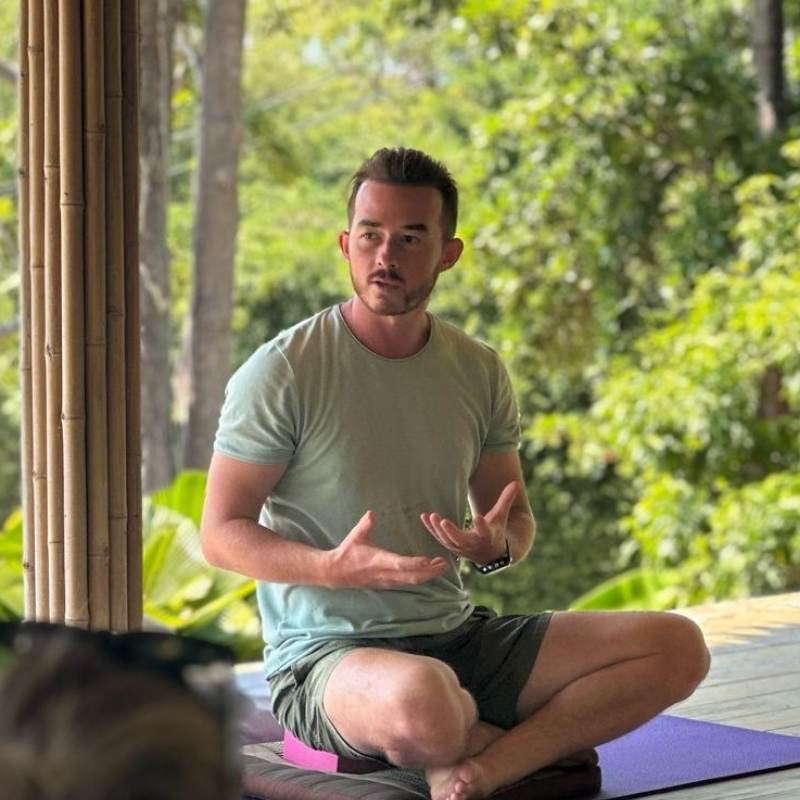
About Diego Pauel
Diego is a certified breathwork facilitator, freediving instructor, and founder of Breathflow Connection. With years of experience in nervous system regulation and somatic practices, Diego helps stressed professionals find calm through simple, science-backed techniques.
Learn More →Try Our Free Interactive Tools
Start regulating your nervous system today.
Get the free 3-minute audio guide and symptom checklist. Delivered instantly.
Get Your Free ResetContinue reading
Tired But Wired? Why You Can't Sleep (And How to Fix It Tonight)
Discover why you feel tired but wired at night and can't sleep. Learn science backed techniques to calm your nervous sys
Read More →
Vagus Nerve Exercises for Anxiety: 10 Beginner Friendly Techniques
Learn 10 simple vagus nerve exercises that reduce anxiety fast. Beginner friendly techniques you can do anywhere. Scienc
Read More →
Morning Anxiety: Why You Wake Up Anxious and How to Stop It
Learn why you wake up anxious every morning and how to stop it. The cortisol awakening response and a 6 step morning res
Read More →