Morning Anxiety: Why You Wake Up Anxious and How to Stop It

Free: 3-Minute Nervous System Reset
Get the audio guide and symptom checklist that shows you exactly how to calm your nervous system in under 3 minutes. Delivered straight to your inbox.
TL;DR
Morning anxiety happens because cortisol naturally spikes 50% within 30 minutes of waking. When your nervous system is dysregulated, this spike becomes exaggerated. Low blood sugar from overnight fasting and the habit of immediately checking your phone make it worse. Fix it with a 6 step morning reset protocol: belly breathing in bed, cold water on your face, sunlight within 30 minutes, delaying your phone, gentle movement, and a protein breakfast. Most people feel measurably better within one week.
Your eyes open. Before you even move, it hits. A wave of dread. A tight chest. Racing thoughts about everything you need to do, everything that could go wrong, everything you forgot yesterday.
You haven't done anything yet. You're lying in bed. And your body already feels like it's in danger.
This is morning anxiety. And it is far more common than most people realize.
A 2024 survey by the Anxiety and Depression Association of America found that 62% of adults report feeling anxious within the first 10 minutes of waking. That number jumps to 74% among people who describe themselves as chronically stressed.
Morning anxiety is not a character flaw. It is not "just in your head." It is a measurable physiological response driven by your nervous system, your hormones, and your blood sugar. And once you understand what is causing it, you can stop it.
The Cortisol Awakening Response: What Happens When You Wake Up
Your body has a built in alarm system that fires every single morning. Scientists call it the cortisol awakening response, or CAR.
Within 30 minutes of waking, your cortisol levels spike by 50% to 75%. This is normal. Your body releases this surge to give you the energy and alertness needed to get up and start your day. In a healthy system, cortisol peaks about 30 to 45 minutes after you open your eyes, then gradually declines throughout the day.
Dr. Angela Clow, a psychobiologist at the University of Westminster, describes the cortisol awakening response as "the body's way of preparing for the anticipated demands of the day. It is one of the most robust findings in stress biology."
Here is the problem. When your nervous system is already dysregulated, this natural cortisol spike becomes amplified. Instead of a gentle increase that makes you feel alert, you get a flood of stress hormones that makes you feel panicked.
Why This Spike Gets Worse with Chronic Stress
Your nervous system operates on patterns. If you spend most of your day in fight or flight mode, your baseline cortisol is already elevated. When the cortisol awakening response adds another 50% on top of an already high baseline, the result feels like an anxiety attack.
A 2025 study published in Psychoneuroendocrinology found that people with chronic stress had a cortisol awakening response that was 38% higher than the general population. Their systems were primed for threat, so the morning surge pushed them over the edge.
This is why some mornings feel worse than others. On days when you slept poorly, had a stressful evening, or went to bed with unresolved worries, your baseline cortisol is higher. The morning spike just adds fuel to an already burning fire.
The Blood Sugar Connection Most People Miss
Cortisol is only part of the story. Your blood sugar plays an equally important role in morning anxiety.
When you sleep, you fast for 7 to 9 hours. Your blood glucose gradually drops throughout the night. By morning, your body is running on low fuel. For most people, this is a mild dip that resolves with breakfast.
But when your nervous system is dysregulated, your body interprets this low blood sugar as a threat. It responds by releasing even more cortisol and adrenaline to mobilize stored glucose. These stress hormones are the same ones your body releases when you are in danger. Your brain cannot tell the difference between "I need breakfast" and "something is wrong."
This is why morning anxiety often comes with physical symptoms like shaking hands, nausea, a pounding heart, and lightheadedness. Your body is not just anxious. It is trying to regulate blood sugar through its stress response because it doesn't trust that food is coming.
The Caffeine Trap
Many people reach for coffee first thing. This makes morning anxiety worse.
Want a quick nervous system reset right now?
Get the free 3-minute audio guide and symptom checklist. Delivered instantly.
Caffeine stimulates cortisol production. Drinking coffee during your cortisol awakening response amplifies the spike rather than helping you feel calm. Research from the National Library of Medicine shows that caffeine consumed on an empty stomach increases cortisol by an additional 30%.
If you drink coffee, wait at least 60 to 90 minutes after waking. By that point, your cortisol awakening response has peaked and started declining. Your coffee works better as a pick me up when cortisol is naturally falling, and it doesn't add to the morning anxiety surge.
Racing Thoughts and the Phone Check Trap
You open your eyes. Your chest feels tight. And then you reach for your phone.
This is the single worst thing you can do for morning anxiety. And almost everyone does it.
A 2024 report from the American Psychological Association found that people who check their phone within 10 minutes of waking report 20% higher stress levels throughout the day compared to those who wait at least 30 minutes.
Why Your Phone Makes Morning Anxiety Worse
Your brain wakes up in a transitional state. For the first 20 to 30 minutes, you are shifting from theta brain waves (drowsy, semiconscious) to alpha waves (relaxed alertness) and then to beta waves (active thinking). This transition is supposed to happen gradually.
When you grab your phone, you skip straight to high beta. Emails demand decisions. News headlines trigger threat detection. Social media floods you with comparison and dopamine hits. Your brain jumps from "waking up" to "under siege" in seconds.
Your nervous system reads this as danger. Cortisol spikes further. Your sympathetic system activates. And now you are locked into stress mode before your feet even hit the floor.
The Racing Thoughts Pattern
Morning anxiety often shows up as racing thoughts. Your mind starts scanning for threats the moment consciousness returns. What did I forget yesterday? What meetings do I have? What if that email was bad news? What about that conversation I need to have?
This is your brain's threat detection system working overtime. A dysregulated nervous system stays in scanning mode because it doesn't feel safe. It is trying to identify and prepare for every possible danger. In the morning, when your defenses are lowest and cortisol is highest, this scanning becomes overwhelming.
The good news is that you can interrupt this pattern. Your nervous system responds to specific inputs that signal safety. And the morning is actually the most powerful time to deliver those signals.
The 6 Step Morning Reset Protocol
This protocol takes 15 to 20 minutes and directly addresses every cause of morning anxiety. Each step targets a specific physiological mechanism. Do them in order.
Step 1: Belly Breathing in Bed (2 Minutes)
Before you sit up, before you check your phone, before you do anything, breathe.
Place one hand on your belly. Inhale through your nose for 4 counts, feeling your belly rise. Exhale through your nose or mouth for 6 counts, feeling your belly fall. The extended exhale is the key. It activates your vagus nerve and sends a direct safety signal to your brain.
Do this for 2 minutes. That is roughly 10 to 12 breath cycles. You are not trying to feel calm. You are giving your nervous system data that says "there is no threat right now." Your body will respond to the data even if your mind is still racing.
This single step reduces cortisol levels by up to 25% according to research published in the journal Frontiers in Human Neuroscience (2024). Two minutes. That is all it takes to change the trajectory of your morning.
Step 2: Cold Water on Your Face or Wrists (30 Seconds)
When you get to the bathroom, splash cold water on your face. Hold your wrists under cold running water for 15 to 30 seconds.
This activates the mammalian dive reflex. Your heart rate drops. Your blood pressure stabilizes. Your vagus nerve fires. The shift from sympathetic to parasympathetic is almost immediate.
You do not need an ice bath. You do not need to suffer. Cold water on your face and wrists is enough to trigger the reflex. If you want to go further, a cool cloth on the back of your neck works well too.
Want a quick nervous system reset right now?
Get the free 3-minute audio guide and symptom checklist. Delivered instantly.
Step 3: Sunlight Within 30 Minutes (5 to 10 Minutes)
Get outside or stand by a bright window within 30 minutes of waking. Direct sunlight on your eyes (not through sunglasses) triggers your circadian clock to reset.
Morning light tells your brain what time it is. This regulates the timing of your cortisol curve so it peaks properly in the morning and drops properly at night. It also signals the start of a countdown toward melatonin production in the evening, which improves your sleep.
Neuroscientist Dr. Andrew Huberman states that "viewing sunlight within the first 30 to 60 minutes of waking is the single most important thing you can do to regulate your cortisol rhythm and improve both energy and sleep."
On cloudy days, you still benefit. Outdoor light on an overcast morning is still 10 to 50 times brighter than indoor lighting. Aim for 5 to 10 minutes outside.
Step 4: Delay Your Phone Check (30 to 60 Minutes)
Keep your phone on airplane mode or in another room until you have completed steps 1 through 3. Ideally, wait 30 to 60 minutes after waking before you check messages, email, or social media.
This protects the transition period when your brain is most vulnerable to stress triggers. You are giving your nervous system time to wake up on its own terms instead of being hijacked by external demands.
If this feels impossible, start with 15 minutes. Even that small buffer changes the dynamic. You are training your brain that mornings belong to you, not to your inbox.
Step 5: Gentle Movement (5 Minutes)
Five minutes of gentle stretching or walking completes the transition from sleep to wakefulness. Movement discharges the physical tension that accumulates during sleep, especially if you clench your jaw or tighten your shoulders at night.
This does not need to be exercise. Walk around your home. Do a few gentle neck rolls. Stretch your arms overhead. Rock your hips side to side. Somatic movement is particularly effective because it helps your body release stored stress patterns.
Movement also stabilizes blood sugar by activating your muscles, which absorb glucose from the bloodstream. This helps address the low blood sugar component of morning anxiety without requiring food immediately.
Step 6: Protein Breakfast Within One Hour
Eat a breakfast that includes protein within 60 minutes of waking. Protein stabilizes blood sugar and prevents the crash that triggers additional stress hormones.
Good options include eggs, Greek yogurt, nuts, a protein smoothie, or leftovers from dinner. The goal is 20 to 30 grams of protein. Avoid starting your day with sugar or refined carbohydrates. A pastry or sugary cereal will spike your blood sugar and then crash it, restarting the anxiety cycle.
If you are not hungry in the morning, that itself is a sign of dysregulation. Elevated cortisol suppresses appetite. Start with something small, even a handful of nuts, and build from there as your system recalibrates.
Why Morning Breathwork Is the Most Effective Habit for Anxiety
Of all six steps, breathwork in bed has the largest impact. Here is why.
Your nervous system is most receptive to input during state transitions. The moment between sleep and wakefulness is a window where small signals have outsized effects. A 2 minute breathing practice during this window reaches your autonomic nervous system before your thinking mind has fully activated.
Extended exhale breathing, where your exhale is longer than your inhale, is the fastest known method for activating the parasympathetic nervous system. The 4 count inhale and 6 count exhale pattern is ideal because it is simple enough to do while still groggy and effective enough to shift your nervous system state.
When you make this the very first thing you do every morning, you create a pattern. Your nervous system begins to associate waking up with safety instead of threat. Over time, typically within 2 to 3 weeks, the intensity of your morning anxiety decreases because your body learns that mornings are not dangerous.
This is the same principle behind why a consistent evening routine helps you fall asleep. Your nervous system responds to patterns. Give it enough repetitions of "morning equals breathing equals safe" and it starts to believe it.
If you want a guided approach to building this habit, the free nervous system reset walks you through the exact breathing technique and helps you establish the practice in your first week.
What to Do When Morning Anxiety Is Severe
Some mornings, the anxiety is intense enough that belly breathing alone doesn't feel like enough. Here are additional strategies for particularly hard mornings.
The Physiological Sigh
A double inhale followed by a long exhale is the fastest way to calm your nervous system. Inhale through your nose, then take a second short inhale on top of it, then exhale slowly through your mouth. Research from Stanford University (2023) found this technique reduces stress faster than any other breathing pattern tested.
Do 3 to 5 physiological sighs when you feel the anxiety surge. It works in under a minute.
Grounding Through Temperature
Step outside barefoot for 60 seconds if possible. The combination of cold ground on your feet and morning light creates a powerful grounding effect. Your nervous system receives sensory data that says "you are here, you are present, you are safe."
Name the Pattern
Say out loud or in your mind: "This is cortisol. My body is doing its wake up routine. I am not in danger." Naming what is happening creates cognitive distance between you and the sensation. You stop being the anxiety and start observing it. This alone reduces the intensity.
If your morning anxiety persists despite consistent use of the morning protocol for 4 or more weeks, consider working with a healthcare provider. Persistent morning anxiety can sometimes indicate thyroid dysfunction, hormonal imbalances, or an anxiety disorder that benefits from professional support alongside your daily practices.
A Note from Diego
I used to dread mornings. I would wake up with my heart pounding, a knot in my stomach, and a list of worries already running through my head. The worst part was that I couldn't point to any specific reason. Everything was fine. But my body acted like I was about to face a crisis.
When I started teaching breathwork, I realized I had been neglecting the most important moment of the day. I had an evening routine. I practiced during the day. But mornings? I would grab my phone, scroll through messages, drink coffee on an empty stomach, and wonder why I felt terrible.
The shift happened when I committed to 2 minutes of breathing before touching my phone. Just 2 minutes. Lying in bed, hand on my belly, breathing slowly. Within a week, the morning dread got softer. Within three weeks, most mornings I woke up and felt nothing. Just neutral. Neutral felt like a miracle after years of waking up anxious.
If you are reading this and your mornings feel like a battle, know that it does not have to stay this way. Your nervous system can relearn how to wake up without panic. It just needs consistent signals of safety. The 7 Day Nervous System Reset was built specifically for moments like this. It gives you a structured daily practice that includes a morning protocol, breathwork sessions, and the tools to regulate your system throughout the day.
Start with the breathing. Two minutes. Tomorrow morning. That is all.
Frequently Asked Questions
Why do I wake up with anxiety every morning?
Your body releases a surge of cortisol within 30 minutes of waking called the cortisol awakening response. When your nervous system is already dysregulated from chronic stress, this natural spike becomes exaggerated. Combined with low blood sugar from overnight fasting, your brain interprets these signals as danger and launches into threat scanning mode before you even get out of bed.
How do I stop waking up with morning anxiety?
Start with two minutes of belly breathing before you get out of bed. Inhale for 4 counts and exhale for 6 counts. Then splash cold water on your face to activate the dive reflex and stimulate your vagus nerve. Get sunlight within 30 minutes of waking. Delay checking your phone for 30 to 60 minutes. Eat a protein rich breakfast within one hour. These steps regulate cortisol and calm your nervous system.
Is morning anxiety a sign of something serious?
Morning anxiety is extremely common and usually reflects nervous system dysregulation rather than a serious medical condition. A 2024 survey found that 62% of adults report feeling anxious within minutes of waking. However, if morning anxiety is accompanied by persistent depression, panic attacks, or suicidal thoughts, consult a healthcare professional. For most people, morning anxiety resolves with consistent nervous system regulation practices.
Does checking your phone in the morning cause anxiety?
Yes. Reaching for your phone immediately upon waking floods your system with cortisol and dopamine before your brain has transitioned out of its sleep state. Emails, news, and social media notifications trigger your threat detection system. Research from the American Psychological Association found that constant phone checkers report 20% higher stress levels. Delaying your phone check for 30 to 60 minutes significantly reduces morning anxiety.
Can breathwork help morning anxiety?
Breathwork is the single most effective habit for morning anxiety because it directly activates your parasympathetic nervous system. Extended exhale breathing, where your exhale is longer than your inhale, sends an immediate safety signal to your brain through the vagus nerve. Just two minutes of this practice before getting out of bed can reduce cortisol levels and calm racing thoughts. Consistency matters more than duration.
How long does it take for morning anxiety to go away?
Most people notice a reduction in morning anxiety intensity within 5 to 7 days of following a consistent morning reset protocol. The anxiety may not disappear completely in the first week, but it becomes more manageable. Significant improvement typically occurs within 3 to 4 weeks. Full resolution, where you wake up feeling calm most mornings, generally takes 6 to 8 weeks of daily practice combined with overall nervous system regulation.
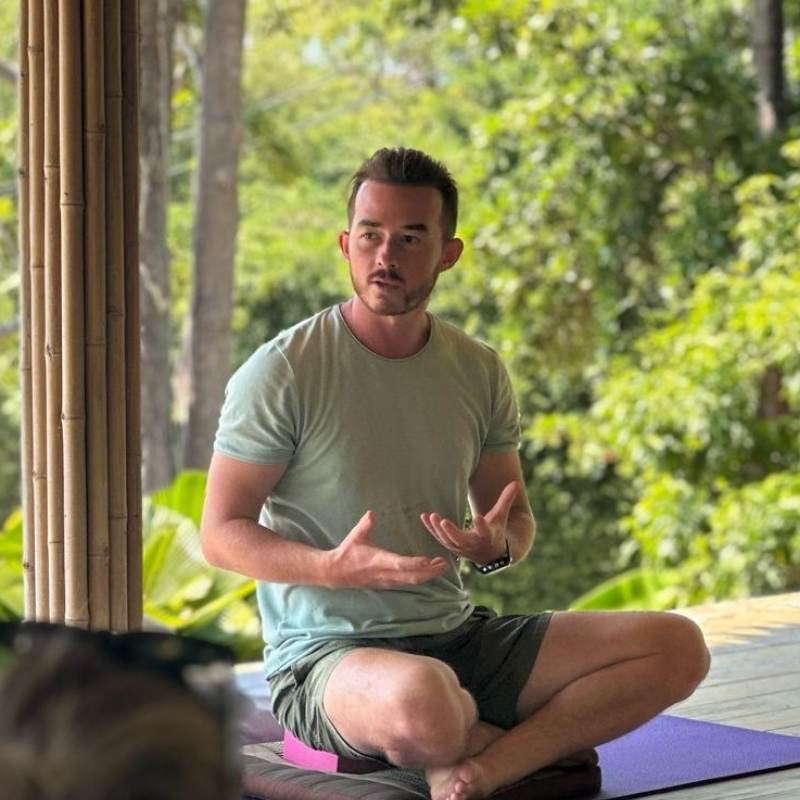
About Diego Pauel
Diego is a certified breathwork facilitator, freediving instructor, and founder of Breathflow Connection. With years of experience in nervous system regulation and somatic practices, Diego helps stressed professionals find calm through simple, science-backed techniques.
Learn More →Try Our Free Interactive Tools
Start regulating your nervous system today.
Get the free 3-minute audio guide and symptom checklist. Delivered instantly.
Get Your Free ResetContinue reading

High Cortisol in Women: Symptoms, Causes, and How to Lower It Naturally
High cortisol symptoms in women include weight gain, irregular periods, hair thinning, and anxiety. Learn natural ways t
Read More →
Why Anxiety Gets Worse at Night (And What Your Nervous System Needs)
Learn why anxiety gets worse at night and what your nervous system actually needs to calm down. Science backed evening p
Read More →